


Cesar Grados Portilla is a Peruvian photographer whose lens reveals the rhythm, complexity, and colors of urban life. Born in Cajamarca and now based in Lima, Cesar has become deeply attuned to the capital’s unique energy—a city he describes as “a bustling place with a lot of street commerce—almost 24 hours of constant movement.”
Rather than shy away from the city’s intensity, Cesar finds inspiration in its unpredictability. “Photographing there is a challenge,” he admits, “but that very chaos and the wide variety of customs among its people is very inspiring.”

Cesar’s path into photography began during his final years at university. “I was always drawn to the audiovisual side of things,” he says. That interest soon became a calling.
“Photography is the best way to immortalize a moment, and through it, one can choose their own style—which is fantastic. In my case, it’s photojournalism and street photography.”
Self-education has played a key role in shaping his craft. Driven by curiosity and inspired by “renowned photographers in magazines or books,” Cesar developed a photographic vision that is distinctly his own.
“Photography is art,” he explains. “My style has been refined over the years, and I’m still learning. I really like the work of Harry Gruyaert and Robert Frank. I enjoy highlighting color in the streets. I do documentary photojournalism, as well as street photography and, occasionally, sports photography.”

While creativity runs in the family—his uncles on his mother’s side are musicians—Cesar’s expression is purely visual. Over time, his work has become a distinctive blend of street and documentary photography, characterized by his attention to color and detail. “Lima is famous for being gray,” he says, “but I try to show that there’s color to be found as you walk through its avenues.”

That vision is backed by intention. When heading out to photograph, Cesar sets a theme. “It’s always good to have a theme in mind,” he explains, whether it’s “people on the street, colors, silhouettes, children playing, or shadows.” His approach strikes a careful balance between structure and spontaneity.
That balance is especially important in Lima, where photographers often face challenges beyond the artistic. “In my country, the biggest challenge is insecurity,” he notes. “But the most rewarding part is the social awareness that some photos can generate.”

Over the years, Cesar has explored a range of themes, including a series on police-related issues. More recently, his focus has shifted to the everyday lives of Lima’s residents. “I’m shaping a project around the colors and everyday life of Lima’s residents,” he shares. “I hope to complete it in a few months.”
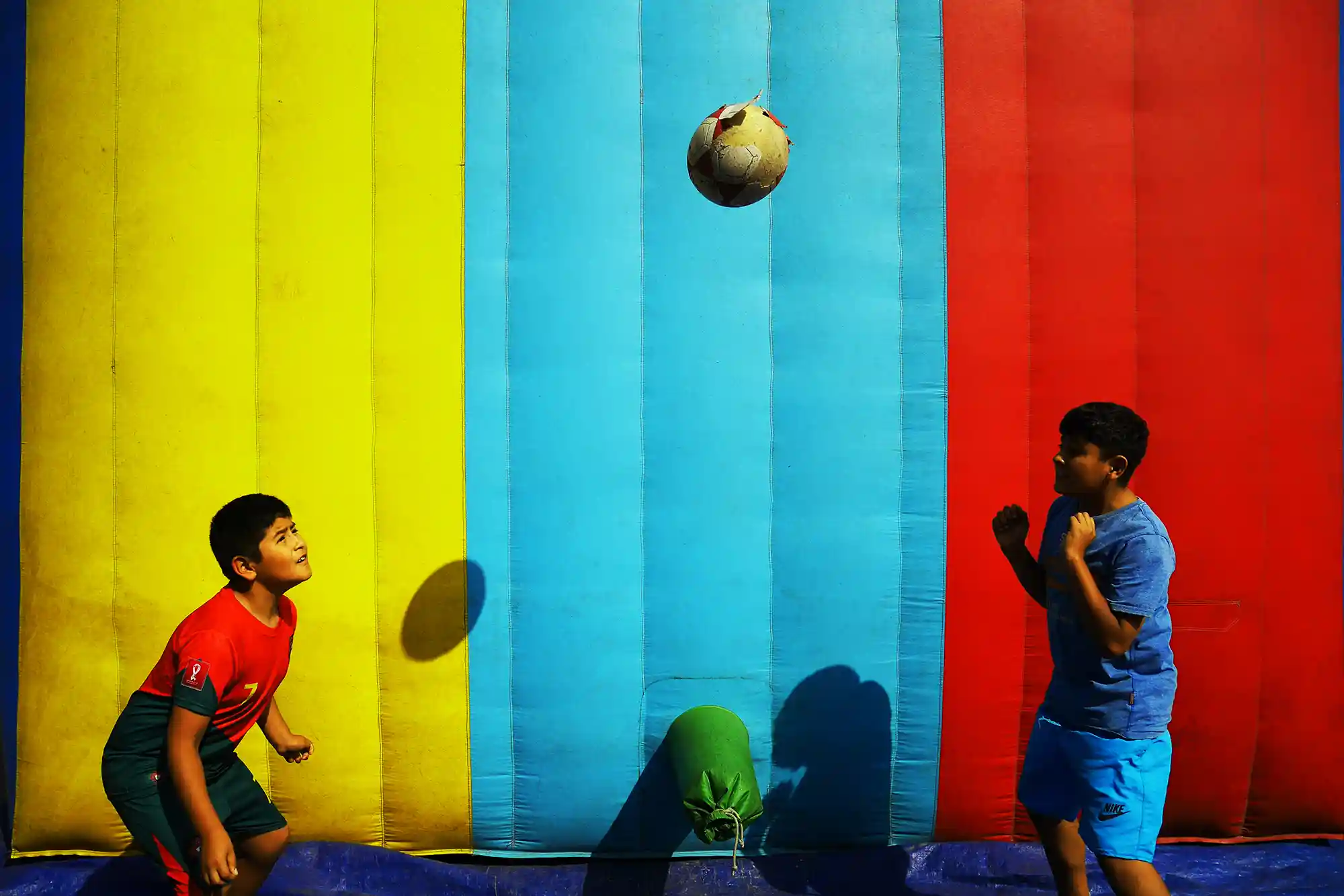
This project is part of his broader effort to challenge stereotypes about the city. “Lima is known as the ‘gray city,’” he says. “Through my photos, I’m trying to show that colors go unnoticed due to the hectic routine of its people. I also enjoy photographic minimalism, which can also be found in this city.”

One of Cesar’s memorable images was taken under pressure. “When doing street photography in Lima—a very dangerous city—there’s always something to tell,” he says. He recalls photographing children playing on an inflatable slide near a road.
“I had to climb a bridge to get a better angle, but I set a goal not to stay there more than 10 minutes because the place was very dangerous and it was likely I could be robbed. Thank God I framed the shot well and the image came out as I expected.”

Experiences like these have shaped Cesar creatively and beyond. “My days doing photojournalism have shaped me technically. There are several images I’ve captured that have been significant to me—like photographing a famous person in my country being taken to prison, or portraits with social themes, as well as street photos.”
The COVID-19 pandemic also left its mark. “It was difficult to go out and work with the fear of getting infected,” he says. “But I believe many images can shift our perspective.”

In 2024, Cesar’s work began gaining broader attention. “I posted a lot of street photography on my social networks, which led to being featured in several exhibitions in my country and in Mexico,” he says.
In 2025, that momentum continued—he won an architectural photography contest and began leading workshops on street photography.

“This year, I’m organizing my photos of the streets of Lima and also its nightlife—focusing especially on the influence of artificial or neon lights on people.”
As someone who has spent years developing his practice, Cesar offers heartfelt advice to new photographers. “Practice a lot,” he urges.
“Watch photography documentaries, and take advantage of the digital world to see the work of the great masters from the ’40s, ’50s, and ’60s. You learn something new every day, and the world of photography is very vast.”
If he could speak to his younger self, his advice would be simple but powerful: “Buy lots of photography books—at least one a month.”
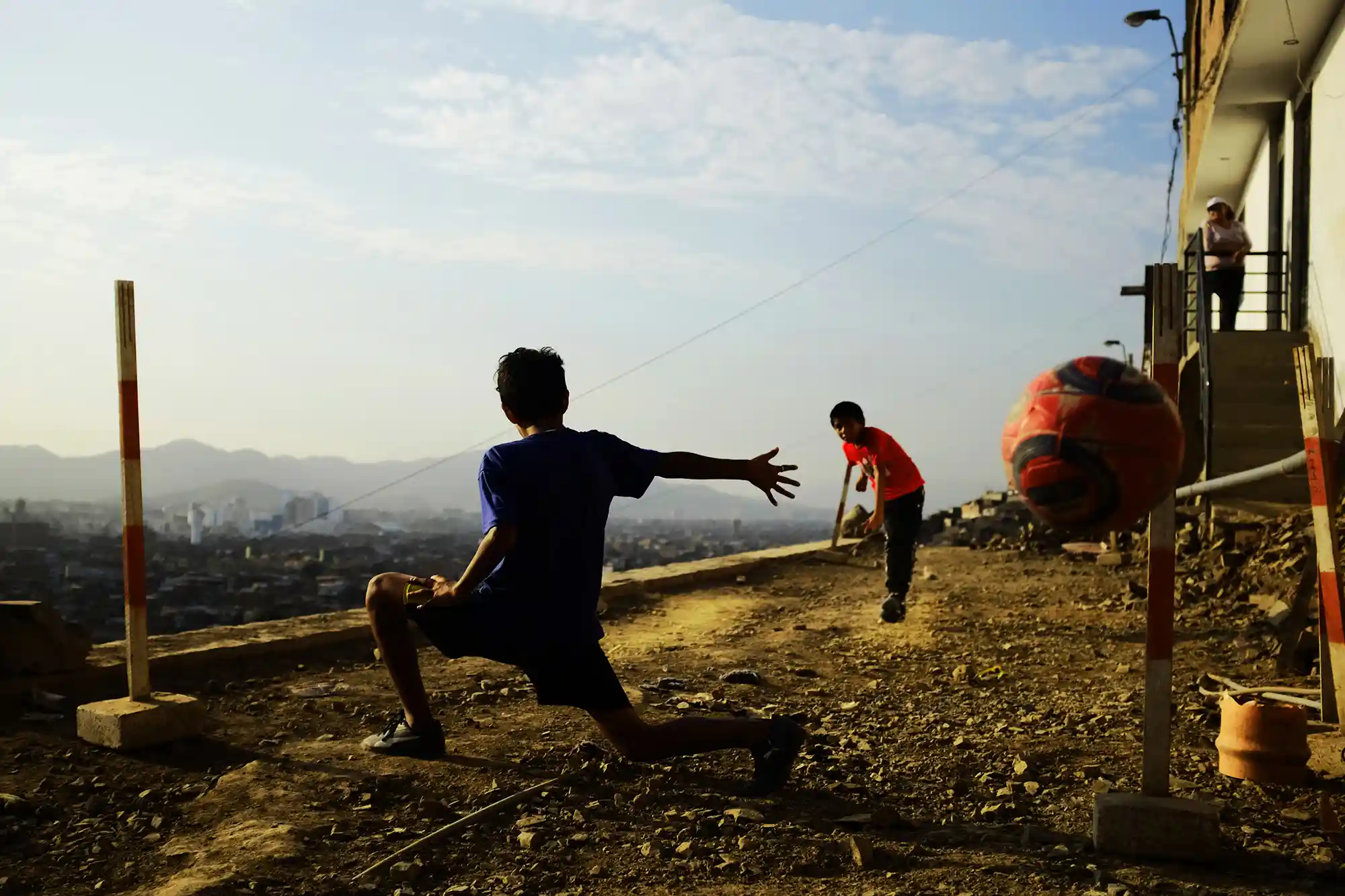
Looking ahead, his dreams extend far beyond Lima.
“A big dream would be to do a documentary photo project in Arab or African countries—exploring their avenues, streets, capturing their people and that lifestyle so different from South America. Places where color and sunlight combine masterfully.”

At heart, Cesar Grados Portilla is a seeker—of light, of meaning, and of the overlooked moments that pulse beneath the surface of everyday life. Through his work, he invites us to look more closely and to find color in the gray.
To Learn More Visit:
 Soledad Quartucci, CEO, Latina Republic
Latina Republic envisions a world where the beauty and resilience of Latin American and Caribbean cultures are recognized and appreciated globally. By amplifying the voices of artists and cultural custodians, we strive to cultivate a deeper understanding of the region’s challenges and triumphs. Our goal is to inspire greater appreciation for the arts as a tool for empathy, unity, and transformative social change. Through our work, we aim to equip all stakeholders with essential insights for addressing regional challenges, ultimately enriching the global cultural landscape and portraying the victories and hardships of everyday life in Latin America.

