
Pedro Castillo’s First Week as Peru’s President: Symbolic and Structural Change Mark First Week.
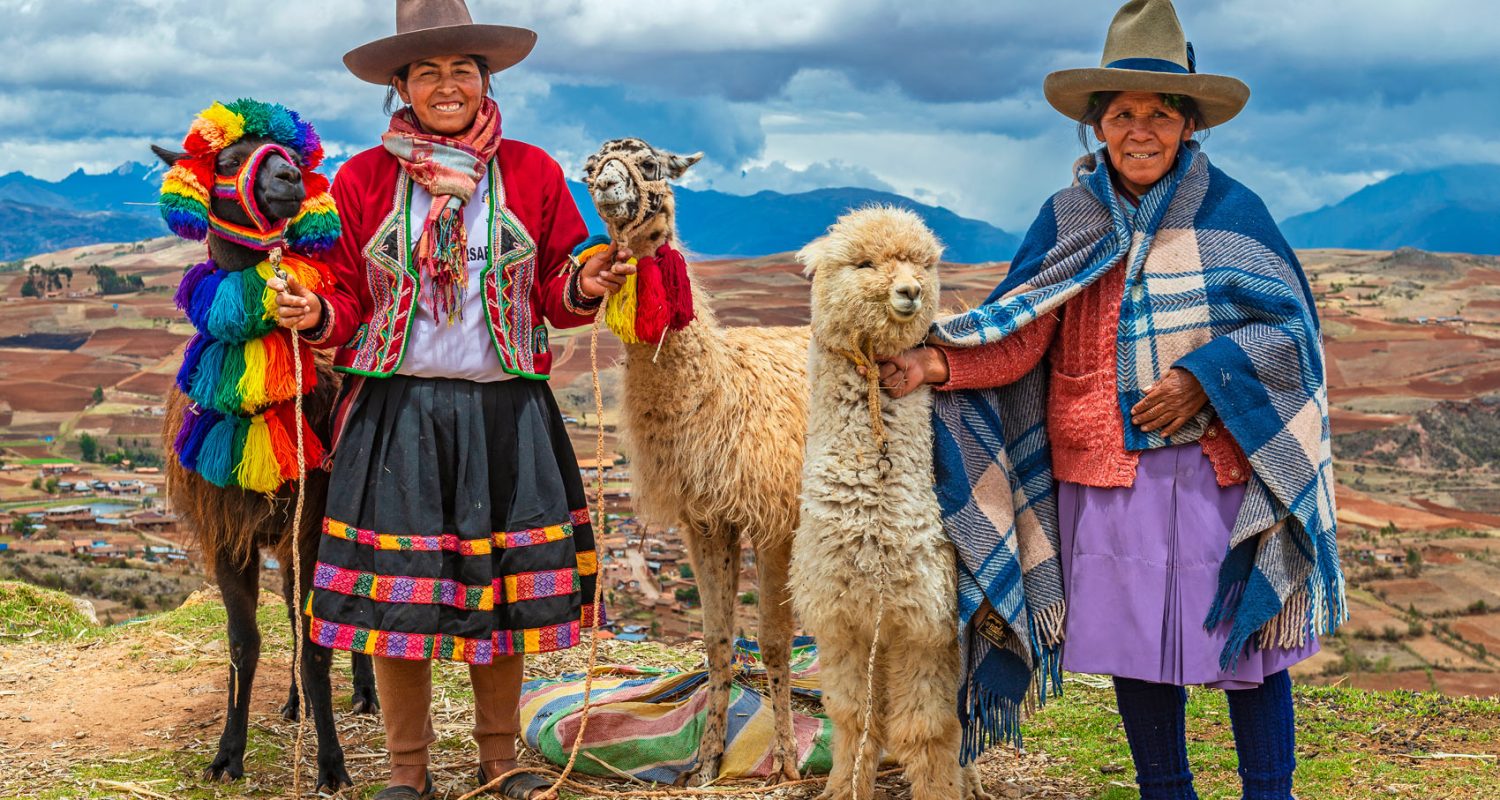
Peru’s newly inaugurated president, Pedro Castillo, made several groundbreaking announcements in his first address to the nation on July 28, 2021. Castillo is Peru’s first campesino president and ran on a campaign that celebrated diversity and sought economic change for the country’s poorest sector. Campesino roughly translates to “peasant” in English and refers to rural farmers of indigenous descent who have historically been excluded from the nation’s historical narrative and current economic progress.
During his inauguration, Castillo wore a hat and suit with traditional indigenous motifs and highlighted his commitment to the often overlooked rural populations. He dedicated his address and presidency, in part, to these groups by saying, “I swear by God, by my family, by my Peruvian sisters and brothers, peasants, native peoples, ronderos, fishermen, teachers, professionals, children, young people and women, to exercise the office of president of the republic … I swear for the peoples of Peru, for a country without corruption and for a new constitution.”
Several of Wednesday’s announcements indicate his intentions to make good on that campaign promise as he is breaking with several presidential traditions. Chief among them is Castillo’s intention to waive his presidential salary and instead continue receiving his teacher’s wage throughout his presidency. He also indicated his intention to return to teaching in rural communities after his presidential term expires in 2026. Castillo also announced a plan to cut minister and legislator salaries by up to 50% in an effort to save the country money.
Castillo will be the first Peruvian president in nearly 100 years to not reside in and govern from the Government Palace in Lima, the country’s capital. He plans to convert the building into a historical museum that will tell Peruvian history, including its often overlooked pre-colonial past. That project will be headed by the newly renamed Ministry of Cultures. Previously, the organization was known as Ministerio de Cultura (Ministry of Culture), but in an attempt to recognize the multitude of histories that make up the country, Castillo has renamed the branch Ministerio de las Culturas. He said,
“I think we have to break with colonial symbols to end the shackles of domination that have remained in place for so many years…. In a diverse country like ours, we need a ministry that recognizes the diverse cultures and languages in force, and executes policies where the native peoples themselves participate in their making and execution.”
The Peruvian government has recognized 48 distinct languages that are spoken in the country, which is mostly due to the multitude of indigenous groups who have been living on that land for centuries. To improve access to social resources for those who don’t speak Spanish as their first language, Castillo announced a plan to “linguistically transform the Peruvian State.” In areas where indigenous languages are the predominant language spoken, public institutions will communicate and operate in those languages.
This will undoubtedly improve access to social resources for these groups, who Castillo acknowledges have been largely overlooked by many policies. His plan will ” inter-culturalize the State and establish that, when relevant decisions are taken, the voices of the original communities and the Afro-Peruvian people are considered.”
Much of Castillo’s first speech highlighted the importance of challenging colonial structures and recognizing that marginalized populations are still excluded from mainstream politics due to their lingering effects. While some changes, such as residing in the Government Palace, are symbolic, their implications are much deeper.
The palace, also called “Casa de Pizarro” or “House of Pizarro,” was named for conquistador Francisco Pizarro who declared Lima the capital of Peru in the 1500s. By adding as many degrees of separation between himself and such colonial images, Castillo hopes to fundamentally change the way the Peruvian state recognizes its own history and indigenous and Afro-indigenous populations.
__________________________________________________________________________
 Hannah Fontaine | Harvard University Alumni
Hannah is a recent graduate of Harvard University who wrote her thesis about the connection between the state-sponsored violence of the Guatemalan Revolution and the lack of prosecutorial and judicial success for women who are survivors of sexual violence in the country today. In the fall, she will be attending University of Wisconsin- Madison for law school where she plans to focus on immigration and criminal law. Hannah has been working with Latina Republic since October 2020 and her favorite part about writing articles is using quotes from interview subjects to emphasize their voices and experiences, telling their stories as they want them to be told and highlighting the successes of organizations and movements working to make their communities better.

