
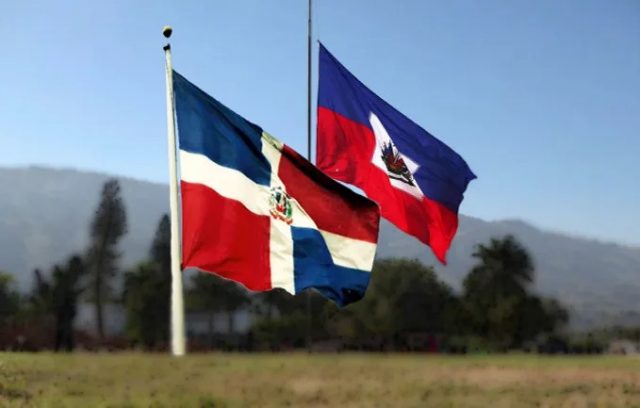
Culture Unites the Dominican Republic and Haiti
Artists from various disciplines in the Dominican Republic and Haiti are deeply immersed in the Binational Cultural Dialogue Project, which took place in Santo Domingo. The aim of this project is to strengthen mutual understanding and cooperation in artistic and environmental matters.
The initiative was developed by the Haiti Jazz Foundation with the Caracoli Association with the support of the European Union to facilitate the transfer of artists of both nations in the world of carnival cultural, music, gastronomy, photography, and street art. For 18 months, artists and professionals from these rich Caribbean countries will work together on various cultural projects and develop a mutual understanding between each other.
Beautifully enough, the initiative has a mission to help preserve the natural resources of the Island of Hispaniola (which is shared by both Haiti and the Dominican Republic). Helping protect the island’s natural resources will contribute to a long-term guarantee of sustainability.
We can all understand the universal language art gives us, it is a gateway to bringing people together from diverse cultures and languages. Art gives us all unity as it is to be felt rather than understood. The director of the Haiti Jazz Foundation, Milena Sandler expressed to Efe this very concept: “artists speak the language of art, which has no borders.”
In addition to this concept, Sandler believes that this will create “relations between artists” with the positive effect of creating mutual understandings. The first event of the Binational Cultural Project occurred in San Cristobal, located in the south of the Dominican Republic. Through the first event it was already observed that having this experience to create mutual understandings between artists of both countries was achieved.
The event has broken many taboos and proven that art has no barriers, especially in political conflicts. Arts has the ability to teach people, to heal broken wounds, change perspectives, develop understandings, and bring people together without discrimination.
Last January, Dominican plastic artist Luis Rivas and the Haitian Saint Juste united ten emerging creators in an art studio to come together and brainstormed about unique ways to celebrate the traditional carnivals of both countries. As a result of this exchange of exploration between the artists, carnival puppets were created from recycled materials that from the magic in their fingertips turned into magnificent art. Materials such as plastic bags/bottles, glass, fabrics, metals and other additional waste materials. The art pieces were presented in the Carnival of Jacmel in southern Haiti and 5 puppets were created.
It is enlightening to see Haiti and the Dominican Republic deciding to collaborate with each other after making years of headlines due to their political conflicts. With the events that happened in January between Luis Rivas and the Haitian Saint Juste, there are a total of eleven major cultural events already scheduled in both Caribbean countries.
Other events that also occurred was the Carnival and Tradition exhibition that took place March 24 in Santo Domingo. The exhibition was dedicated to the puppets and photographic reports on the workshops. In February, the Binational Digital Media Forum took place. This event was the first of its kind and was held via video conference. In June the Dominican Jazz Band will perform at the Port-au-Prince International Jazz Festival (PAPJAZZ), which lasts only 4 days. It is also planned that Haitian artists will participate in the Santo Domingo Jazz Festival.
For dates of events in Haiti click here.
For dates of events in the Dominican Republic click here.
 Vanessa Campa | Florida International University
Vanessa Campa is a recent graduate from Florida International University holding a Bachelor of Arts in English on the Writing and Rhetoric track, and a minor in Psychology. Through working for the Latina Republic as a Latin Correspondent, Vanessa has gained a true love and passion for reporting underreported stories in the region. Discovering underreported stories that will inspire her readers, she has specialized in interviewing and writing articles on outstanding Latinx women who have made an impact in their communities, especially immigrants.