
Child Protection and Vulnerable Groups Officers of Mexico
Their main objective is to safeguard the human rights of girls, boys, and adolescents in strict compliance with current regulations.
National Institute of Migration of Mexico
Protection Officers are public servants of the National Institute of Migration certified in child protection and trained in various topics, including the rights of children and adolescents, asylum, gender, special attention to migrant women, persons with disabilities, and older adults.
Background
On March 30, 2007, within the framework of the Interinstitutional Dialogue on Unaccompanied Migrant Children (NNA) and Migrant Women, the “Model for the Protection of the Rights of Unaccompanied Migrant Children and Repatriated Minors” was established.
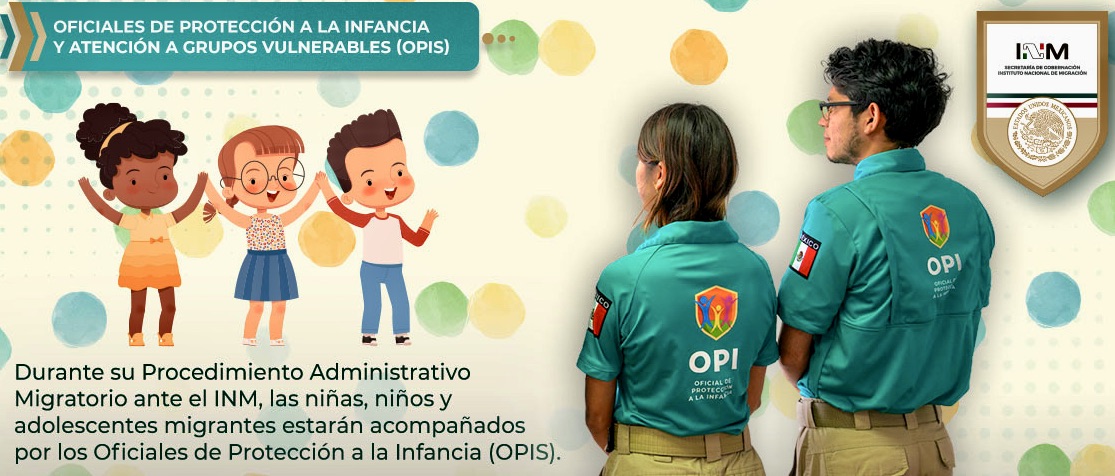
In this context, the figure of the Childhood Protection Officer (OPI) was created to provide differentiated attention, assistance, and accompaniment to accompanied and unaccompanied children during their administrative migration procedures.
In November 2012, with the publication of migration protection guidelines by the INM in the Official Gazette of the Federation (DOF), the functions of OPIs were expanded to include the care of adult migrants belonging to vulnerable groups.
Since then, it has become a group with trained and certified personnel in child protection and the care of migrants in vulnerable situations.
Los OPIS del @INAMI_mx atienden de forma integral a Niñas, Niños y Adolescentes ???? que ingresan a territorio mexicano.
? https://t.co/O7kCuSyaFj pic.twitter.com/ydtvoueFQ4— INM (@INAMI_mx) January 8, 2024
Regulations
The services provided by Child Protection and Vulnerable Groups Officers are based on the following regulations:
- Migration Law published in the Official Gazette of the Federation on May 25, 2011;
- Regulation of the Migration Law published in the Official Gazette of the Federation on September 28, 2012;
- General Law on the Rights of Girls, Boys, and Adolescents published in the Official Gazette of the Federation on December 4, 2014;
- Regulation of the General Law on the Rights of Girls, Boys, and Adolescents published in the Official Gazette of the Federation on December 2, 2015;
- Guidelines on the protection of migrants from the National Institute of Migration published in the Official Gazette of the Federation on November 29, 2012.
How to Identify Protection Officers?
Protection Officers wear a shield with the program’s logo on their uniform, distinguishing them from other public servants of the INM.
Functions of Protection Officers
For the attention of children and adolescents:
- Ensuring their health with medical personnel;
- Meeting their basic nutritional needs;
- Notifying the appropriate Child Protection Agency to issue a Rights Restoration Plan;
- Notifying the corresponding Family Integral Development System (DIF) to designate a place of accommodation for the child or adolescent;
- Explaining the implications of their administrative migration procedure and their rights in a clear language appropriate to their age;
- Providing an interpreter or translator if necessary;
- Conducting an interview to determine their identity, nationality or residence country, migration status, the whereabouts of their family, and their specific protection, medical, and psychological needs;
- Keeping them informed of their migration status using respectful and friendly language;
Accompanying the child or adolescent to the shelter designated by the DIF; - If the need for international protection is identified, immediately notifying the Mexican Commission for Refugee Aid to proceed as required by law and regulations;
- Accompanying them throughout the assisted return process to their country of origin or residence.
- In the case of pregnant women, providing specialized assistance for their assisted return.
For the attention of vulnerable groups:
- Meeting their basic nutritional needs;
- Ensuring their health with medical personnel;
- Explaining their rights in a friendly language;
- Providing an interpreter or translator if necessary;
- Keeping them informed of their migration status using respectful and friendly language;
- Facilitating free phone calls to communicate with their family or anyone they wish to contact;
- Providing dignified and safe accommodation;
- Referring them to specialized institutions according to their vulnerability for the necessary care.
- Training of Protection Officers
Protection Officers receive continuous training in various topics, including current regulations, human rights, risk detection in migration, types of violence, human trafficking, non-discriminatory care, gender perspective, biopsychosocial approach to care, stages of development in children and adolescents, psychological first aid, among others.
Additionally, the EC1366 competence standard has been created before the National Council for Standardization and Certification of Labor Competencies (CONOCER), titled “Attention for the specialized protection of girls/boys/adolescents and adults belonging to a vulnerable/priority group in the context of migration.” This standard is applied to public servants who wish to work as Child Protection and Vulnerable Groups Officers.
Procedure Followed by OPI when Receiving Unaccompanied Children and Adolescents
The INM has two differentiated procedures for the care of unaccompanied migrant children and adolescents, one focused on foreigners and another on Mexicans.
To learn about both procedures, you can refer to the following documents:
Where to locate a Protection Officer?
Protection Officers can be found in the 32 Representation Offices of the National Institute of Migration.
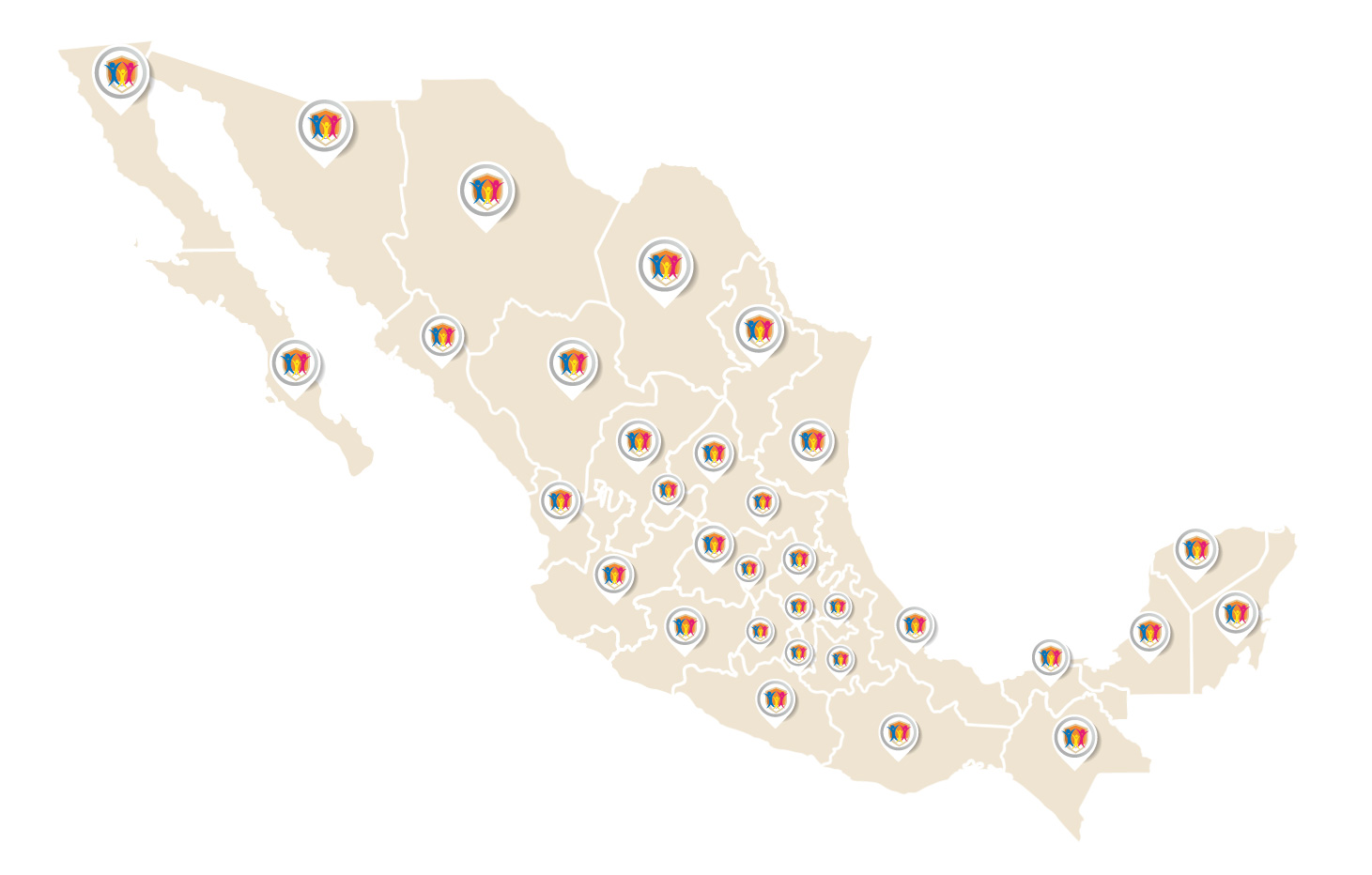
See Infograph
Message to Women in Migratory Contexts
 Soledad Quartucci | CEO/Founder, Latina Republic
Latina Republic is dedicated to promoting regional understanding through compelling narratives, articles, interviews, and reports that emanate from the heart of the Americas. Our foremost goal is to facilitate constructive dialogue by illuminating local viewpoints frequently overshadowed by mainstream media. Our mission is to equip all stakeholders with essential insights for addressing regional issues, thus empowering them in their efforts. We are committed to portraying the victories and hardships of everyday life in Latin America, while also chronicling the progression of social movements and amplifying the voices of those at the forefront of change.