
Mexico’s 2024 Indigenous Language Comics Results Announced
- The Ministry of Culture, through INALI, announces the results of the 2024 Call for Comics in National Indigenous Languages
- The jury, composed of three women speakers of national indigenous languages, reviewed 19 works created in 13 indigenous languages.
- The winning work, awarded first place, was created in Triqui and addresses the theme of death.
Mexico City, November 8, 2024 – The Ministry of Culture of the Mexican Government, through the National Institute of Indigenous Languages (INALI), has announced the results of the 2024 Call for Comics in National Indigenous Languages, which reviewed 19 works in 13 national indigenous languages from 14 Mexican states.
The works were created in Tojol-ab’al, Kumiay, Yoremnokki (Mayo), Ralámuli (Tarahumara), Tu’un Savi (Mixtec), Maayat’aan (Mayan), Nawatlahtolli (Nahuatl), Lhima’alh’ama’/Lhimasipij (Tepehua), Hñähñu (Otomi), Triqui, Tének (Huastec), Tutunakú, and Zapotec; from Baja California, Chiapas, Chihuahua, Campeche, Mexico City, Guerrero, Hidalgo, Oaxaca, Puebla, Querétaro, San Luis Potosí, Sinaloa, Tlaxcala, and Yucatán.
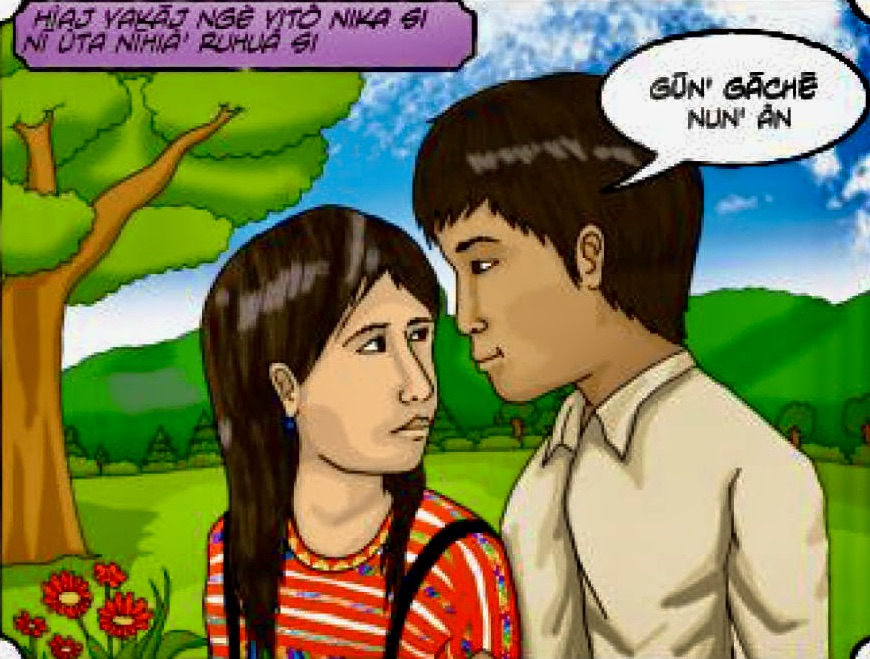
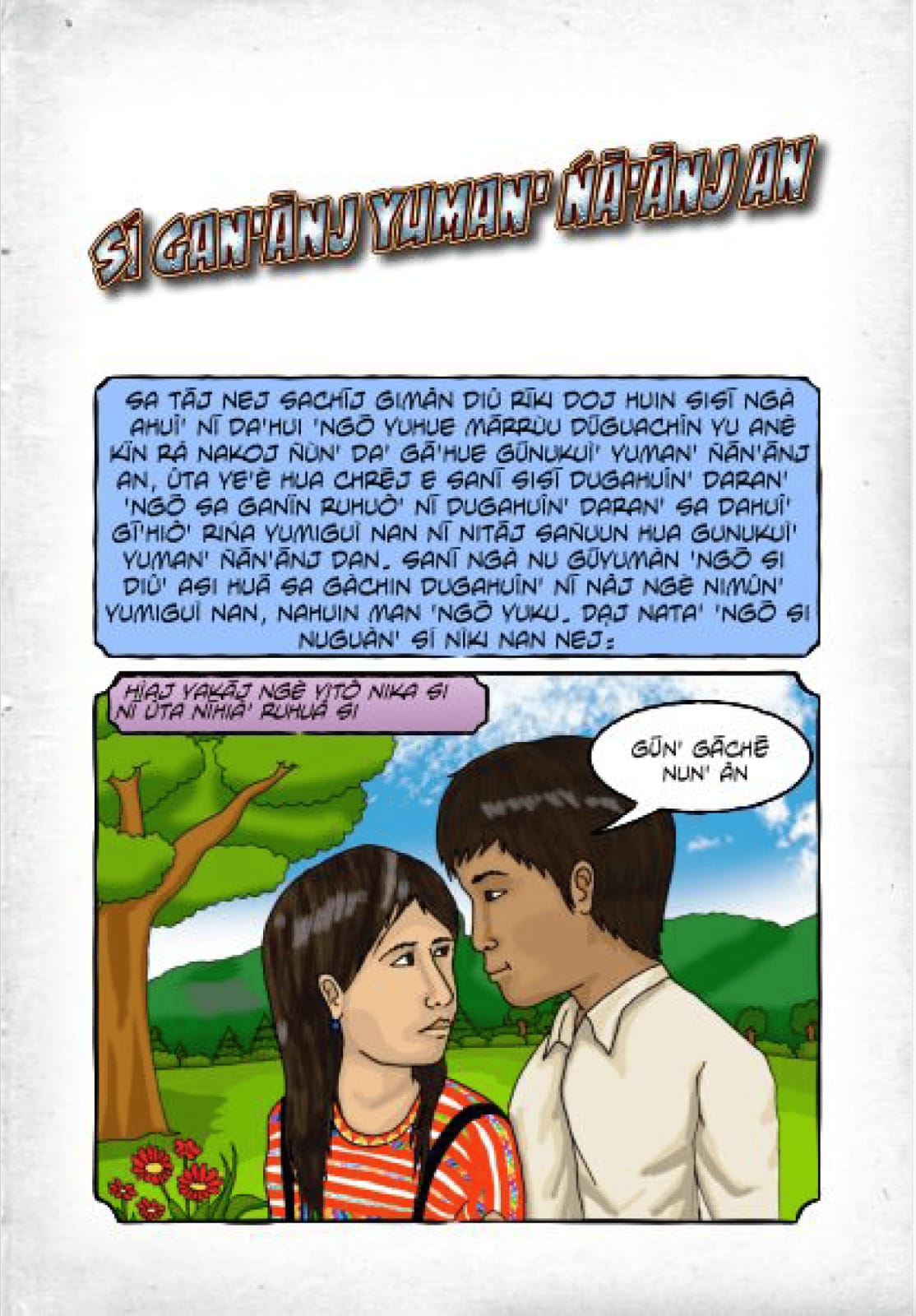
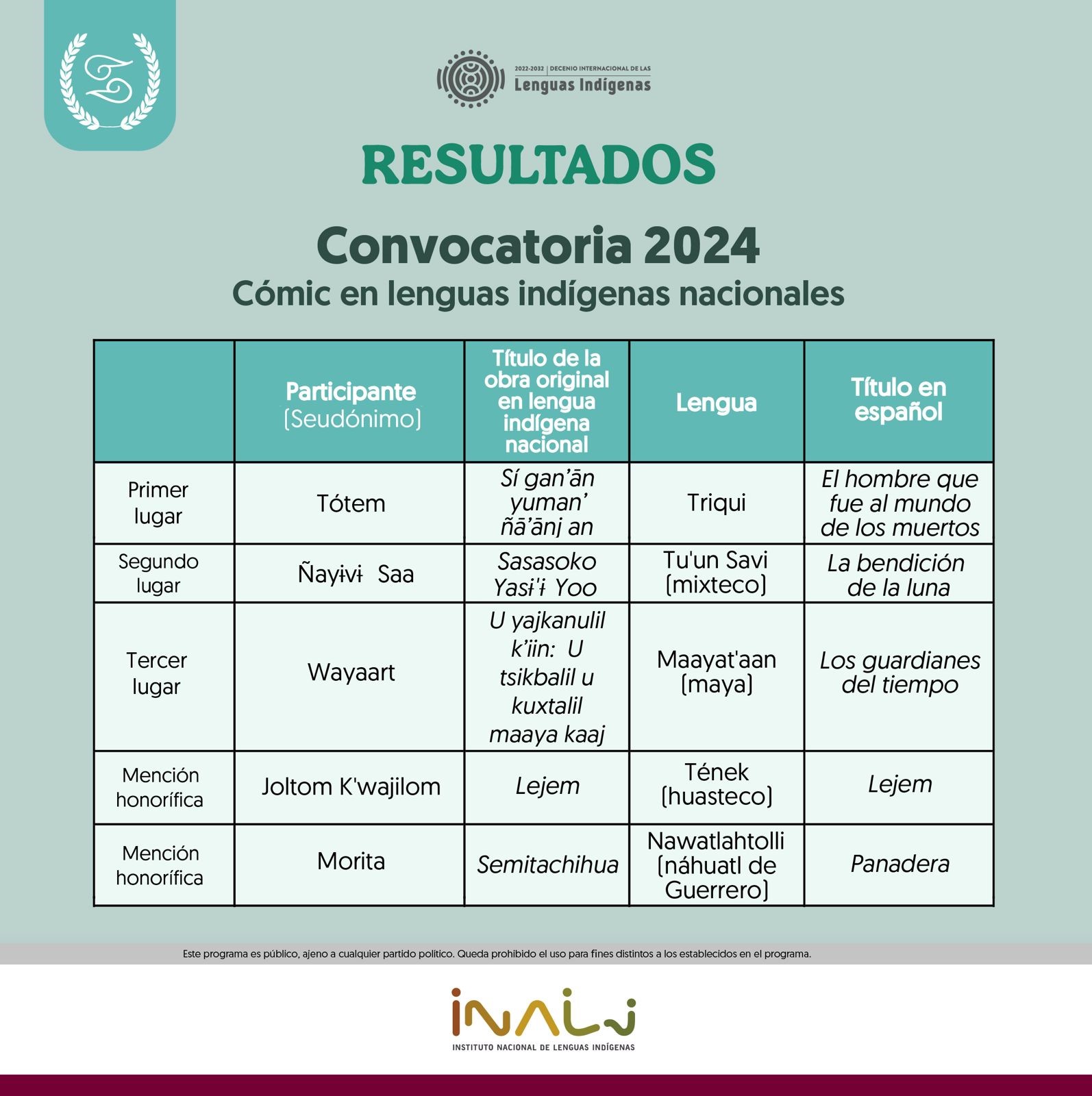
The first-place-winning work, Sí gan’n yuman’ ñ nj an (El hombre que fue al mundo de los muertos), The Man Who Went to the World of the Dead, is a graphic narrative that clearly and faithfully portrays events related to death from the Triqui worldview.
The call aims to strengthen multilingualism and promote Mexico’s linguistic diversity through national indigenous languages in modern artistic genres like graphic narratives.
The importance of graphic and narrative expression lies in its potential to transmit stories, values, and traditions in a visually appealing and accessible format for different types of readers of various age groups. The combination of text and images typical of the genre helps with the understanding and learning of national indigenous languages.
Comics can be an effective tool for the revitalization of indigenous languages, encouraging new generations to learn and use them in creative and versatile ways. In this sense, promoting their creation strengthens the sense of identity and cultural pride of communities, as well as the visibility and recognition of their languages.
In addition to the linguistic and cultural diversity, the participating works cover a wide range of themes: oral traditions, futuristic topics, defense of territories, environmental conservation and care, among others.
The jury was made up of Nahuatl poet and coordinator of literary creation projects by indigenous women, Ateri Miyawatl; Zoque and Tsotsil illustrator, artisan dyer, and textile designer Katia Alejandra González García; and Zapotec surgeon, trainer of interpreters-translators in health care, and representative of the Beez Ngaas collective, María de Lourdes Martínez Gómez.
In this edition of the call, which took place as part of Mexico’s Action Plan for the International Decade of Indigenous Languages (DILI) 2022-2032, 21 works were submitted. After the administrative phase review, two works were disqualified for not meeting the call’s requirements, leaving 19 works for the jury’s review.
The committee met remotely on November 6 to deliberate and determine the winning works, considering factors such as originality, the use of indigenous languages, aesthetic elements, handling of worldviews, and cultural practices of indigenous peoples, among other criteria.
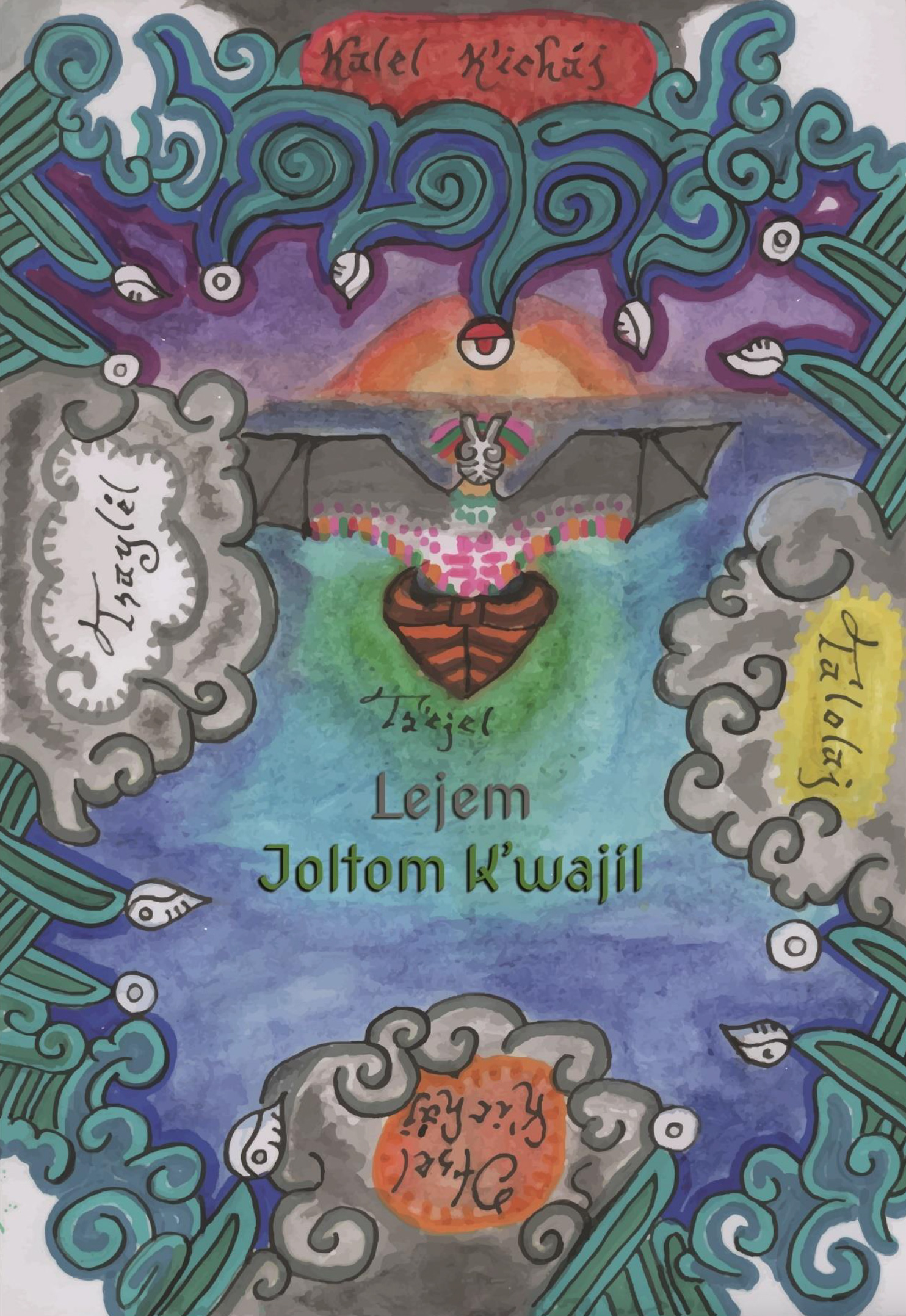
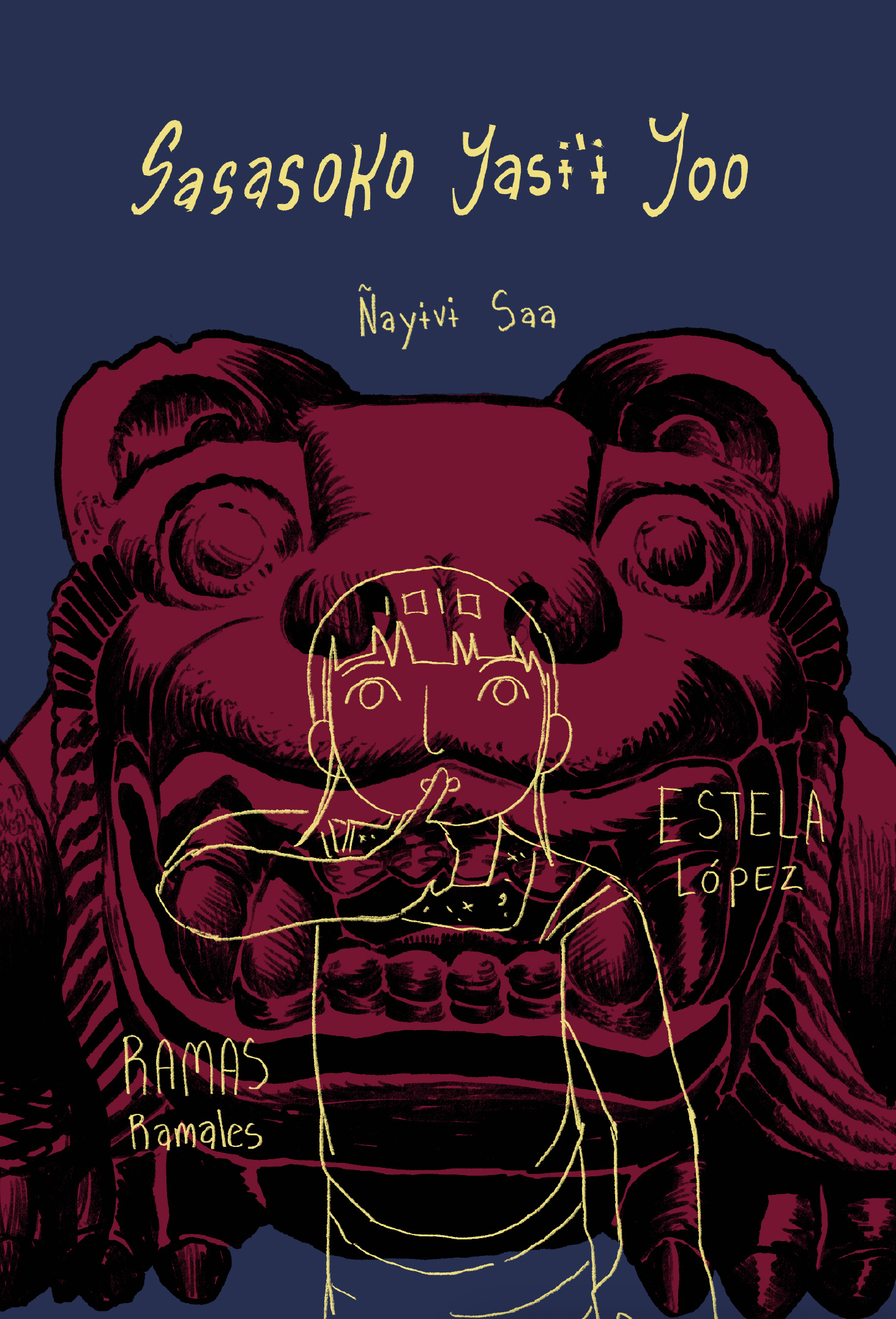
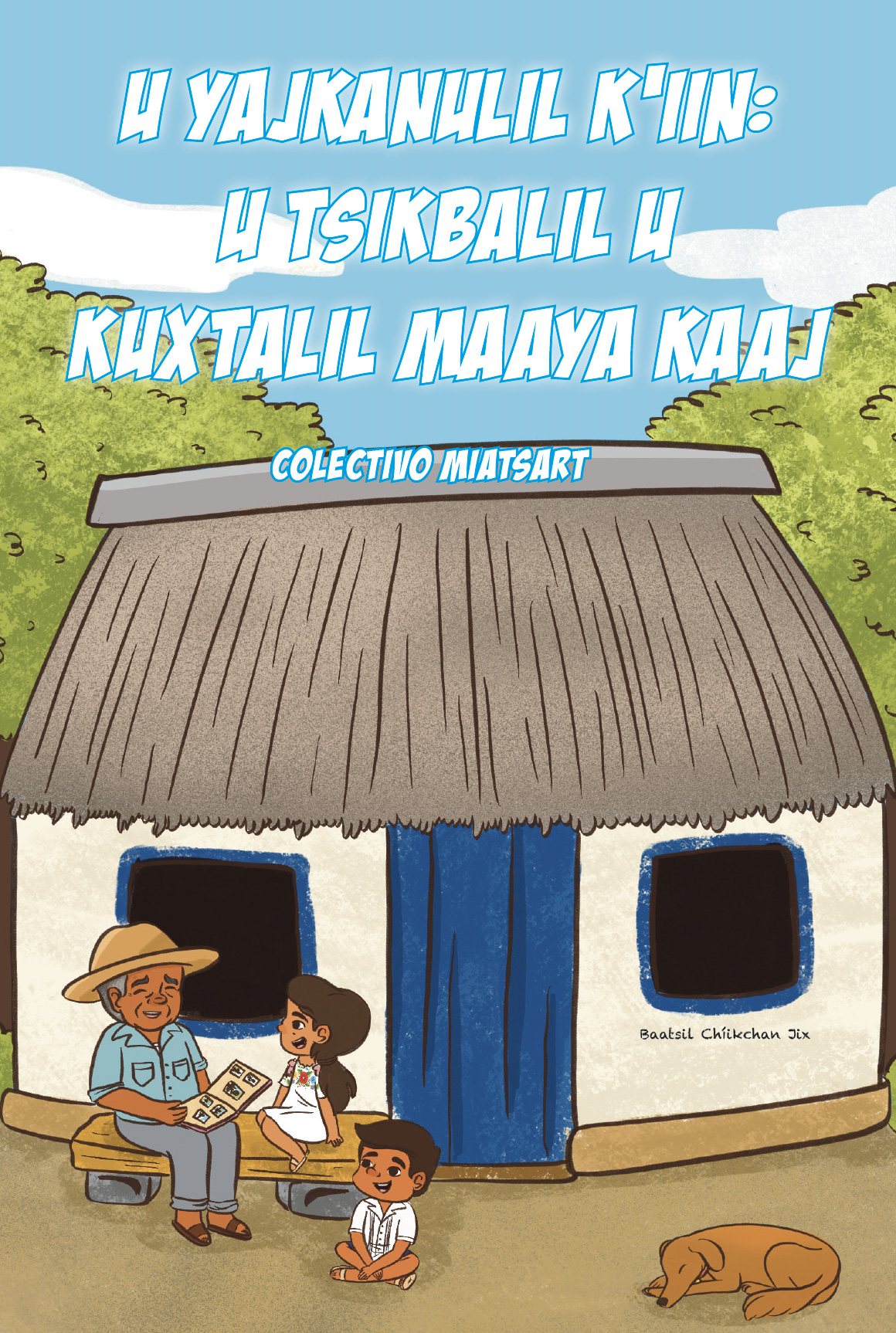
The results are as follows:
 Latina Republic envisions a world where the beauty and resilience of Latin American and Caribbean cultures are recognized and appreciated globally. By amplifying the voices of artists and cultural custodians, we strive to cultivate a deeper understanding of the region’s challenges and triumphs. Our goal is to inspire greater appreciation for the arts as a tool for empathy, unity, and transformative social change. Through our work, we aim to equip all stakeholders with essential insights for addressing regional challenges, ultimately enriching the global cultural landscape and portraying the victories and hardships of everyday life in Latin America.