

President Petro Orders Acceleration and Expansion of Colombia’s Rain Emergency Response Plan
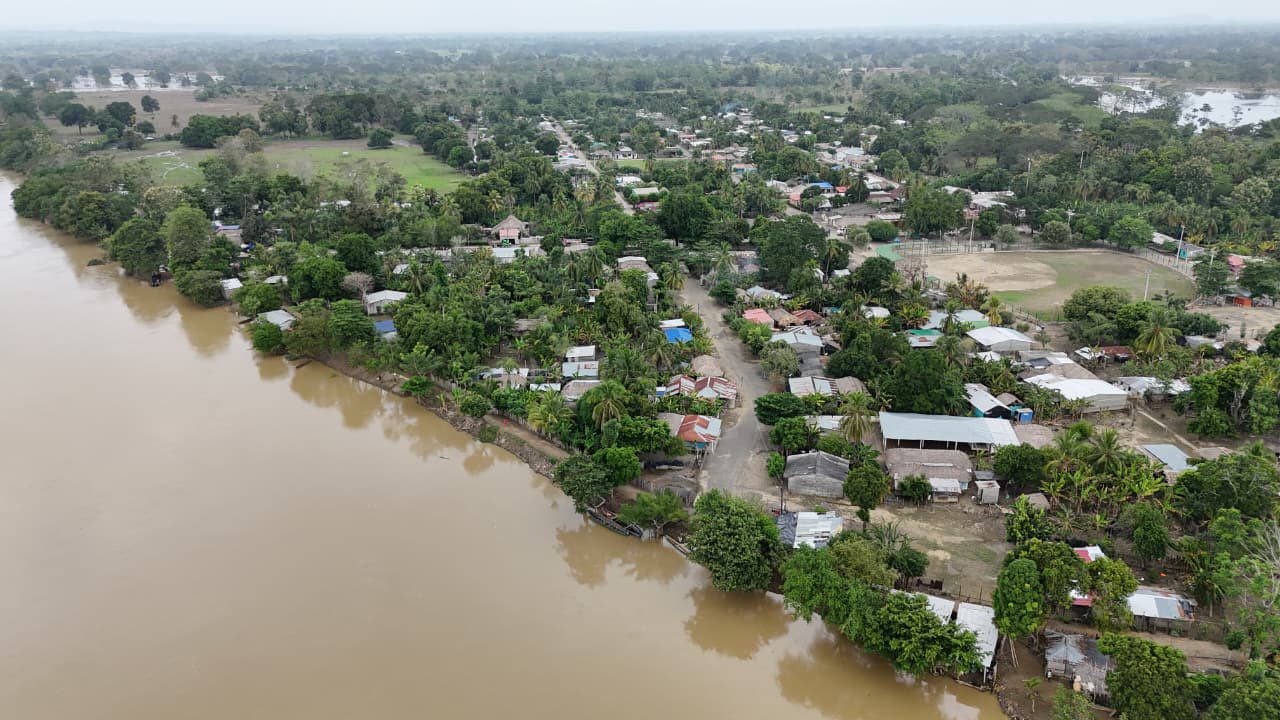
After weeks of unusually heavy rainfall that began in late January, large parts of Colombia remain under emergency conditions, with at least 16 departments reporting severe flooding and river overflows, particularly in Córdoba and Antioquia, where the Sinú River has burst its banks and damaged thousands of homes.
In the hard-hit Urabá subregion of Antioquia, the national government met with local leaders to coordinate relief efforts, as UNGRD director Carlos Carrillo gathered mayors from San Juan de Urabá and Arboletes, along with delegates from Canalete and Los Córdobas, announcing the installation of two military bridges to replace collapsed highway structures and the creation of emergency community kitchens in Necoclí, Arboletes, San Juan de Urabá and San Pedro de Urabá to provide hot meals for displaced and affected families.
During a Cabinet Council session held in Cartagena on February 24th, President Gustavo Petro instructed his ministers to urgently accelerate and deepen the national response to the severe rainy-season emergency affecting large parts of the country, particularly the Caribbean region.
The President called for the swift and legally rigorous issuance of emergency decrees under the recently declared State of Economic, Social, and Ecological Emergency. He emphasized that any procedural error in the drafting or signing of decrees could invalidate them, warning ministers to strictly comply with constitutional requirements.
New Cold Front Threatens Additional Impacts
The Sistema Nacional de Gestión del Riesgo de Desastres reported the passage of a new cold front over the Colombian Caribbean Sea between February 22 and 26, potentially increasing rainfall, wind intensity, and wave heights.
According to the Instituto de Hidrología, Meteorología y Estudios Ambientales (IDEAM), heightened precipitation is expected across the Insular, Caribbean, Andean, and Pacific regions. Special monitoring has been recommended for the Gulf of Urabá and the departments of Córdoba, Sucre, Bolívar, Atlántico, Magdalena, Cesar, La Guajira, Antioquia, Norte de Santander, Caldas, Risaralda, Quindío, Tolima, Huila, Valle del Cauca, Cauca, Nariño, and Chocó.

Meanwhile, the Dirección General Marítima (DIMAR) forecast northeasterly winds of 30–50 km/h and waves between 2.3 and 3.2 meters in the Archipelago of San Andrés, Providencia, and Santa Catalina, with significant swells along central coastal sectors of Bolívar, Atlántico, and Magdalena.
Authorities warned that these conditions increase the risk of landslides, flash floods, and river overflows, particularly in high-slope and riverside communities.
Financing the Emergency Response
President Petro outlined three primary funding sources for immediate response and long-term reconstruction:
- Existing resources from the Unidad Nacional para la Gestión del Riesgo de Desastres (UNGRD).
- Budget reallocations within the national government.
- New revenue generated through targeted taxation of high-income and speculative (“rent-seeking”) sectors.
The President stressed that UNGRD funds must be mobilized immediately for urgent needs, while reconstruction will require substantial additional resources.
Agrarian Reform and Dike Removal in Reconstruction
Beyond emergency relief, President Petro linked long-term territorial reconstruction to Colombia’s agrarian reform agenda. He called for structural solutions to restore the natural flow of water in historically altered floodplains, including the controlled breaching of dikes where necessary.
He emphasized that competent authorities, including the military where appropriate, must clarify responsibilities and act swiftly to prevent prolonged flooding and secondary humanitarian impacts.
Preventive Health System Deployment
The President warned that once floodwaters recede, stagnant water could trigger outbreaks of malaria, dengue, and other mosquito-borne diseases. He insisted that Colombia’s preventive healthcare model be fully deployed in affected regions.
Petro criticized reliance solely on private health insurers (EPS), arguing that without strong national institutional coordination, post-disaster disease prevention would be insufficient. He highlighted recent progress in reducing child and maternal mortality as evidence that the preventive health model must now be intensified in emergency zones.
Additional 2% Energy Sector Contribution
In parallel, the Ministry of Environment announced a draft decree requiring hydroelectric and thermoelectric power generators operating in affected river basins to transfer an additional 2% of gross energy sales for six months.
The measure follows Decree 150 of 2026 declaring the State of Emergency in Córdoba, Antioquia, La Guajira, Sucre, Bolívar, Cesar, Magdalena, and Chocó. Funds collected through regional environmental authorities (CARs) will be used exclusively for environmental restoration and disaster risk management initiatives.
The decree clarifies that these transfers do not constitute a new tax but are compensatory contributions tied to the use of natural resources, consistent with Colombia’s environmental framework.
Environmental and Risk Management Measures
The Ministry’s decree package includes eight complementary measures, among them:
- Adjustments to environmental management instruments for hydroelectric plants
- Urgent integration of risk management into watershed planning (POMCA)
- Temporary measures regarding river buffer zones
- Hydrosedimentological modeling
- Ecological restoration and rehabilitation actions
- Accelerated environmental procedures for water and sanitation projects
- Immediate execution of priority works in forest reserves
Ongoing Coordination and Public Advisory
The UNGRD will continue coordinating with IDEAM, DIMAR, and territorial authorities. Communities are urged to follow official communications, monitor river and hillside conditions, avoid flooded areas, prepare emergency kits, and comply with evacuation orders when issued.
President Petro concluded that the emergency demands not only immediate humanitarian action but structural transformation to prevent future climate-related disasters and protect vulnerable populations.
 Latina Republic is a 501(c)(3) nonprofit organization that tracks government initiatives across Latin America and the Caribbean. We feature official updates on immigration, the economy, social welfare, environmental policy, and cultural stories, filling critical information gaps to highlight the region’s diversity, resilience, and wealth of lived experiences.