

Instituto Ambiental, or ISA, was established in 1994 in the struggle for social and environmental rights in Brazil. The institute’s mission is to propose integrated solutions to social and environmental issues and its main objective is to defend the social good and rights, both collective and individual, of the environment and humans, as well as local cultural heritage. Over the past decade, ISA has been engaged in various lines of action, such as defending socio-environmental rights, proposing and monitoring alternatives to public policies, researching and documenting local issues, developing sustainability models, and building local institutions.

Over the decades, the organization has developed various programs and projects, from engaging with indigenous populations to monitoring protected areas. Instituto Socioambiental’s indigenous team, for instance, serves as a national reference for the production, analysis, and quality of data on Indigenous populations in Brazil. Furthermore, in terms of the monitoring of protected areas, the organization produces and publicizes a wide variety of information which influences public policy decisions and government actions concerning “the defense of collective rights and the protection and conservation of Brazil’s environmental heritage” (ISA website). Monitoring programs are based, specifically, on indigenous territories and federal and state conservation units, as well as other public lands such as military areas and mining reserves.
View this post on Instagram
Meanwhile, ISA’s Policy and Law Program aims to promote public policies and the implementation of rights that ensure an ecologically balanced lifestyle for local indigenous peoples. The program operates on every government level, proposing lawsuits, preparing studies, disseminating information, monitoring the proposal of bills, and participating in civil forums and international conferences. In particular, the program intends to “articulate and mobilize civil society and social movements for the defense and development of protected areas” (ISA website) threatened by the expansion of agriculture, infrastructure, and mining. Furthermore, the program aims to monitor the implementation of new forestry laws and mining regulations in order to support and encourage conservation and environmental restoration in rural areas as well as to protect the rights of local communities. Ultimately, ISA plays a vital role in raising social and governmental awareness of the risks involved in exploitative extraction of natural resources.
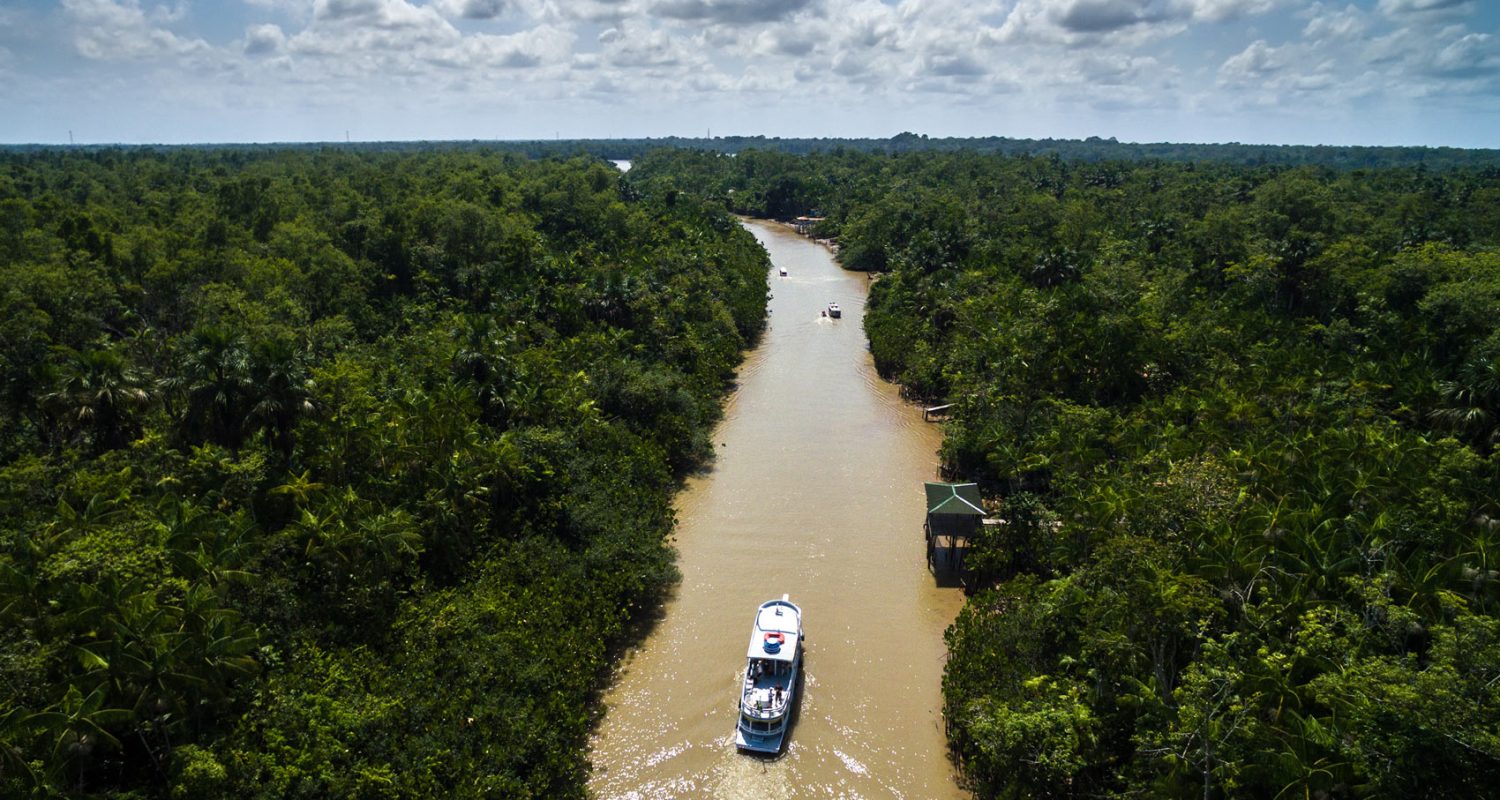
Furthermore, through the Rio Negro and Vale do Ribeira Programs, ISA has contributed to the socioeconomic development of the surrounding region as well as sustainable interactions with the local environment. The main objective of the Rio Negro Program (PRN), for one, is to create the conditions for sustainable development in the Rio Negro River Basin, located in Northwest Amazonia. The region is home to both indigenous peoples and a mosaic of forest formations, partially protected by indigenous territories and environmental conservation units. Another aim of the program is to encourage sustainable development of communities in the Middle and Upper Rio Negro through partnership with local indigenous organizations, other nongovernmental organizations, and governmental agencies.
The Vale do Ribeira Program, meanwhile, aims to “contribute to building a regional development model based on social and environmental wealth of the Atlantic” (ISA). By proposing and implementing sustainable development projects, the program generates income and both conserves and improves the quality of life of traditional communities in the southeastern state of São Paulo and eastern Paraná State.
Thus, like many NGOs of its kind, ISA has furthered the growth of a more socially and environmentally just civilization by taking into account the needs of the local population as well as economic reality in which the nation operates.

 Clara Rabbani | University of Chicago
Clara Rabbani is a rising sophomore at the University of Chicago, majoring in Anthropology with a minor in Urban and Environmental Studies. She is passionate about poetry and is the editor of “The World is Waking Up: Poetry of Resistance from Youth Around The World”. With a Brazilian and Iranian background, she is also fascinated with the diversity of human cultures and their intersection with environmentally sustainable practices. She will be collaborating as the Environmental Writer for Brazil.

