


Binational Plan to Clean the Tijuana River
Authorities from Mexico and the US agree on a binational working plan for the sanitation infrastructure of the Tijuana River. The new infrastructure will provide the conduction, treatment, disposal and, where appropriate, the reuse of wastewater to reduce pollution in the Tijuana River basin.
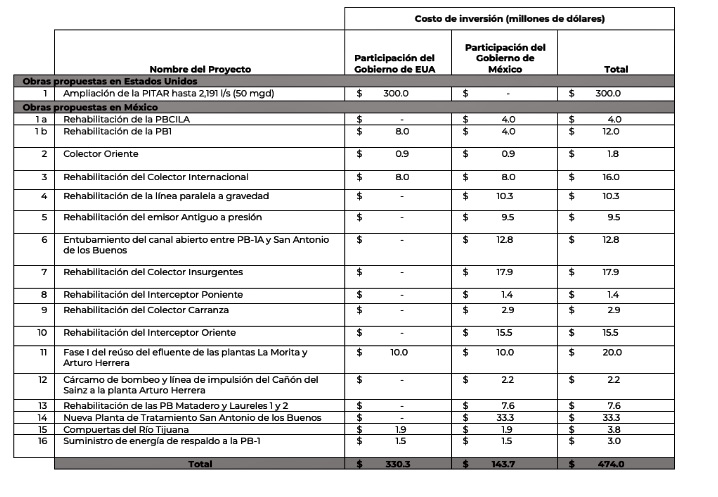
Mexico and the US celebrate the entry into force of Act 328 of the International Boundary and Water Commission (CILA). The 17-water infrastructure and border sanitation projects will benefit residents on both sides of the border. Mexico and the United States will invest 474 million dollars in sanitation infrastructure for the Tijuana River.
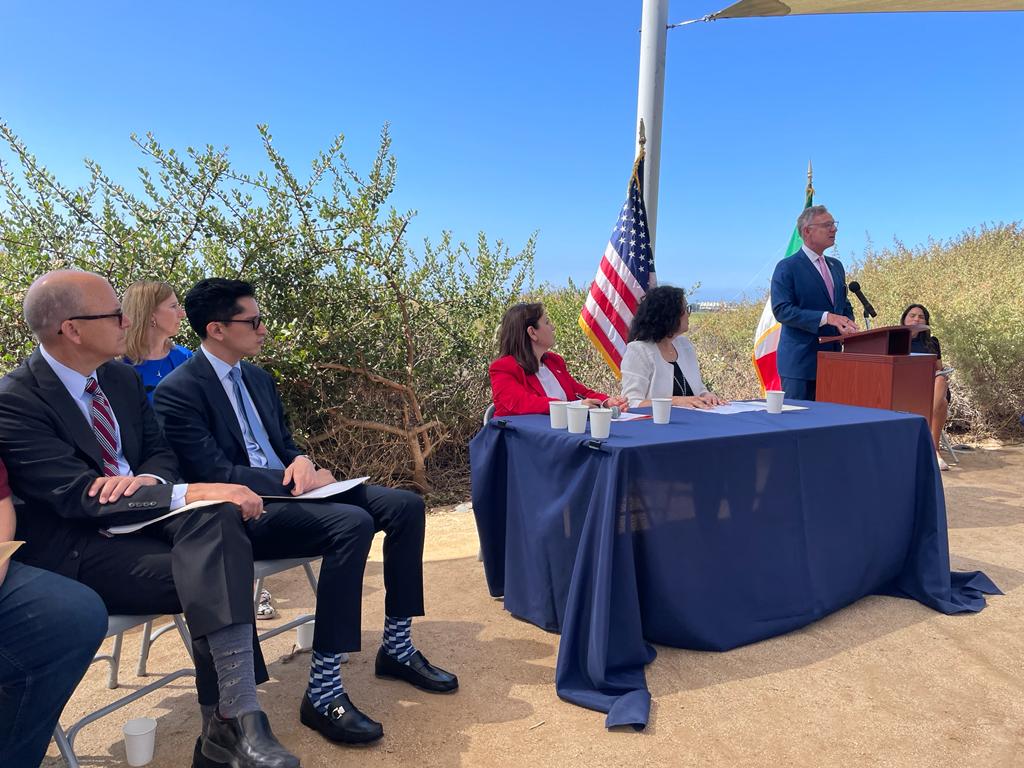
On behalf of the Government of Mexico, the head of the North American Unit of the Ministry of Foreign Affairs (SRE), Roberto Velasco Álvarez, participated on Thursday together with the United States Consul General in Tijuana, Thomas E. Reott, in the presentation of the documents approving Act 328 of the CILA, “Sanitation Infrastructure Projects in Tijuana, Baja California – San Diego, California, for immediate implementation and for future development.”
The meeting was held in the amphitheater of the Tijuana River Estuary Visitors Center, located in the city of Imperial Beach, California. The Tijuana River National Estuarine Research Reserve is one of 30 Reserves in the United States. The center preserves, protects, and manages the natural and cultural resources of the Tijuana River Estuary by creating opportunities for education and research while promoting public access for recreation throughout the Reserve.
The communiqués were signed notifying the entry into force of Act 328. Among the projects, are the expansion of the International Wastewater Treatment Plant (PITAR) on the US side and the rehabilitation of pumping plants, collectors, emitters and interceptors on the Mexican side; as well as the complete renovation of the San Antonio de los Buenos Wastewater Treatment Plant in Baja California, communicated the Secretary of Foreign Relations of Mexico.
With this agreement, the governments of Mexico and the United States commit to work in coordination in the planning, design, construction and rehabilitation of the existing wastewater infrastructure in the Tijuana, Baja California – San Diego, California region, including along the Pacific Ocean.
The new infrastructure will provide the conduction, treatment, disposal and, where appropriate, the reuse of wastewater to reduce pollution in the Tijuana River basin, as Mexico and the United States, continue working together to safeguard the environment along the border, stated the Government of Mexico.
Also participating in the event were the Mexican and American commissioners of the CILA, Adriana Reséndez and María Elena Giner, respectively; the director of Border Affairs of the SRE, Pablo Gálvez; the manager of Engineering and Binational Water Affairs of Conagua, José Gutiérrez; the consul general of Mexico in San Diego, Carlos González, and the mayors of the cities of Imperial Beach, San Diego and Chula Vista, California.
Priority projects to be implemented with the entry into force of Act 328 of the CILA
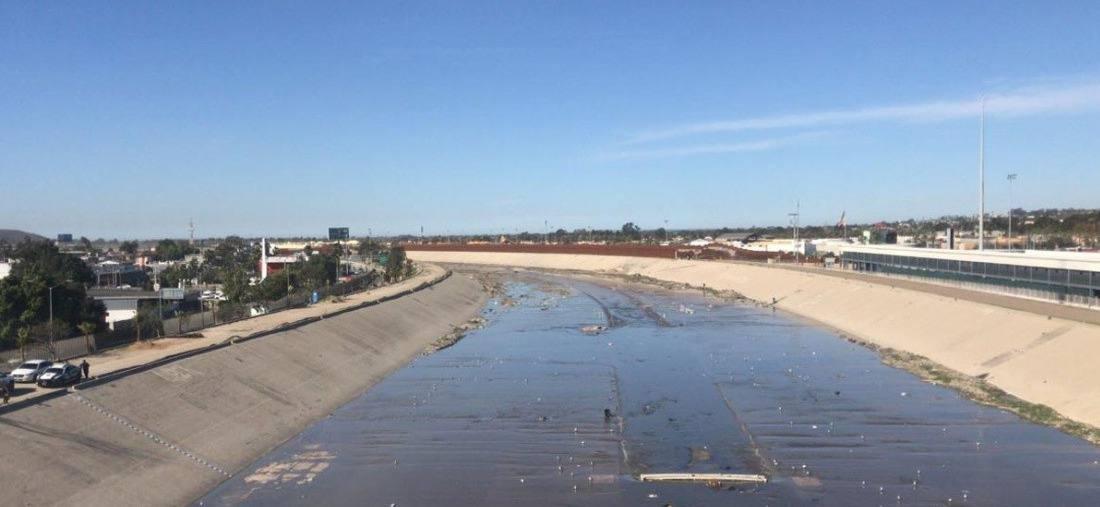
In February, 2021, El Sol de Tijuana published a report, titled, “Who owns the Tijuana River water and who needs it most? The Mexican government says the water is theirs, at least before it crosses the border.” The article smartly addresses boundaries, usage, waste and potential of water that is shared by two nations, especially as the region is affected by drought, amplified by global warming.
“On stormy days, up to a billion gallons of water from the Tijuana River spill into San Diego. None of that water is reused in either city as it is contaminated by sewage on the Mexican side. If successfully recycled it would be valuable,” says the press.
The report, made possible thanks to the support of the Pulitzer Center and the Water Desk of the University of Colorado at Boulder, and a collaboration of Voice of San Diego and Tijuanapress.com, suggests that water is being wasted at a time that the American Southwest, is experiencing high water uncertainty due to climate change.
“The occasionally mighty river draws the attention of private sector companies that want the water, to treat it and sell it to the government or other buyers,” says El Sol de Tijuana.
“We treat it, we throw it away, we treat it again, we spend 100 million pesos (about five million dollars) a year,” said Rigoberto Laborín Valdez, Undersecretary of Sanitation for the Tijuana State Public Services Commission to El Sol de Tijuana.
“But Mexico is not claiming it,” says the press. “Instead, the treated water goes to the Pacific Ocean through a five-mile pipeline at the bottom of the sea.
Private water recycling companies evaluate the current use as a waste: “Once the water is treated and cleaned, it’s worth $1,000 to $1,500 per acre-foot. Garbage becomes treasure,” said Kurt Tetzlaff, president of WinWerks, a San Diego company that launched a project to recycle sewage from the river. When Mexican water reaches US soil, its citizenship changes to California water, explains El Sol de Tijuana.
“The muddy Tijuana River symbolizes a shared problem and what happens when politics does not take care of the quality of life on both sides. It’s a problem that can only get worse as climate change progresses, bringing sudden and strong storms and more unpredictable heat waves and droughts,” says the press.
Yesterday’s meeting between Mexico and the U.S. raised positive expectations on bilateral agreements for improvements to the Rio Tijuana. Marcelo Ebrard shared the excitement on Twitter: “The Tijuana River begins sanitation through a Mexico-U.S. collaboration. Good news for the border.”
For his part, the mayor of San Diego also expressed his enthusiasm for the partnership: “A big day of our binational region! The signing of Act 328 by the US & Mexican governments establishes a shared path forward on $500M of infrastructure improvements on both sides of the border to finally comprehensively address Tijuana River Valley pollution. Thanks to all involved.”
 Soledad Quartucci | Latina Republic
Dr. Soledad Quartucci is the founder and CEO of Latina Republic, a 501(C)3 California-based nonprofit organization. Latina Republic is committed to improving the diversity and professional development of storytellers in the media industry as representation matters and affects the stories we tell. Latina Republic makes space for and empowers unheard voices and trains the next generation of leaders in the U.S.