

Mothers without Freedom. President Petro of Colombia enacts a law so that 5,000 imprisoned women, who are mothers head of the family, can be reunited with their children.
“Today we celebrate the new penal alternative law for women heads of the family. Before arriving in prison, the women lived in conditions of inequality, vulnerability and poverty. For the most part their families depended on them. And that often led them to commit a crime. When a woman goes to prison, not only does she lose her freedom, but her family is even more vulnerable than before. For example, older children take care of their siblings and then supporting the family becomes even more difficult. This new law is important because it will allow women to pay for their sentences with community service. Thus, neither they nor their families will suffer the impacts of jail.
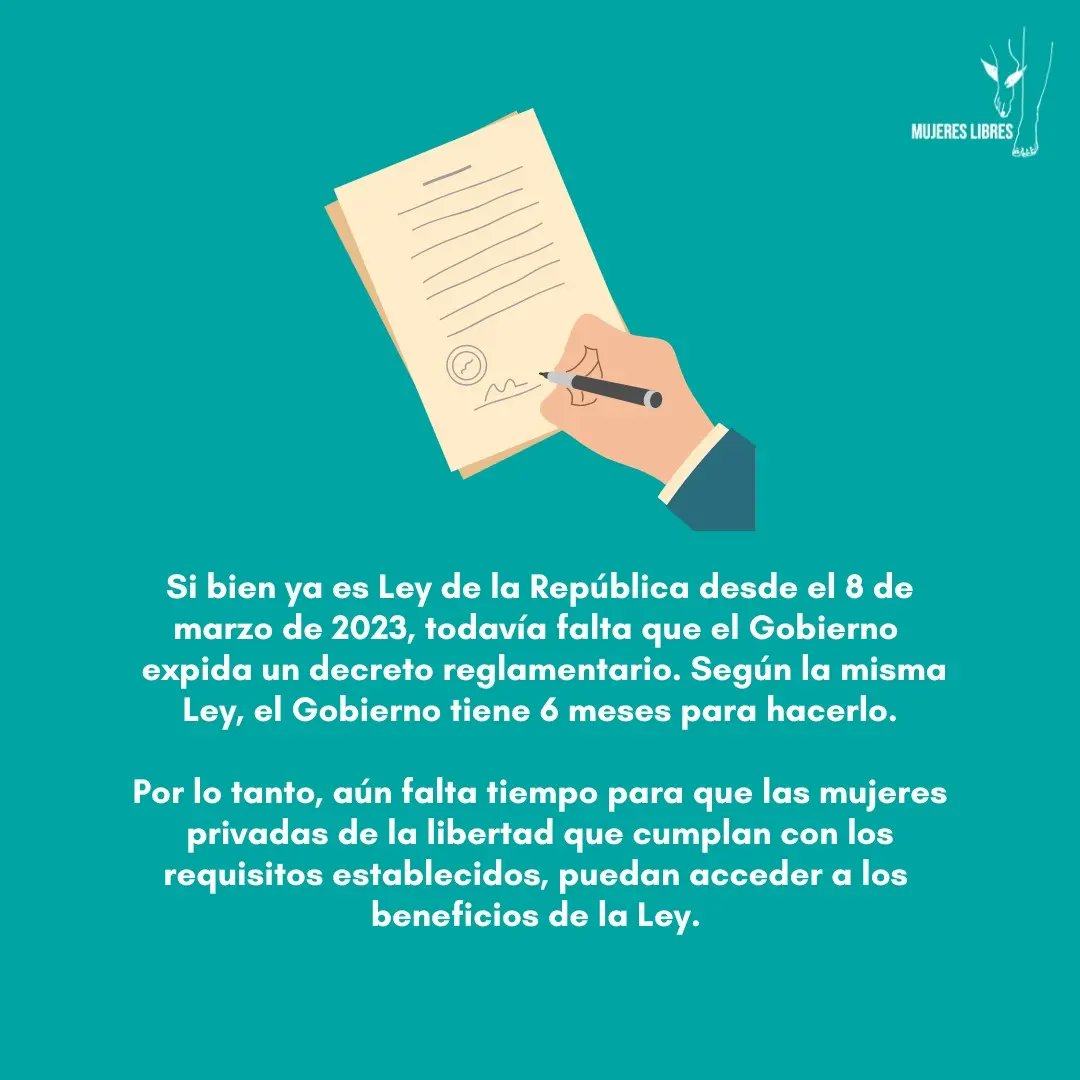
After many obstacles, the law for women heads of households was finally signed by President Gustavo Petro and is now a law of the republic, however, for it to be applied, a regulation is still needed. The national government has 6 months to issue a decree that regulates the way in which these services will be provided to the community and through which women will be able to access this service. The decree will outline which state or non-profit entities may provide this service. Once this regulation is approved, thousands of women convicted of minor crimes such as theft and drug crimes will be able to benefit from the new law to pay for their sentences outside of prison.
Women who want to take advantage of this law must demonstrate that they committed the crime due to conditions of vulnerability that affected their ability to support the home. That is why this law will apply to women who are in prison today and also to those who now face criminal proceedings. Thus, with a criminal policy that adopts a gender approach, it will be possible to reduce prison overcrowding in women’s prisons and reduce violations of human rights.” Mujeres Libres de Colombia and De Justicia.
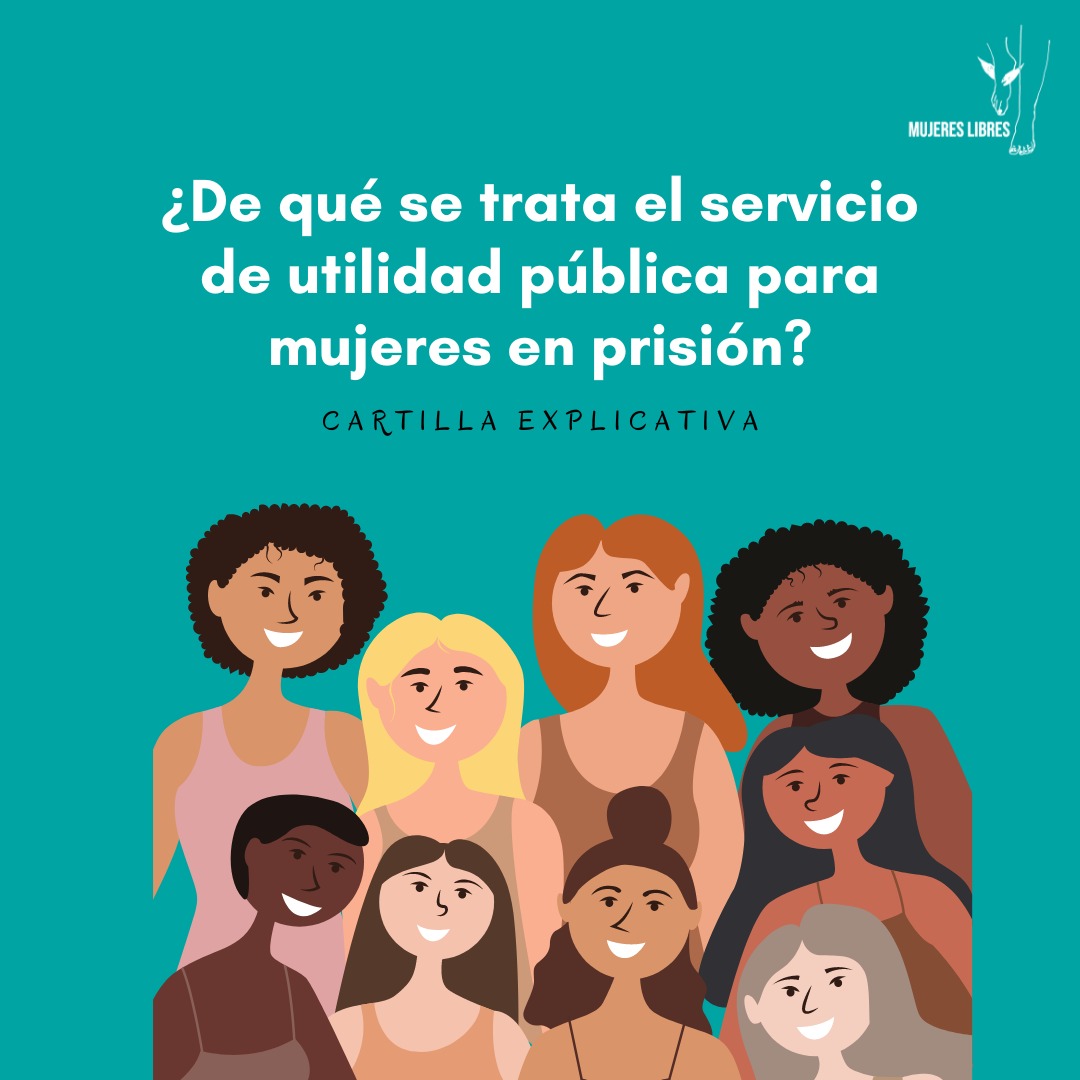
Quibdó, March 8, 2023.
President Gustavo Petro sanctioned this Wednesday in the capital of the department of Chocó the law that replaces, with a gender approach, the prison sentences of nearly five thousand convicted women who are heads of households and are in marginal conditions.
“This is the bill that I voted for as a congressman in the First Committee of the Senate and that now, what a paradox, I did not know it at that time, as President of the Republic I sign to make it into law,” said the Chief of State in the act of sanctioning the norm, held at the Quibdó Police Command.
The law passed to presidential sanction in July 2021, but was challenged. Therefore, it went to the examination of the Constitutional Court, which ruled through judgment C-256 of July 6, 2022, rejecting the objections and returning the text of the bill to the House of Representatives, which forwarded it again to the Presidency of the Republic for the respective presidential sanction.

President Petro explained that the objective of the law is to avoid children turning into a life of crime:
“If women continue to be imprisoned and the children are left without their mothers, these children will grow up without affection and many, in the future, will become criminals. That is the logic of violence and exclusion, a kind of suicide siphon. Well, here, we are cutting that chain so that these children can have their mother.
Petro states that here lies the importance of the sanctioned norm, “because it initiates another way of doing things.”
“We wanted to sign the law on (International) Women’s Day” and indicate that “perhaps, the woman in prison is the most excluded of all, because she suffers all the exclusions that all women suffer together,” said Petro.
In that sense, Petro added, it is necessary to “lead society to higher levels of freedom.”
“It is not by imprisoning societies that we save ourselves from violence;” therefore, “it is in freedom where societies are built,” declared Petro.
In the same way, the president highlighted the importance to continue loving children, despite a criminal past:
“If the incarcerated can be together with their children, freed, that love can be produced and not be interrupted by chains; Removing the chains from love will make us a better society, which can begin to build equality between women and men if we release women from jail.”
Rebuild the social fabric
The Minister of Justice, Néstor Osuna, was present at the event, who indicated that the norm will apply only to women who have sentences of less than 8 years. In exchange, they must provide unpaid public utility services that benefit the community and rebuild the social fabric that was affected by the commission of the crime.

The objective of the norm, stressed the official, is the well-being of children and adolescents, of vulnerable families and aims to promote the social inclusion of women heads of households in a state of marginalization. In addition, it responds to the historical unconstitutional state of affairs of the penitentiary system.
The alternative measures to imprisonment contemplated by the law favor the reduction of recidivism and avoid the breaking of social and family ties, and the generation of stigma and discrimination.
5.000 mujeres saldrán de la cárcel 5 días a la semana para cuidar sus hijos. Recibirán una renta ciudadana del estado para ese fin. Creo que así se construye una mejor sociedad. https://t.co/XfYylxOEB8
— Gustavo Petro (@petrogustavo) March 18, 2023
Excerpts of President Petro’s Speech
“Where can the most excluded women in Colombia be? Well, almost all women are excluded, right? In a patriarchal society, says feminism.
Of course, in Colombia there is a patriarchal society, heir to other patriarchal societies that arrived here and that means that women are in a condition of subordination to men in all fields, from the corner of a house to political power in Colombia.
The equality of women and men has become a struggle that has concrete results in Colombia. It is long, it is difficult, it is complex.
And of that totality of excluded women, which is the most excluded of all? Those who are in poverty, undoubtedly. Poverty is female today in Colombia. Most of the poor people in this country are women, and within that group there is still poorer subgroup.
…The imprisoned woman is the most excluded of all, perhaps because she suffers all the exclusions together. Those that all women suffer, those that poor women suffer, those that women without freedom suffer. Having women mothers without freedom, is like leading society to higher levels of crime.
Let’s break that chain. That these children have their mother and hug each other, and affection arises, and that affection is profoundly healing because when that first childhood is built, in the midst of affection, they will certainly not become criminals.
That is why this bill for five thousand women is so important. Because it initiates another way of understanding things: that the recluse gets together with her children. Released. That love can be produced and not be interrupted by chains. That removing those chains and that love enters is what allows us to be a better society. That we can begin to build equality between women and men if we release women from jail.
Five thousand mothers are going to reunite with their children. This is the Bill that I voted for as a congressman in the First Committee of the Senate and now, what a paradox! -I did not know it at the time-, as President of the Republic I affirm so that it becomes a Law of the Republic,” President Gustavo Petro.
Testimonials from women detainees from inside Colombian jails
Entre sus aportes y peticiones: alimentación digna, derecho a la visita, humanidad de la guardia, situación de la sindicadas, surtir el expendio, mejorar las actividades ocupacionales, educación digna, entre muchos. pic.twitter.com/OxX0RDIe2C
— Mujeres Libres Colombia (@MujeresLibresCo) February 24, 2023
 Dr. Soledad Quartucci | Founder
Latina Republic is a reporting, research, and advocacy nonprofit organization advancing human rights in the Americas. Latina Republic fills the void in coverage of urgent social, political, environmental, economic and gender inequities affecting the Americas. Latina Republic’s mission is to inspire humane policies that fortify relations between the U.S. and Latin America. Our work is guided by peaceful international relations focused on solidarity. We believe asylum and seeking refuge is a human right. Our work envisions a world where neighboring countries are seen as partners, and immigrants and refugees don’t have to live in the shadows. Our goal is to advance peaceful dialogue by highlighting local perspectives that don’t make it into the mainstream news. Our vision is that this knowledge will assist all stakeholders in solving regional problems while strengthening ties.

