Guatemalan Elections
On June 25, 2023, Guatemala conducted the initial round of national elections. No presidential or vice-presidential candidate secured 50 percent or more of the vote.
Consequently, the top two candidates from the first round, Sandra Torres and Bernardo Arévalo, will face off in a second round of voting scheduled for Sunday, August 20, 2023.
The election season commenced in late March 2023 and will extend until the conclusion of the second round of voting.
- A questionable move by the Prosecutor’s Office aimed to remove Arévalo and his party from the second round.
- The attempt to disable the Movimiento Semilla generated denunciations of a coup d’état and spread confusion.
- Guatemalans decided that Sandra Torres and Bernardo Arévalo will contest the second round in upcoming elections.

European Union Election Observation Mission Guatemala 2023
Upon receiving an invitation from the Supreme Electoral Tribunal (TSE), the European Union dispatched the EU Election Observation Mission (EU EOM) for the general elections in Guatemala.
In a statement by the EU, the European Union indicated that deployment of the EU Election Observation Mission to Guatemala demonstrates the EU’s unwavering commitment to supporting democracy and upholding the rule of law. It also serves as a crucial means to foster inclusive and transparent elections, declared the EU. Heading the EU EOM Guatemala 2023 is Chief Observer Jordi Cañas Pérez, a member of the European Parliament.
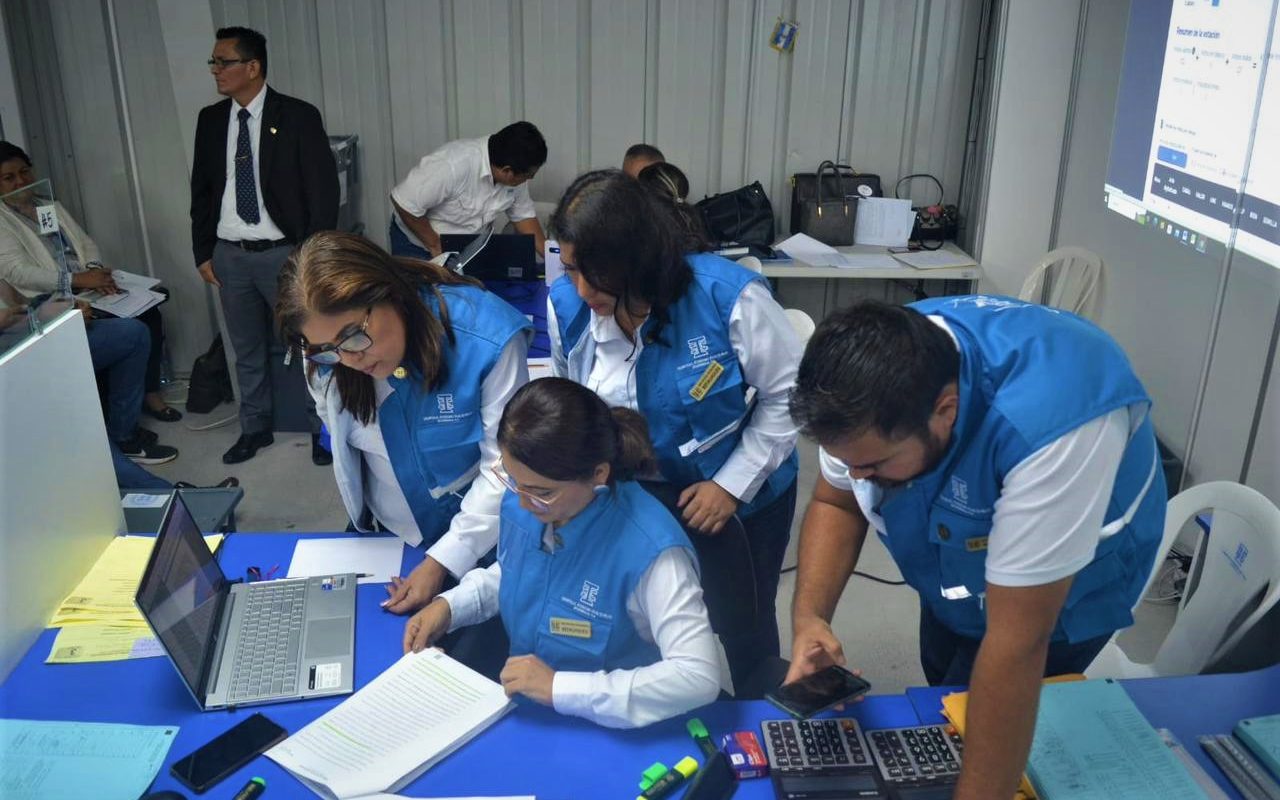
The Core Team of the EU EOM comprises 12 election experts, who have been present in Guatemala City since mid-May. Additionally, 40 Long-Term Observers (LTOs) were dispatched across the country to closely monitor the electoral campaign and the TSE’s activities in the field.
Closer to the election-day, 44 Short-Term Observers (STOs) joined the mission. Furthermore, a delegation from the European Parliament and Locally-Recruited Short-Term Observers from EU Member States accredited in Guatemala were listed as part of the mission on Election Day.
The EU EOM is committed to remaining in the country until the entire electoral process is completed, providing continuous observation and oversight.
The EU EOM conducts a comprehensive analysis of the electoral process, based on long-term observation. Observers meet with election administration, political parties, candidates, civil society organizations and the media, among others. They observe:
- The legal framework and its implementation;
- The political context, the election campaign and the campaign finance;
- The work and the impartiality of the electoral administration;
- The use of election technology;
- The respect for fundamental freedoms and civil and political rights;
- The participation of women,
- The participation of indigenous peoples, persons with disabilities and the LGTBI community;
- The role of public institutions and civil society;
- The conduct of the media and the online content related to elections, and their coverage of the elections;
- The voting, counting, tabulation and the announcement of results;
- The complaints and appeals process and the post-electoral environment.
The European Union uses an established methodology for observing elections. Observers do not interfere in any way in the electoral process, including by offering advice or assistance. The EU EOM does not legitimize the electoral process nor does it validate the election results.
All EU election observers are bound by a Code of Conduct that ensures their neutrality and impartiality. The EU has endorsed the Declaration of Principles for International Election Observation, commemorated in 2005 at the United Nations.
EU Election Observation Missions are financed exclusively from European Union budget.
Following the EU election observation methodology, the mission will issue a preliminary statement and hold a press conference in Guatemala City after election day.
The final report, which will include a set of recommendations for future electoral processes, will be presented and shared with stakeholders after the finalizing of the entire electoral process.
The Right to Free Elections
The European Union has called on Guatemalans to exercise their right to “choose freely” and has emphasized the need for the electoral campaign to be conducted “without any interference.”
The EU’s Electoral Observation Mission in Guatemala has expressed concerns about potential interference in the electoral process, particularly regarding the legal actions taken by the Public Ministry (MP) in relation to the Movimiento Semilla party’s creation.
Manuel Sánchez, the deputy head of the EU mission, stressed the importance of a free electoral campaign without any undue influence, referring to the ongoing investigation by the Prosecutor’s Office.
Guatemala’s Prensa Libre argued “the actions taken by the MP and Judge Fredy Orellana have created uncertainty, potentially impacting Semilla, Bernardo Arévalo’s party, ahead of the run-off against Sandra Torres, the candidate of the National Unity of Hope.”
“Esperamos que los ciudadanos, que ya demostraron su firme compromiso con la democracia el 25/6, puedan escoger libremente y sin interferencias entre los dos candidatos que han pasado a la segunda vuelta presidencial” – jefe adjunto de la MOEUE #Guatemala #EleccionesGT2023 pic.twitter.com/vTEeozBgvD
— MOE UE Guatemala 2023 (@moeUEgt2023) July 28, 2023
Prensa Libre declared that “Prosecutor Rafael Curruchiche alleges that Semilla committed irregularities during its formation in 2017, but the international community views it as a pretext to disqualify Arévalo from the race.”
The headquarters of Semilla were searched, and a party leader faced arrest and chose to go into exile.
As tensions rise, the Secretary-General of the Organization of American States (OAS), Luis Almagro, is scheduled to visit Guatemala on Monday.
The EU EOM will release a report after August 20, but their presence will continue in Guatemala to monitor the process of officially declaring the results, including any challenges or legal actions that may arise.
The second round of elections is scheduled for August 20, and it will feature the presidential candidates Sandra Torres and Romeo Guerra from the UNE party, and Bernardo Arévalo and Karin Herrera from the Movimiento Semilla.
Conversé con los candidatos @SandraTorresGUA y @BArevalodeLeon para reiterar el apoyo de ?? al derecho de los guatemaltecos de elegir a sus gobernantes por medio de unas elecciones libres y justas. Continuaremos trabajando con el sector privado y la sociedad civil de Guatemala,…
— Brian A. Nichols (@WHAAsstSecty) July 27, 2023
Assistant Secretary for Western Hemisphere Affairs for the U.S. Department of State, Brian A. Nichols, recently reached out to Sandra Torres and Bernardo Arévalo to reaffirm the United States’ support for the electoral process in Guatemala.
Through his Twitter account on July 27, Nichols stated that he had spoken with the presidential candidates to emphasize the United States’ backing for the right of Guatemalans to freely elect their leaders through fair and transparent elections.
He also expressed their commitment to collaborating with the Guatemalan private sector, civil society, international partners, and the Organization of American States to support the electoral process.
Coincidimos. En el fortalecimiento al derecho de los guatemaltecos a elegir a sus autoridades en elecciones libres transparentes y justas. La democracia y la participación ciudadana son fundamentales para la estabilidad del país. ????? https://t.co/1c3lC6vtZ1
— Sandra Torres (@SandraTorresGUA) July 28, 2023
In response to the communication with the US official, Sandra Torres also posted on her Twitter account, expressing agreement on reinforcing the right of Guatemalans to choose their authorities in elections that are free, transparent, and fair. She emphasized that democracy and citizen participation are crucial for Guatemala’s stability.
Sandra Torres, representing the National Unity of Hope (UNE), and Bernardo Arévalo, from the Movimiento Semilla, will be competing in the presidential election on August 20.
The Fight to Uphold Democracy
The recent involvement of the Public Ministry, which sought to suspend one of the two parties that made it to the second round of elections, has sparked widespread reactions both within and outside Guatemala.
Following the first round of voting on June 25, Sandra Torres from National Unity and Bernardo Arévalo from Movimiento Semilla emerged as the top candidates.
The Organization of American States, the United States, and the European Union expressed concerns about serious risks to Guatemala’s democracy and called on the Giammattei government to uphold democracy, the rule of law, and the electoral process in the country.
The attempt to influence the electoral process through the request to suspend the legal status of one of the finalist parties for the second round triggered broad rejection from various sectors of Guatemalan society. Business entities, labor unions, scientists, universities, press associations, constitutional experts, the Episcopal Conference, and citizens exercised their rights to freedom of expression, petition, and action and raised their voices against the interference.
Amidst this situation, the Supreme Electoral Tribunal, acting as the highest authority in electoral matters upheld the principle of legality, and declared the validity of the presidential and vice-presidential election on June 25.
The international community is following the current electoral process in Guatemala, and expressing support for the protection of democratic institutions in the region, emphasizing the need for fair and transparent electoral processes.
International organizations have highlighted the importance of respecting the popular will expressed at the polls as Guatemala nears its second round of elections.
Details on the Political Proposals
 Soledad Quartucci | Founder
Latina Republic is a reporting, research, and advocacy nonprofit organization advancing human rights in the Americas. Latina Republic fills the void in coverage of urgent social, political, environmental, economic and gender inequities affecting the Americas. Latina Republic’s mission is to inspire humane policies that fortify relations between the U.S. and Latin America. Our work is guided by peaceful international relations focused on solidarity. We believe asylum and seeking refuge is a human right. Our work envisions a world where neighboring countries are seen as partners, and immigrants and refugees don’t have to live in the shadows. Our goal is to advance peaceful dialogue by highlighting local perspectives that don’t make it into the mainstream news. Our vision is that this knowledge will assist all stakeholders in solving regional problems while strengthening ties.