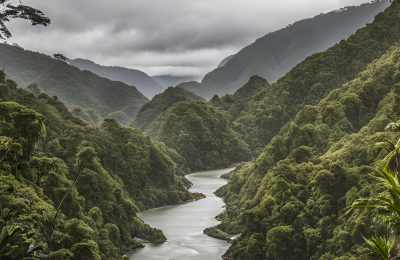


Darién is not a Route
Panama Initiates “Darién is not a Route. It is a Jungle” Campaign in Response to Irregular Migration Crisis via Darién
Irregular migration has escalated into a pressing national security concern, declared the Presidencia of Panama in a statement. Concrete measures to curtail irregular migration will be unveiled this week. “We have surpassed our capacity to provide assistance,” emphasized the Minister of Security in a press release.
Panama, August 23, 2023. – The surge in irregular migratory movement through the Darién jungle took center stage during a press conference following the conclusion of the Cabinet Council on Wednesday, August 23. At the event, an international media campaign titled “Darién is not a route. It is a jungle” was introduced.
Minister of Security Juan Manuel Pino elucidated the substantial impact posed by irregular migration through the Darién jungle. “Despite our strenuous efforts and dialogues with the involved nations, we have been unable to stem the tide,” conveyed the minister. Presently, a daily influx of 2,500 to 3,000 individuals persists—a situation that has overwhelmed our resources.”
“Panama has responsibly and humanely addressed this situation,” stated Minister Pino. He added that over 60 million dollars have been allocated to support the needs of those entering the country irregularly.
Las crecidas de los ríos y las constantes lluvias que se registran en la selva de #Darién, a menudo ocasionan accidentes que acaban con la vida de quienes realizan la peligrosa travesía.#DariénNoEsUnaRuta #MigraciónPanamá pic.twitter.com/ZeOrKh98kx
— Migración Panamá (@migracionpanama) August 25, 2023
Part of the strategic response involves the media campaign “Darién is not a route. It is a jungle,” aimed at dissuading irregular migration through Darién by exposing the challenges of this perilous journey.
Minister Pino emphasized that the Darién National Park is a natural treasure facing a severe environmental predicament.
El área protegida más grande de Panamá y Centroamérica, también sitio declarado como Patrimonio Mundial, está siendo afectado por el constante tránsito de migrantes, quienes a su paso dejan considerables cantidades de desechos que alteran el ecosistema de esta importante reserva. pic.twitter.com/09ZNKDROwo
— SENAFRONT PANAMÁ (@senafrontpanama) August 25, 2023
The Darién National Park holds the distinction of being a “World Heritage Site” and a designated Biosphere Reserve. These distinctions place a collective responsibility on Panama as a nation to uphold criteria for site protection, integrity, and safeguarding water resources, among other commitments, announced Panama’s government.
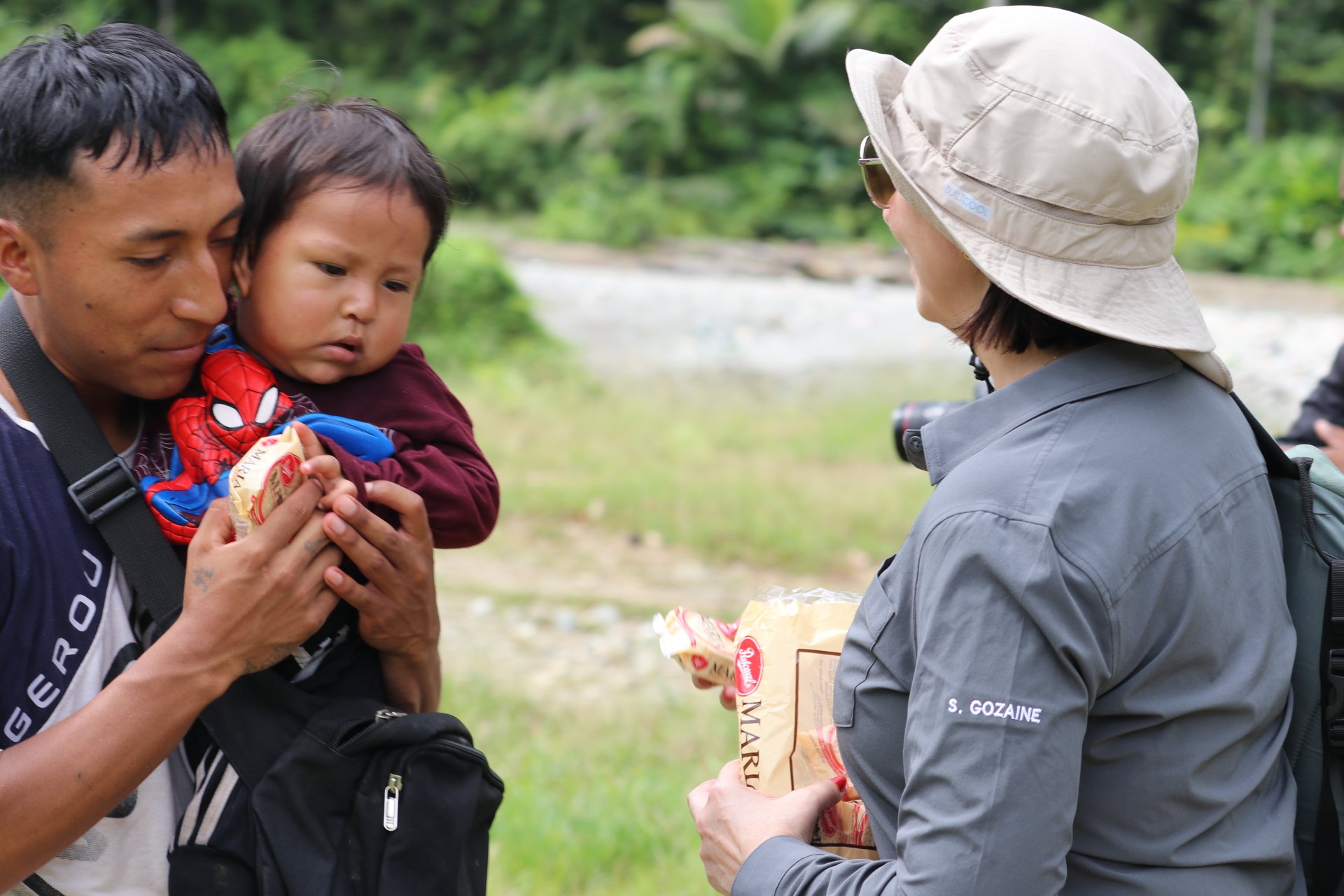
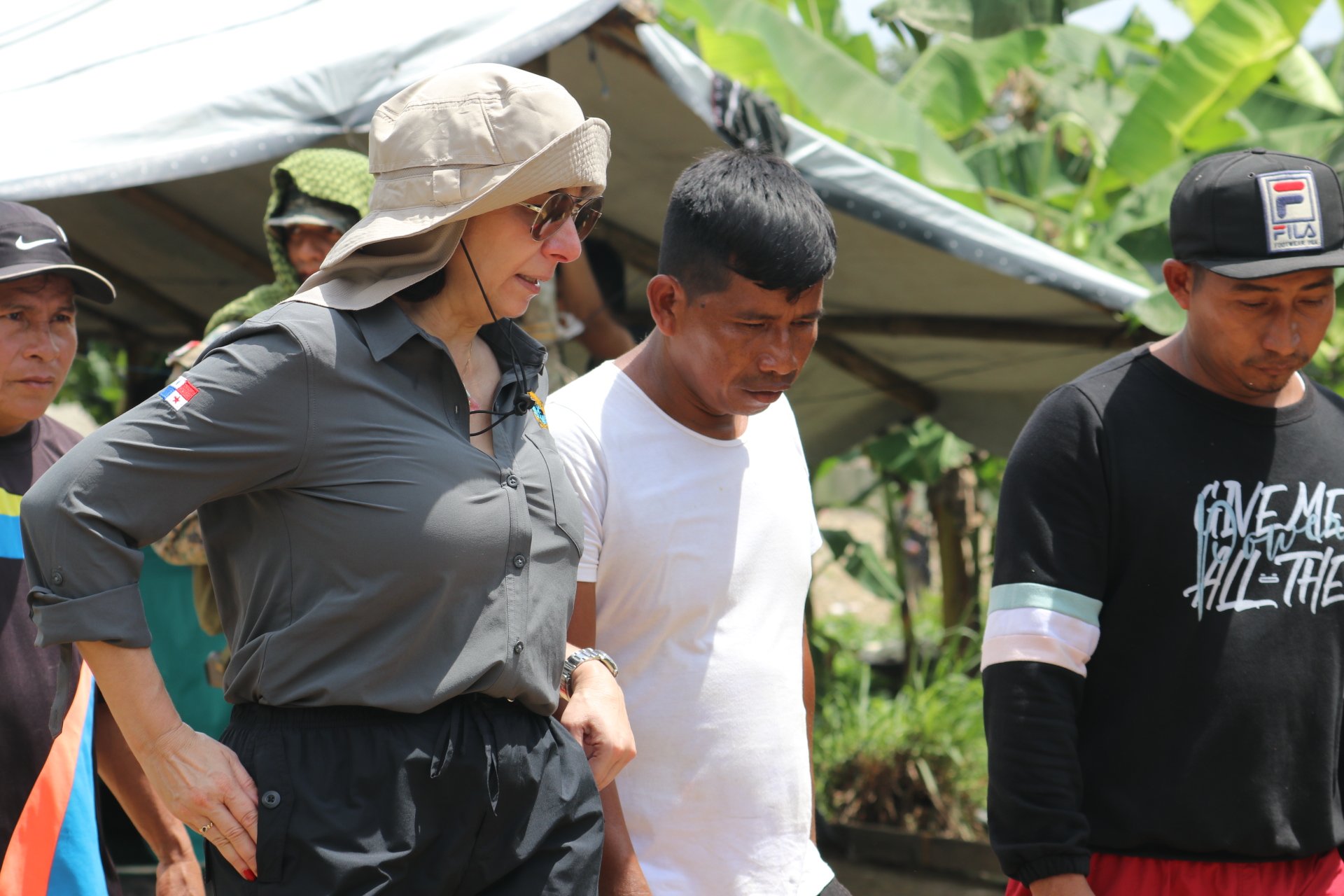
The Minister of Security stated that a delegation of 6 ministries will visit the region this week to make critical decisions. Director of the National Migration Service (SNM) Samira Gozaine expressed concern over the escalating number of children in shelters. She underscored the lack of humanitarian principles in permitting this irregular inflow of individuals, where women, children, and men face violence, theft, and violation. “We have been left on our own,” Gozaine lamented.
Gozaine pointed out that in 2016, 25,407 irregular migrants traversed the region, whereas this year has already witnessed over 308,000 individuals displaced through Darién, with projections that this number may swell to half a million.
Meanwhile, Director of the National Border Service (SENAFRONT) Jorge Gobea illustrated the significant toll on rivers. “Around 60 thousand tons of waste have been collected from the area; rivers are contaminated by refuse and human waste,” Gobea affirmed. He highlighted the adverse impact on indigenous communities, particularly Bajo Chiquito and Membrillo, in terms of health, food security, and overall well-being.
“Las capacidades han llegado a su límite, esto es insostenible”, advirtió La subdirectora de @migracionpanama, @misabelsaraviam, sobre la migración irregular. #DebateAbierto. #TReporta pic.twitter.com/AUOyPag3Ud
— Telemetro Reporta (@TReporta) August 27, 2023
Debate Abierto, a program of Telemetro Reporta
On August 27, Journalist Hugo Famanía hosted a segment for the program Debate Abierto featured in Telemetro Reporta. The program hosted a panel of experts to discuss the ongoing migration crisis in Panama. Maria Sarabia, Sub Director General of Panama’s National Migration Service, Rafael Rodríguez, president of the Association of Foreign and Naturalized Residents (ARENA), and Don Danilo Toro, a sociologist were invited guests of Debate Abierto (Open Debate), segment titled, “Migracion, Se Agrava La Crisis.”
To start the debate, Famanía inquired about the potential resolution of the migration crisis in the Darien region. He stated that if resolution to the migration crisis depends on the countries of origin’s resolving their own crisis, Panama may be facing a long-term challenge:
“In the countries of origin, the issues are deeply entrenched. Venezuela has been in conflict for decades. Ecuador is grappling with narco-state dynamics, and the challenges faced by Haiti are staggering. So, if we anticipate resolution from the countries of origin, are we essentially suggesting that a solution remains elusive, or is my assessment flawed?”
Analysis of the Migratory Crisis Segment begins at 1:17 minutes.
Maria Sarabia Sub Director General of Panama’s National Migration Service stated that Panama is currently confronting the most extensive scenario of international human mobility documented in history with a historical parallel observed during the Second World War.
“Within this context, while Venezuela is prominently in focus in South America, it’s crucial to recognize that amidst this irregular migratory surge, Panama is host to a diverse array of over 60 nationalities, spanning across the Americas and beyond,” said Sarabia, “Among these, five main nationalities stand out: Venezuela, Ecuador, Haiti, China, and Colombia. Alongside these, there are noteworthy numbers from India, Bangladesh, and even European nations entwined within this flux,” she continued.

Sarabia stated while it’s indisputable that Panama cannot address the underlying structural causes behind this phenomenon, it can certainly fortify its internal policies and augment its foreign relations strategy to alleviate the resultant impacts on Panama.
“We must acknowledge the significance of dealing with organized crime as a pivotal aspect of Panama’s response. This includes combatting the illicit trafficking of immigrants and the trade in human beings that exploits this very phenomenon,” said Sarabia.
For his part, Rafael Rodriguez, president of the Association of Foreign and Naturalized Residents (ARENA), expressed concern with the migration crisis by referencing how external measures have impacted migrant traffic:
“Our apprehension grows with the recent surge of foreign citizens entering through these regions. This situation is deeply concerning as many lives are lost during this journey. On October 15 of the previous year, President Nito Cortizo engaged in discussions with the Secretary of Security, seeking logistical assistance to address this crisis,” detailed Rodriguez.
“We witnessed the earnest commitment of the Secretary of State, in collaboration with the President, to extend a specific form of aid. On March 11 of this year, Panama welcomed the Secretary of State for Security for an emergency meeting involving Colombia, Costa Rica, and other regional nations.
The objective was to collectively devise strategies to mitigate the escalating migratory issue and establish a strategic approach to resolving this crisis. Several aspects were deliberated during these discussions. However, it’s notable that on April 11, the United States enacted measures under Title 42, limiting entry into the country,” explained Rodriguez.
“This subsequently triggered the reinforcement of Title 8, marked by stricter regulations. Yet, there has been no discernible progress. We’ve heard statements from the security minister suggesting that Panama has been left to contend with this alone.
This resonates significantly as a regional challenge. Colombia, Costa Rica, and other Latin American nations need to collaborate. In recent days, the phrase “Panama has been left alone” has been echoing,” expressed Rodriguez.
Maria Sarabia asserted the need to uphold respect for the policies of other States. “Firstly, let’s clarify that Title 8 in the United States has been in force consistently as their foundational immigration framework law. Title 42 was a sanitary measure, primarily aimed at border closure during the pandemic, with Mexico’s cooperation aiding the effort,” explained Sarabia.
“When the pandemic induced regional sanitary measures, Panama experienced a hiatus, and entry was restricted during this period, owing to the cooperation extended by other nations facilitating transit. In particular, discussions and cooperation with Colombia have been ongoing, including high-level meetings. While it’s true that the suspension of Title 42 took place on May 12, an earlier trilateral meeting on April 11 between the US, Colombia, and Panama failed to yield tangible outcomes. It’s crucial to note that Panama cannot compel a third nation like Colombia to act according to its preferences.
However, there’s been a surge in Colombian migrants within the flow. There’s an expectation for enhanced cooperation from international organizations, which, regrettably, has not materialized. Panama’s current perception of “we are alone” underscores the necessity to manage the issue domestically, to mitigate the repercussions and implications of irregular migration for our own citizens and the region at large,” said Sarabia.
Rafael Rodriguez added that “the United States recently allocated 16 million dollars to the International Organization for Migration (IOM) to aid in this situation.”
To which Sarabia clarified: “We must be clear. Similarly, in the previous year, it was reported—respectfully, with factual evidence—that Panama received 17 million dollars in 2022. However, this disbursement has not precisely aligned with Panama’s specific requests. Presently, the Foreign Ministry is collaborating with the Ministry of Security to address the issue of cooperation.
Hugo Famania asked for details on the figures received.
Sarabia explained that “in quantifiable terms, it doesn’t exceed a million in the areas we’ve requested. While they offer various forms of assistance such as technical training and consultation, when we voice the plea for aid, the response falls short. We’ve invested significantly, and currently, more than 70 million dollars—over 90% of the budget of the National Migration Service—have been allocated under standard conditions. Transit expenses alone total 83 dollars and 50 cents, focusing solely on the essentials.
It’s pivotal to recognize that despite these efforts, our capacities are stretched to their limits. The current situation is unsustainable. Furthermore, the resource allocation needs to be restructured in line with our national strategy.
It’s important to underscore that while international organizations are primarily focused on migrants, Panama also hosts a migrant population with Panama as their destination. This dual challenge compels us to convey the full scope to these international bodies, while emphasizing the impact on Panamanians.
Hugo Famania asked, “Some have suggested closing the border. Is this feasible?”
Maria Sarabia explained that from a technical standpoint, “it’s not feasible, since the border was never fully open. The Darien National Park stands as the largest natural barrier on the continent, acting as a protective shield. The notion of border closure necessitates collaboration from the respective neighboring State, much like the cooperation seen during the pandemic.
The challenge lies in the question of how to close a jungle. The jungle isn’t merely a transit route; it inherently forms a natural barrier. We cannot ignore the porosity of spaces between states. The presence of Darien, a world biosphere reserve, marks a protected region by international agreement. One side it is guarded by Senafront and the Panamanian State, while on the other is the Clan del Golfo—an organized crime group.
It’s the duty of the Panamanian State to protect life and property, especially when dealing with a heritage that not only belongs to Panamanians but to all of humanity—the Darien National Park. Addressing the environmental consequences, the contamination of water sources, and the infringement upon food security for our indigenous communities is paramount. This commitment underscores the actions Panama will undertake to mitigate this dire situation.The involvement of mafias in people trafficking is also a concern.”
Rafael Rodriguez added, “We’ve encountered a plethora of information regarding groups engaged in transporting individuals upon entering Darien to Panama. These organized groups arrange bus transportation to Costa Rica.
The individuals behind this business and transportation remain unknown. Border closure isn’t attainable for Panama due to its limitations. Panama lacks an army and the sophisticated infrared equipment possessed by the United States for detecting transiting individuals. The larger border region is also causing extensive damage to flora and fauna. The environment is marred by garbage, plastic bottles, clothing, footwear, and various items left behind, with nobody addressing this, not even Panama’s environmentalists.”
Infographics, Irregular Migration Panama 2023


Environmental Concerns
Vanessa Calviño of Senafront, visited the Darien National Park, a site designated as a World Heritage Site and Biosphere Reserve back in 1982, to report on the environmental impact of irregular migration in the jungle. Reporting from Cañas Blancas, Calviño said that along the turquoise river,
“We’ve encountered approximately 6 to 7 sources of contamination. Sadly, this has become an ongoing pattern due to the significant migratory flow that has impacted and polluted these once pristine areas – areas that are meant to be preserved and protected, such as Cañas Blancas, Bajo Chiquito, and other crucial points within the Darien National Park.”

Commenting on the tons of trash left behind, she stated, “This speaks volumes about the extent of the problem. It’s a problem that reflects decades of effort required to reverse this situation, – This isn’t news. Panama’s authorities have consistently raised concerns about this issue,” said Calviño.
To learn more visit:
Analisis Debate Abierto, Crisis Migratoria
Panama lanza Darien No es Una Ruta
 Soledad Quartucci | CEO/Founder, Latina Republic
At Latina Republic our mission is to foster regional understanding through stories, articles, interviews and reports that resonate from the heart of the Americas. Our primary objective is to encourage peaceful dialogue by shedding light on local perspectives often overlooked by mainstream media. We aspire to empower all stakeholders in resolving regional challenges by disseminating this valuable knowledge. We strive to capture the triumphs and struggles of everyday life in Latin America. Our stories track the evolution of social movements, amplifying the voices of those pioneering change.