

The Fight Against Human Trafficking in Bolivia
In 2023, 1,359 cases of human trafficking were recorded in Bolivia, a number higher than in 2022, reports La Razon. The figure corresponds to human trafficking and other related crimes, according to records from the Public Ministry.

Despite campaigns and operations, human trafficking continues to be a crime affecting the country. According to reports from the Public Ministry, 1,359 cases of this crime, as well as related offenses, were recorded in 2023.
“As we live in an increasingly interconnected world, we must be aware of the risks posed by online platforms and be alert to the sophisticated tactics used by criminals and criminal organizations to recruit victims. Therefore, it is important to encourage dialogue in our homes to prevent this scourge that mostly affects adolescents and women. That is why in the 2023 management, the General Prosecutor’s Office signed agreements to receive cybertipline reports in order to investigate cases related to connected crimes such as pornography,” said the Attorney General, Juan Lanchipa.
Of the 1,359 incidents recorded by the Public Prosecutor’s Office, related to offenses under Law 263 Against Trafficking in Persons, precisely 73%, or 989 cases, correspond to human trafficking; while 226 were related to pornography; pimping, 82; human trafficking, 45; and commercial sexual violence, 17.
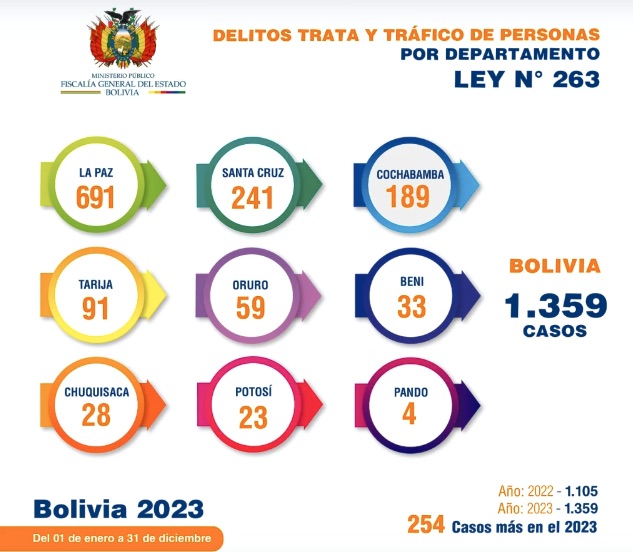
Regarding an analysis by departments, La Paz is the most affected with 691 cases recorded last year under Law 263; followed by Santa Cruz with 241; Cochabamba, 189; Tarija, 91; Oruro, 59; Beni, 33; Chuquisaca, 28; Potosí, 23; and Pando 4.
Campaigns and operations are carried out at both national and subnational levels to prevent these types of crimes. Unfortunately, the figures show that there is still work to be done to eradicate these crimes, which deeply impact the lives of their victims. Between 2022 and 2023, there is an increase in cases.

The data from the Public Ministry identified 1,105 of these crimes in 2022, while in the past year, this number increased to 1,359, representing 254 more cases. “This reality requires our collective attention and the commitment of all competent authorities to prevent, detect, and combat this crime that affects the integrity and dignity of the most vulnerable in our society. It also requires joining efforts to confront criminal organizations that are establishing a presence in our country,” emphasized Lanchipa.
Human Traffickers Use ‘Romance’ to Lure Their Victims
Social media has become the primary recruitment channel
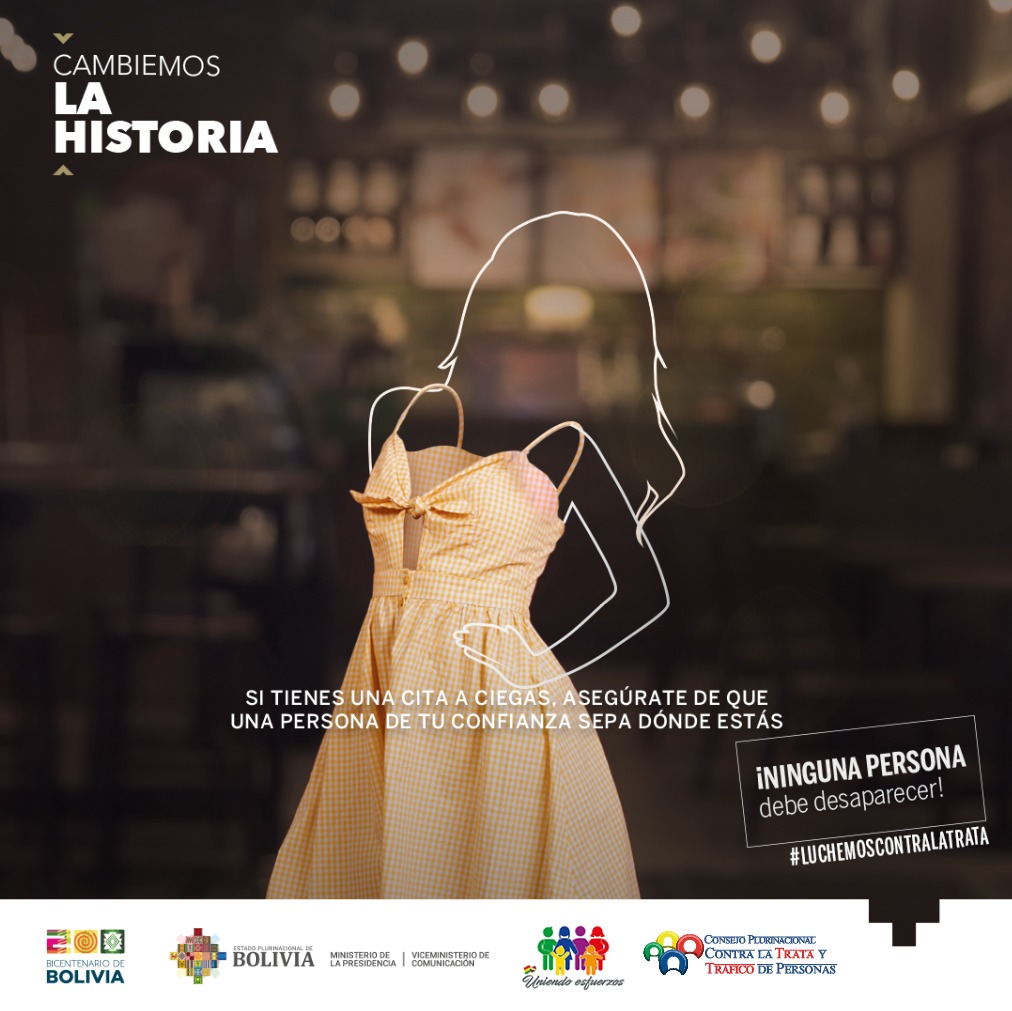
“Romance” has become one of the methods used by human traffickers to lure their victims. The lack of attention and communication between parents and children is exploited by those involved in this crime.
“There are many cases where the aggressor, the trafficker, has a romantic relationship with the victim, and they perceive it that way because they are unaware of guidance and education. Many of these cases and situations of vulnerability are exploited in that manner,” said Carola Arraya, the General Director of the Fight against Trafficking in Persons, Ministry of Government, in an interview on La Razón Radio.
She pointed out that, in addition to this, nowadays, for various reasons, particularly work-related, the home has ceased to be the primary place of protection, learning, and teaching for children and adolescents. As a result, a majority lack education and guidance on topics such as sexuality, putting minors in a vulnerable state.
Moreover, she noted that due to the COVID-19 pandemic, the use of social media has significantly increased for work, education, commerce, and even recreation. However, criminals have also chosen this avenue to commit criminal acts, including human trafficking.
Traffickers
Arraya explained that traffickers’ modus operandi involves identifying girls, adolescents, and even adult women facing economic difficulties, domestic violence, or living in a violent environment, or those with sentimental problems.
“For example, the economic factor makes potential trafficking victims, as the captor clearly identifies these individuals, young mothers who are the breadwinners of their families, offering them attractive employment with few working hours,” explained the director.
In the case of “romance,” the perpetrators, who are generally adults, target minors facing problems, offering them encouraging words that boost their self-esteem and confidence. They make them feel protected and take advantage of the opportunity to approach the potential victim with gifts, outings, gradually distancing them from their family and friends until they are enamored.
In these cases, the police have solved several instances where victims aged 14, 15, 16 years have been sexually exploited by their romantic partners.
The Law
In Bolivia, under Law 263 Against Trafficking in Persons, 14 purposes of the crime are identified and sanctioned by the law.
These include: Sale or other acts of disposition of a human being with or without profit; unlawful extraction, sale, or disposition of bodily fluids, cells, organs, or human tissues.
Reduction to slavery or analogous state; labor exploitation, forced labor, or any form of servitude; customary servitude; commercial sexual exploitation; forced pregnancy.
Sexual tourism; forced begging; servile marriage, free or servile cohabitation; recruitment of individuals for participation in armed conflicts or religious sects. Employment in criminal activities and unlawful biomedical research.
Bolivia will strengthen migratory control
Investigative bodies and those responsible for assisting victims must adhere to the principle of non-revictimization of trafficked individuals, reports Ahora El Pueblo.
The Deputy Minister of Justice and Fundamental Rights, César Siles, announced that one of the guidelines in the fight against human trafficking is to strengthen migratory control with neighboring countries.
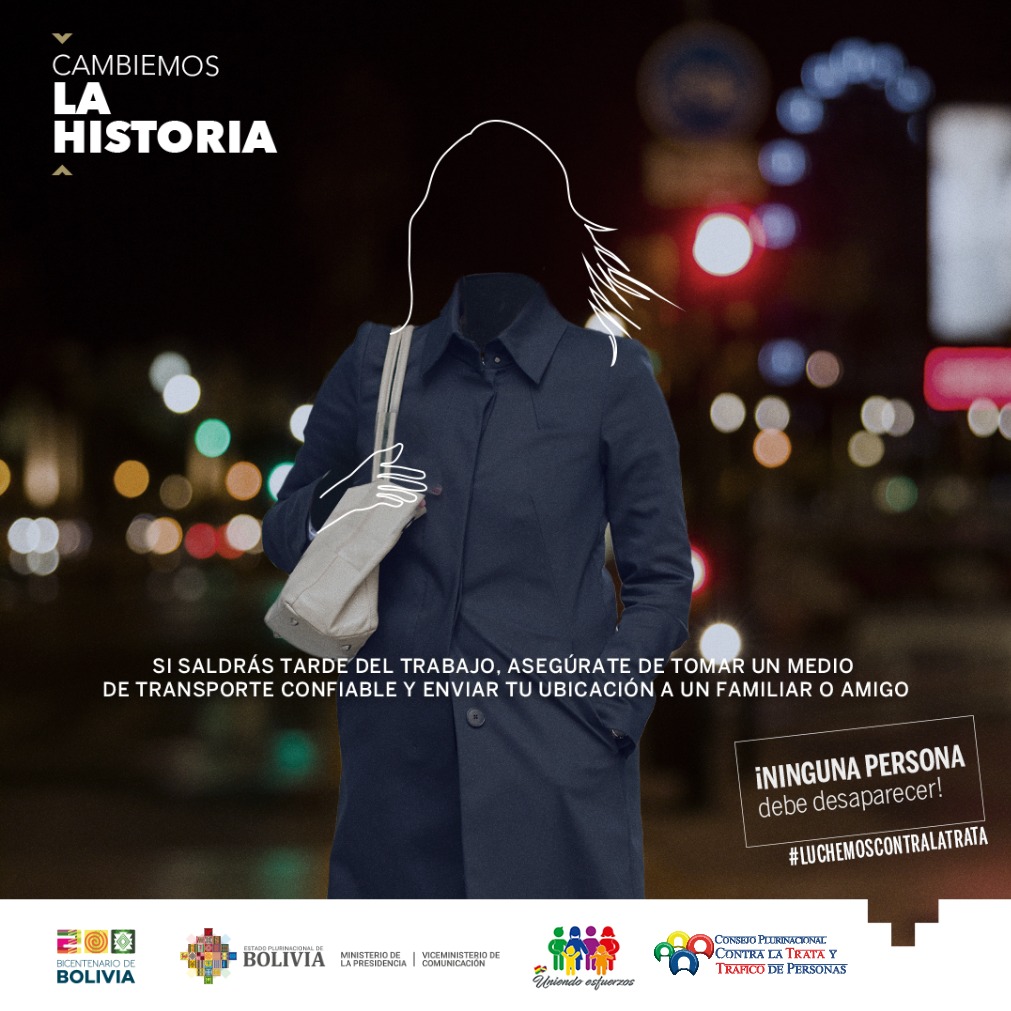
The goal is to “strengthen border migratory control and also the normative framework. We have a law in force since 2012, Law 263, which is the Comprehensive Law against Trafficking in Persons, a regulation that has been in force for more than 10 years,” said the authority.
The law, which requires an update in line with international standards, consolidated the institutionality of the Plurinational Council against Trafficking in Persons.
— Fiscalía de Bolivia (@FGE_Bolivia) January 14, 2024
Another guideline is to create alliances with other countries since the crime of trafficking transcends borders. Therefore, the need for agreements with transborder nations was emphasized.
“We need bilateral and multilateral agreements in the fight against trafficking. That is one of the first guidelines of the plurinational policy,” said the authority.
Siles mentioned that another aspect concerns the prevention of the recruitment of trafficking victims. Strategies such as communication, public prevention policies, awareness, and dissemination in the media about these issues are needed.

Another pillar is the attention given to victims of human trafficking. Under the principle of non-revictimization, “victims must be assisted within the framework of the Plurinational Council and the competencies of its members,” he emphasized.
Additionally, another element relates to the care of migrants in irregular situations within the framework of respect and guarantee of their rights.
The last strategic guideline is the interinstitutional strengthening for the prosecution and criminal punishment of human trafficking and migrant smuggling offenses.
“The Police are implementing several units and specialties in trafficking investigation, however, the observation we make is that there is a lot of personnel turnover. We are requesting that this mechanism not be in place and that trained investigators remain in the human trafficking division,” added the authority.
A Global Crime
This crime is present worldwide, which is why coordination between various countries is sought to combat this scourge.
The country has signed and currently has agreements in force with Peru, Argentina, and Paraguay, reports Ahora El Pueblo.
“We are currently negotiating, and hopefully we can conclude this administration with Brazil, Spain, Panama, Venezuela, and other countries that are within the context of the possible human trafficking network,” said the Deputy Minister of Justice and Fundamental Rights, César Siles.
Siles indicated that in a report issued by the UNODC on work carried out between 2017 and 2022, Bolivia, in the South American context, is the primary country of origin for human trafficking.
The authority added that reports of human trafficking and smuggling increased from 463 in 2017 to 551 in 2022.
Deputy Minister Siles mentioned that human trafficking is a transnational crime since it transcends borders, which is why the numbers of reports double year after year.
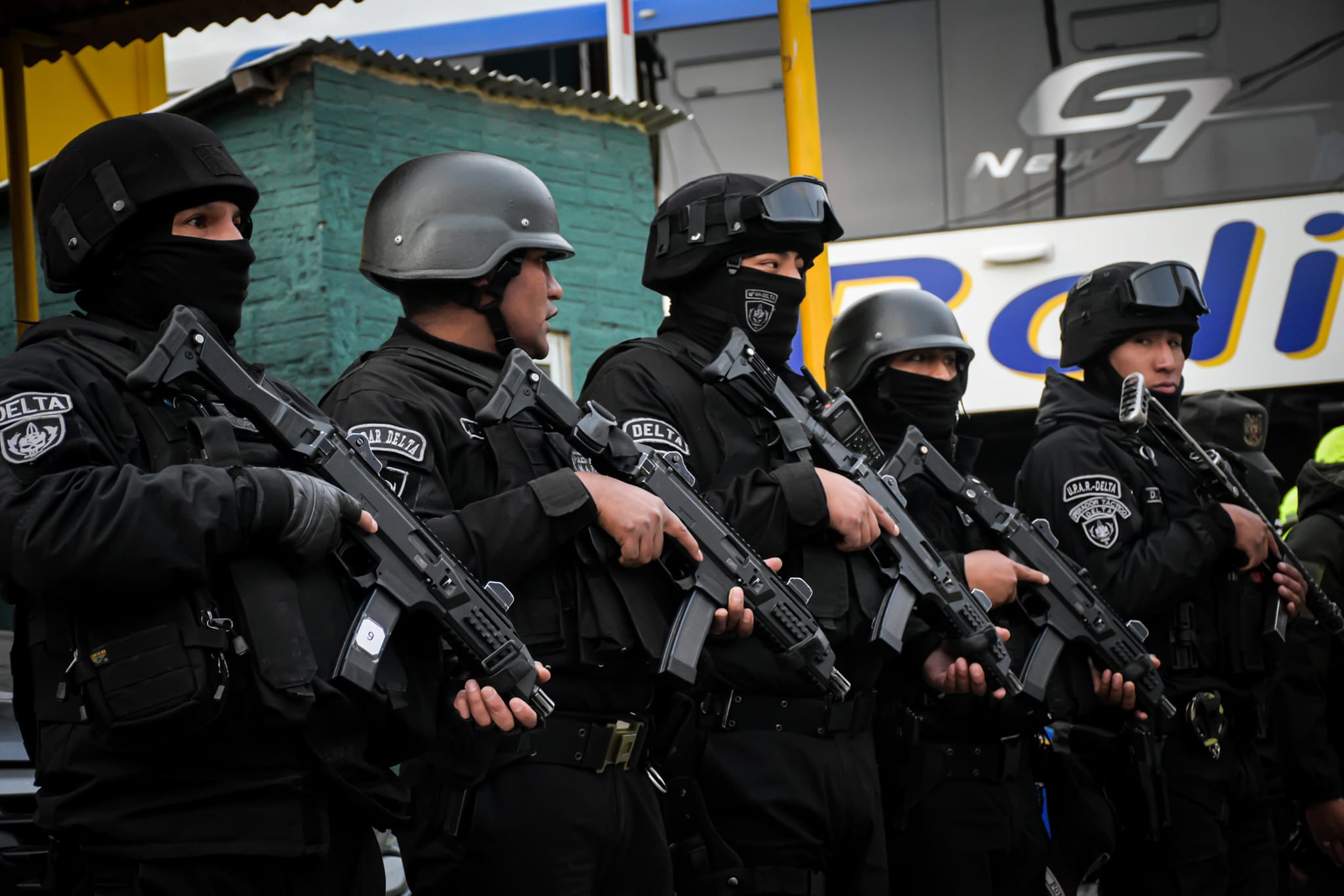
The government decided to address this issue internally and externally through the Plurinational Council against Trafficking in Persons, which outlines actions for combat and prevention.
The institutions forming the Council include the ministries of the Executive Branch, the Public Ministry, the Ombudsman’s Office, and civil society.
He added that the ministries of the Presidency and Justice worked on a plurinational policy against human trafficking, along with a communication strategy that demands departmental governments to approve their plans to combat this issue.
They also prepared a proposal to amend Law 263, Comprehensive Law against Trafficking in Persons, which was enacted on July 31, 2012.
“We must constantly generate actions of prevention, investigation, and punishment against these serious crimes, but fundamentally against human trafficking,” reiterated the authority.
He added that human trafficking is the third most profitable crime in the world, after arms trafficking and controlled substances.
 Soledad Quartucci | CEO/Founder, Latina Republic
Latina Republic is dedicated to promoting regional understanding through compelling narratives, articles, interviews, and reports that emanate from the heart of the Americas. Our foremost goal is to facilitate constructive dialogue by illuminating local viewpoints frequently overshadowed by mainstream media. Our mission is to equip all stakeholders with essential insights for addressing regional issues, thus empowering them in their efforts. We are committed to portraying the victories and hardships of everyday life in Latin America, while also chronicling the progression of social movements and amplifying the voices of those at the forefront of change.