

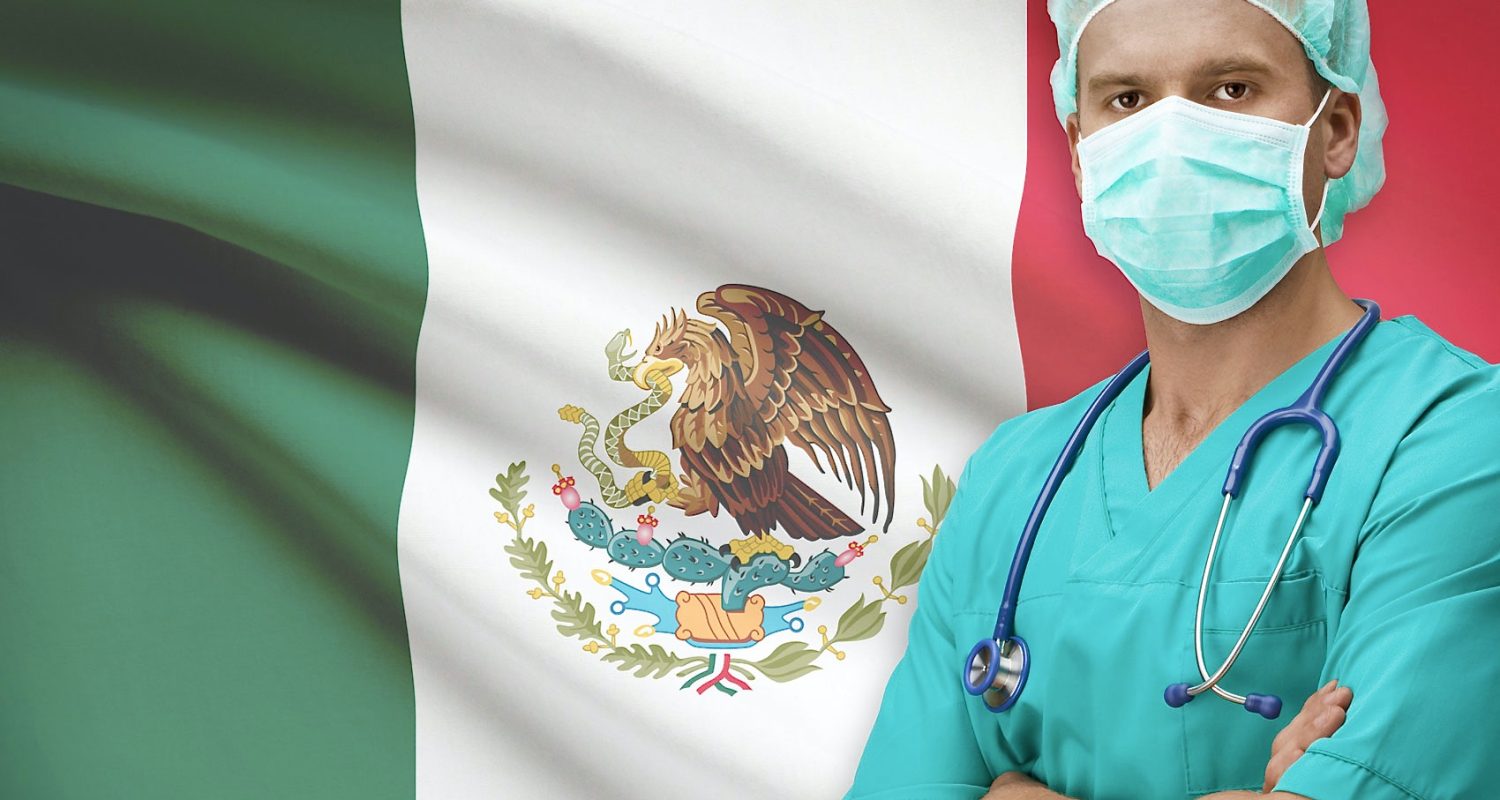
President Andrés Manuel López Obrador led a morning conference to announce the start of resource distribution for the “La Clínica es Nuestra” program. This initiative aims to rehabilitate, modernize, and equip 11,947 primary care medical units in the most remote communities.
The Government of Mexico’s initiative involves providing direct subsidies to the Health and Wellness Committees, which are formed by organized community members. These committees will manage the funds based on their knowledge of the health centers’ needs, oversee improvements, and verify expenses in the 23 states included in the IMSS Bienestar program.
On June 4, the first of three rounds of support was delivered to Campeche, Chiapas, Guerrero, Oaxaca, Quintana Roo, Tabasco, and Veracruz.
Committees
The committees are comprised of a president, a treasurer, and members, elected during assemblies held last April, as detailed by Zoé Robledo Aburto, the Director General of the Mexican Social Security Institute (IMSS).
Budget
The budget is delivered directly to the Health and Wellness Committees through Banco del Bienestar cards and is determined based on the size of the health center. Centers with one clinic or nucleus will receive 400,000 pesos annually; those with two nuclei will receive 600,000 pesos; centers with three to six clinics will receive 800,000 pesos; and those with more than six clinics will receive up to one million pesos. Health centers with expanded services will each receive 1.2 million pesos.
How to use funds
The funds can be used for improving basic infrastructure, such as waterproofing, bathrooms, walls, and perimeter fences. They will also be used to purchase medical equipment and furniture, including stethoscopes, diagnostic kits, examination tables, and desks.
Recording Expenses
The members of the committees will be responsible for recording expense control; the mechanism includes a transparent social audit. If necessary, the budget could be increased in a second phase to complete the work.
The total national investment of the “La Clínica es Nuestra” program amounts to 5.087 billion pesos, as stated by the Director General of IMSS.
“During the entire neoliberal period, the primary level of care was the least attended to, so there is no uniformity in the quality of services in the 23 states that are now being transferred to IMSS Bienestar,” he added.
President López Obrador witnessed the distribution of the “La Clínica es Nuestra” program cards via video calls.
Campeche
In Campeche, 129 committees have been established, which will be able to use 65.2 million pesos.
Governor Layda Sansores San Román handed over the funds to the committee formed in Lerma. Accompanied by the presidential commissioner, Alejandro Calderón Alipi, Director General of Health Services at IMSS Bienestar, she emphasized the importance of the program in strengthening the public health system for the benefit of the people.
Chiapas
In Chiapas, 1,002 committees have been set up, which will have access to a budget of 458.6 million pesos.
“This is participatory democracy because economic resources are managed very responsibly; the people will directly ensure that their health facilities function. Thank you very much, Mr. President, this is definitely Mexican humanism,” said Governor Rutilio Escandón Cadenas in Tuxtla Gutiérrez, accompanied by the presidential commissioner in that state, Alejandro Svarch Pérez, head of the Federal Commission for the Protection against Health Risks (COFEPRIS).
Guerrero
In Guerrero, 944 committees were created; they will have funding of 433 million pesos.
“Starting today, the solutions from La Clínica es Nuestra will be coordinated; there is great communication and coordination with all committee members, and all decisions are also agreed upon with the population and health personnel, which undoubtedly strengthens the identity and collaborative spirit we have with the people we serve,” highlighted Governor Evelyn Salgado Pineda in Chilpancingo de los Bravo, alongside Marcos Cantero Cortés, Secretary of the General Health Council, representing the presidential commissioner, Jorge Alcocer Varela, Secretary of Health.
Oaxaca
In Oaxaca, there are 1,227 committees with a total budget of 543.2 million pesos.
“Thank you very much, Mr. President, for your support; thanks to your commitment and the strengthening and democratization of the public health system, it is now a reality,” mentioned Governor Salomón Jara Cruz in San Bartolo Coyotepec, accompanied by the presidential commissioner in the entity, Gustavo Reyes Terán, head of the Coordinating Commission of National Institutes of Health and High Specialty Hospitals.
Quintana Roo
In Quintana Roo, there are 171 committees, which will benefit from 82.4 million pesos.
“In democracy, the people decide, and here the people, the citizens, will decide on health matters, which is fundamental. (…) The people’s money will reach the people to improve their health centers because we trust the people, because the people are noble, because the people are good,” emphasized Governor María Elena Lezama Espinosa in Othón P. Blanco, in the presence of the presidential commissioner, Célida Duque Molina, Director of Medical Benefits at IMSS.
Tabasco
In Tabasco, there are 503 committees; they will have a budget of 250.2 million pesos.
“This policy strengthens our health system, especially in the medical units, which are the first contact with the people who go there for medical care. Since we started this program, we have worked with dedication and commitment to ensure that all Tabascans, regardless of their social or economic status, have access to dignified and quality medical care,” indicated Governor Carlos Merino Campos in Villahermosa, along with the presidential commissioner, Juan Ferrer.
Veracruz
In Veracruz, 1,245 committees have been formed, which will manage 598.4 million pesos.
“We are very pleased to integrate Veracruz’s health system into IMSS Bienestar, and Mr. President, this is one of the benefits we aspired to,” expressed Governor Cuitláhuac García Jiménez in Xalapa, accompanied by the presidential commissioner, José Manuel Nogueira Fernández.
Aiming for the Best Public Health System
The President reiterated that the goal is to consolidate the best public health system in the world and, by September, to fully equip medical units, health centers, and hospitals for the benefit of the people, especially those without social security.
“This is a concept that distinguishes us from other governments in our country, especially during the neoliberal period that aimed to privatize education and health. It also distinguishes us from what happens in other countries where education is private, and medical care is the same. We want to uphold the Welfare State, ensuring that Mexicans have social security from birth to death, from cradle to grave, and that is the purpose,” he stated.
He thanked the governors for supporting the initiative, as well as the Ministry of Welfare and Banco del Bienestar, institutions that collaborated in the creation of the committees and the distribution of resources, respectively.
Tomorrow, June 5, the distribution of La Clínica es Nuestra resources will continue in central states, and June 6 will be dedicated to northern states.
Additionally, the head of IMSS announced that on Tuesday, the distribution of credentials for IMSS Bienestar users will begin. People can obtain this identification in three ways: online at https://registro.imssbienestar.gob.mx/, in person at participating health centers and hospitals, and through the Health and Wellness Committees or the National Servers of the Ministry of Welfare.
 Soledad Quartucci | CEO/Founder, Latina Republic
Latina Republic is dedicated to promoting regional understanding through compelling narratives, articles, interviews, and reports that emanate from the heart of the Americas. Our foremost goal is to facilitate constructive dialogue by illuminating local viewpoints frequently overshadowed by mainstream media. Our mission is to equip all stakeholders with essential insights for addressing regional issues, thus empowering them in their efforts. We are committed to portraying the victories and hardships of everyday life in Latin America, while also chronicling the progression of social movements and amplifying the voices of those at the forefront of change.

