
“Migration through the Americas is taking a harsh toll on children’s health— particularly their mental health—These needs are not being met,” UNICEF.
Migration Experiences of Children and Caregivers in Honduras
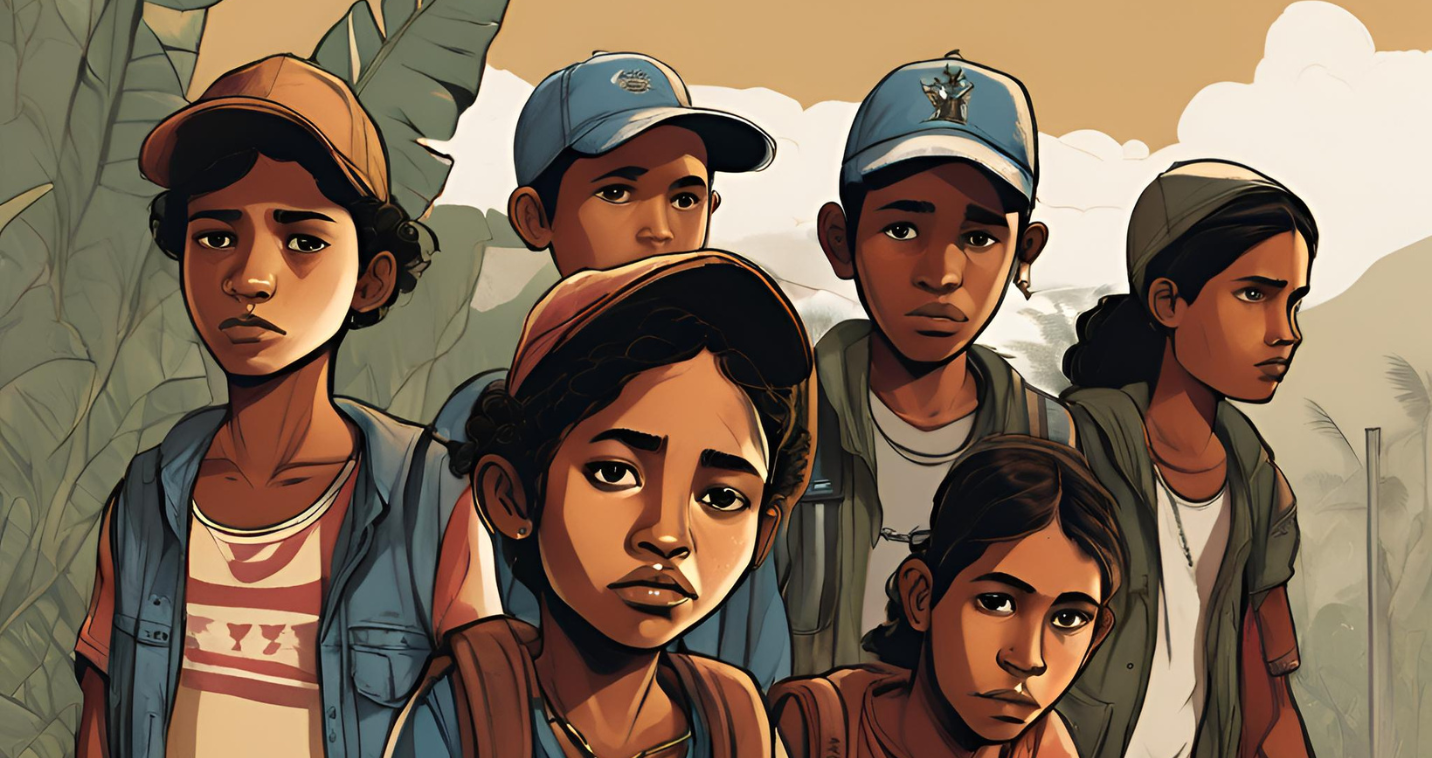
As eight-year-old Maria clung tightly to her mother’s hand, the shadows of the jungle came alive. The river they had narrowly escaped the night before haunted Maria’s dreams. This testimony is just one of many stories captured in the report “Migration Experiences of Children on the Move through Honduras,” authored by Ximena Canal Laiton in November 2023.
The report, developed by the Mixed Migration Centre (MMC), the Centro de Desarrollo Humano (CDH), and UNICEF Honduras, delves into the migration experiences of children and caregivers traveling through Honduras. It offers a comprehensive analysis of their travel conditions, the security risks they face, and the urgent humanitarian needs identified by caregivers surveyed through the 4Mi project.
Following are highlights of the report:
Key Findings
• Migratory Journey Risks: The journey to North America is dangerous for refugees and migrants with economic vulnerabilities, generating prolonged stress and long-term trauma for children. This is due to situations that produce “migratory mourning” and the safety risks and abuses faced along the journey.
• Darien Gap Dangers: The Darien Gap, between Colombia and Panama, is the most dangerous part of the route northwards for children and the migrant population in general in transit through Honduras. They face risks of death, injury, kidnapping, harassment, sexual violence, and physical violence. Additionally, access to food and safe water is limited, putting children at high risk of dehydration and malnutrition.
• Brief Stop in Honduras: Honduras serves as a brief stop on the migration journey, with relatively rare reports of xenophobic attacks. Caregivers reported a low perception of insecurity while transiting there. However, organizations in the country reported potential security risks for children.
• Mental Healthcare Needs: Mental healthcare is a critical humanitarian need for children on the move in Latin America and the Caribbean. Caregivers often mentioned the psychosocial effects of the migration process, indicating a need for psychological care.
• Unaccompanied Children: Adolescent boys make up the majority of separated and unaccompanied children in Latin America and the Caribbean. These children have additional humanitarian protection needs as they often lack legal documentation and are easy targets for violence along the migration route. Their movements are under-registered in the region.
Migration Statistics
One in five of the 391,004 refugees and migrants known to have entered Honduran territory irregularly between January 1 and October 15, 2023, were under the age of 21. These arrivals were over three times more numerous than those recorded during the same period in 2022.
Most crossed Honduras’ southern border intending to travel to the United States or Canada. Although the profiles of those who entered Honduras during this period in 2023 were diverse, 86% came from the Latin America and Caribbean region, with Venezuelans representing 44% of all registered entries. Migrants from Cuba, Ecuador, Haiti, and Colombia accounted for 40%.
Data and Policy Challenges
Children on the move worldwide face severe risks and needs requiring targeted responses, but they are often overlooked when essential data is collected. According to UNICEF, persistent gaps in timely, accurate, and disaggregated data for migrant and displaced children make it challenging to support evidence-based policymaking in the region.
To bridge this information gap, this paper presents an overview of children’s migration experiences, impacts, and security risks as they transit through the Americas and Honduras, as perceived by their caregivers.
Migration Experiences of Children and Caregivers in Honduras
Profiles of Caregivers
Among the caregiver respondents:
• 24% were youth between 18 and 25 years old.
• 55% were between 26 and 35 years old.
• 18% were between 36 and 45 years old.
• 3% were over 46 years old.
Almost all (99%) respondents were Latin American or Caribbean nationals:
• 75% were from Venezuela.
• 8% from Ecuador.
• 7% from Cuba.
• 6% from Colombia.
• 3% from other countries in the region.
• 1% were from African countries.
The majority (65%) of respondents were women, indicating that caregiving tasks on the migration route were primarily delegated to women, even when they migrated together with adult men. Although the Haitian population represented 14% of the people on the move registered in Honduras, less than 1% of those surveyed were of this nationality due to language barriers.
The interview profiles were selected based on predominant transit patterns, focusing on the young Latin American population migrating with one or two children. A total of 2,338 children were traveling with the caregivers surveyed, averaging two children per caregiver.
Humanitarian Needs of Unaccompanied and Separated Children
Key informants reported that the humanitarian needs of unaccompanied and separated children in Honduras varied according to their nationality. Migrants from outside the continent tend to have better economic conditions and access to essential services, while those from Latin America (e.g., Venezuela, Colombia, and Ecuador) tend to have greater economic needs, less suitable clothing, and less access to food and basic services like toilets, showers, drinking water, and cell phone charging points.
All unaccompanied and separated children have humanitarian needs such as shelter, health, clothing, food, water, sanitation, and hygiene. However, they also have different information and protection needs, as they tend to have less access to legal guidance and are easy targets for violent attacks like kidnapping, bribery, detention, sexual violence, and forced recruitment.
Secondary Migration of Venezuelan Children
Of the 975 Venezuelan caregivers surveyed in Honduras, 278 (29%) had previously attempted to settle in another country in the region before deciding to move on. Most were living in Colombia (57%), Peru (21%), and Ecuador (13%) before embarking on this migratory journey.
Almost all (94%) of the 278 attributed their decision to remigrate to economic factors in their previous host country. Other explanations included violence, insecurity, and conflict (39%), as well as corruption and difficulty accessing services such as education and health care (31%).
Of the 1,428 children with one or more Venezuelan parents under the care of survey respondents, 236 (17%) were engaged in secondary movement, having begun their current journey in a country other than their nationality. Multiple migratory movements contribute to “migratory mourning,” making it extremely difficult for children to settle and forge ties in safe spaces.
Economic Vulnerability and Risks
Almost half (47%) of the caregivers surveyed stated that they had earned no money in the 12 months before migrating, and 59% noted that the money they had saved for the trip had not been sufficient to meet their needs up to the time of the survey. Those with fewer financial resources appear to be exposed to higher risks during migration.
Of the 745 caregivers with insufficient funds, 46% identified very high levels of risk to the children in their care during the migratory journey. In contrast, 37% of the 460 caregivers with sufficient funds reported high levels of risk. This finding aligns with recent UNICEF analysis indicating that refugee and migrant children using irregular pathways in Latin America and the Caribbean typically lack resources for safe and efficient transport.
Consequently, they choose longer and more hostile migratory routes, use precarious means of transportation, and/or walk long distances, facing significant security risks, including violence, diseases, and injuries.
Constant Risks for Children
Ninety-four percent of the caregivers surveyed stated that the children in their care faced some kind of incident or abuse along the migration route. The majority identified injury or illness from harsh conditions as the main risk (reported by 77% of caregivers who identified at least one risk), followed by death (62%), kidnapping (53%), and robbery (46%).
Additionally, between 30% and 40% of respondents perceived the children in their care as at risk of sexual violence, physical violence, detention, or extortion at some point during the journey.
Health and Safety Needs of Migrant Children in Honduras
Key informants identified critical needs related to food, protection, and physical and mental healthcare for children arriving in Honduras. Many children arrive with health problems such as injuries, malnutrition, dehydration, sunstroke, diarrhea, and fever. They often have limited access to food and water, and the harsh travel conditions and episodes of violence they experienced have significant psychological impacts, interrupting proper childhood development.
Despite their brief transit through the country, children arriving in Honduras have many critical humanitarian needs. These needs pose challenges to organizations providing humanitarian aid, which have established a presence in high-traffic areas like transportation terminals and institutional registration points.
Impact on Routines, Social Ties, and Education
Almost all (94%) of the 840 respondents traveling with children over five years old reported that their children were not attending any educational or childcare facility at the time of the survey. In most cases (82%), this was because their stay in Honduras was too short. A small minority (14%) lacked sufficient information about available services. Fifteen percent of the respondents had started their journey more than two months before the survey, and 45% had been traveling for one month.
Research shows that lack of schooling during migration leads to social, territorial, and cultural losses, learning gaps, school dropouts, and educational lags. Some respondents mentioned that the children with whom they were traveling still did not know how to read and write by the age of seven or eight because their schooling had been interrupted multiple times.
The interruption of schooling is just one of the disruptions that occur during prolonged migratory journeys. Caregivers also highlighted the loss of social ties with family and friends and the disruption of play, care, and attention routines they had with their children before starting their migration.
The stress of the journey and challenging conditions hindered the quality time caregivers could spend with the children and reduced the possibility of engaging in stimulating activities, affecting the children’s social and cognitive development in the medium and long term.
Trauma and the Need for Psychosocial Care
Migration often involves psychological and social losses, leading to “migratory grief” or “migratory mourning.” These losses, compounded by incidents and abuses faced during migration, can adversely affect mental health. Children not only risk experiencing harm but also witnessing traumatic scenes, leading to stress, anxiety, and a constant state of alertness.
Research by UNICEF shows that migratory routes through Latin America are highly stressful for children. Prolonged exposure to traumatic situations can cause a release of cortisol, the stress hormone, affecting brain functionality and impacting long-term development.
The study found that migratory grief and violent episodes had psychological impacts on children, such as sadness, mood swings, anxiety, nightmares, and sleeping difficulties. Key informants identified mental health care as a primary need for children in transit.
However, only 12% of respondents reported that the children they were traveling with needed psychosocial attention. This may be due to prioritizing basic needs like food and transportation over mental healthcare.
Caregivers employed strategies to protect children’s mental health, such as encouraging them to see migration as an adventure, telling them to cover their eyes, creating distractions to avoid traumatic scenes, and maintaining social contact with family and friends through phone or video calls.
Read the full report: Migration Experiences of Children Through Honduras
 Soledad Quartucci | CEO/Founder, Latina Republic
Latina Republic is dedicated to promoting regional understanding through compelling narratives, articles, interviews, and reports that emanate from the heart of the Americas. Our foremost goal is to facilitate constructive dialogue by illuminating local viewpoints frequently overshadowed by mainstream media. Our mission is to equip all stakeholders with essential insights for addressing regional issues, thus empowering them in their efforts. We are committed to portraying the victories and hardships of everyday life in Latin America, while also chronicling the progression of social movements and amplifying the voices of those at the forefront of change.