
Over 50 Students in Ayacucho Learn Quechua for Free Through Peru’s Mincul Course
The Ministry of Culture highlights the collaboration with I.E.E. Mariscal Cáceres to promote cultural diversity and intercultural education.
On October 25, 2024, over 50 students from the Mariscal Cáceres Educational Institution in Huamanga, Ayacucho, completed a free Quechua course (Chanka variety) offered by the Ministry of Culture. This initiative aims to foster appreciation and promotion of indigenous languages.
During the closing ceremony, Gerardo García Chinchay, director of the Indigenous Languages Directorate, praised the school’s support for this initiative. He noted that in Ayacucho, 62.6% of residents speak an indigenous language as their mother tongue, totaling around 400,000 individuals.

The course ran for three months (June, July, and August), held on Fridays from 4:00 PM to 6:00 PM, and included 50 academic hours. Under Minister Fabricio Valencia, the initiative aligns with President Dina Boluarte’s policies to promote linguistic diversity and intercultural citizenship in educational settings.
Key participants in the event included local educational leaders and representatives from various government bodies.
Note: To date, bilingual signs have been installed in 13 public institutions in Ayacucho as part of efforts to enhance services in indigenous languages.

Quechua
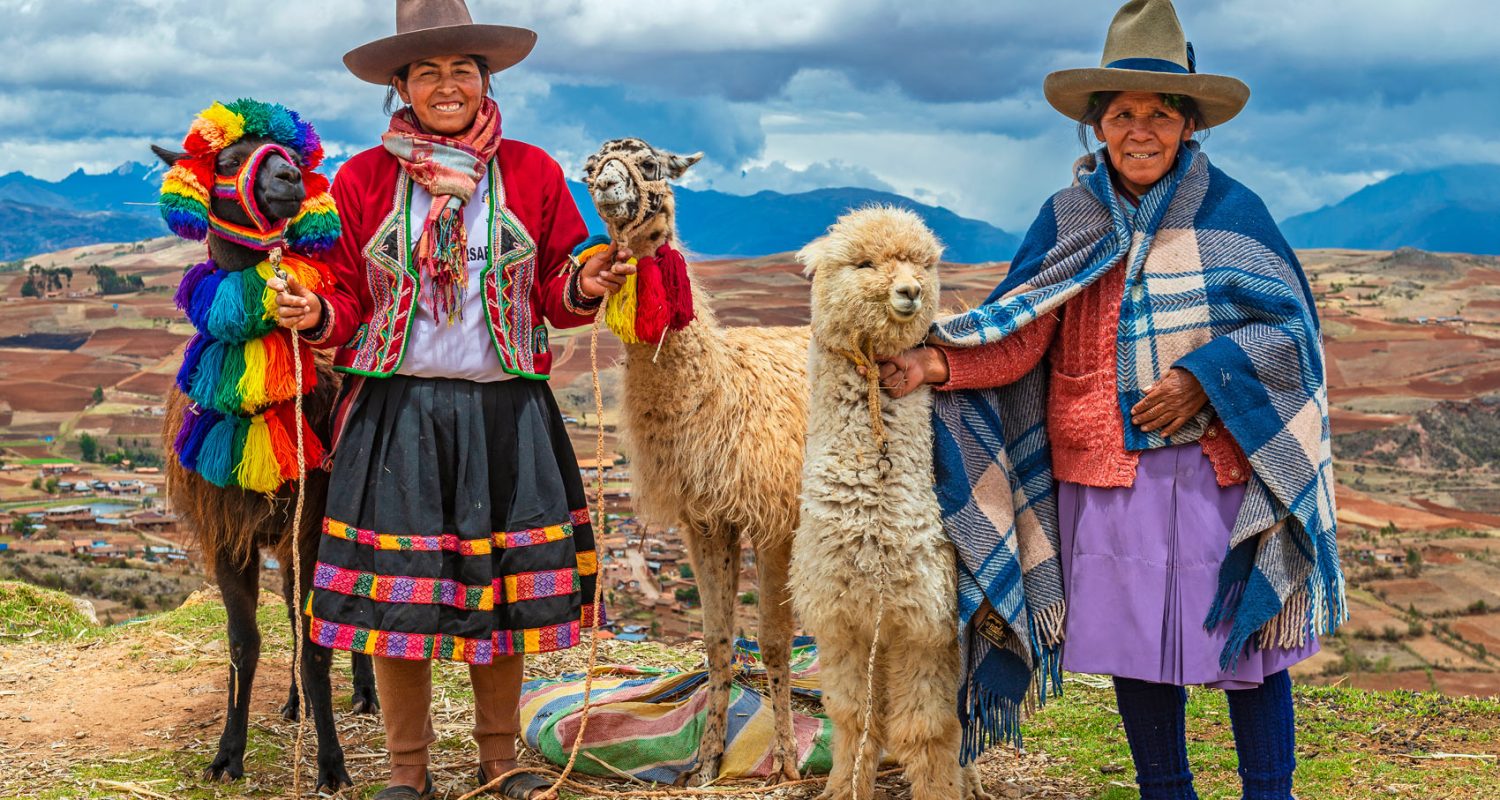
Quechua, the language of the Incas and one of the most spoken languages in South America, is the most significant living legacy of Ancient Peru. Many of its words are still in use today and have even been adapted into Spanish. Terms like cancha, carpa, pucho, and poncho are part of Quechua vocabulary, widely used even by Spanish speakers.
With over 10 million Quechua speakers in Peru and Bolivia, this language represents a valuable cultural contribution. Despite its decline, local authorities are developing bilingual intercultural education programs to promote its importance. Here’s more about the origins, current status, and significance of the sacred language of the Incas.
History of an Ancient Language
According to Peru Travel, Quechua, or runa simi, originated in central Peru, specifically in the Supe Valley in Lima. About five centuries before the Incas, one of the oldest civilizations in America, Caral, thrived in this area. It was here that a rich language developed, helping to integrate coastal and Andean communities and enhancing trade between them.
During the expansionist period of the Incas in the early 15th century, Quechua spread primarily across the highlands and southern regions of the Tahuantinsuyo Empire. However, with the arrival of the Spanish, it gradually lost prominence due to colonization, which established Spanish as the main language of the Viceroyalty.
In some northern and coastal areas, Quechua was already spoken, while in others, runa simi did not replace indigenous languages like Mochica or Cañari. Today, the Quechua spoken in the provinces of Áncash, Lima, Huánuco, Junín, and Cerro de Pasco is considered the most traditional.
Quechua Today
Today, Quechua is one of the official languages of Peru, alongside Spanish and Aymara. Approximately 4 million Peruvians speak it as their first language. The teaching of Quechua is becoming increasingly relevant, emphasizing its role as a fundamental part of Peru’s history. Preserving and respecting the language of the Incas is essential for appreciating the country’s rich cultural heritage.
Peru Travel encourages visitors to Peru to learn Quechua ahead of traveling to Cusco. By learning key phrases and words in Quechua, tourists visiting destinations like Cusco can gain a deeper understanding of Inca culture and foster better connections with locals.
 Latina Republic celebrates artists from Latin America as ambassadors of each nation’s unique creativity and provides updates on cultural programming and traditions throughout Latin America and the Caribbean aimed at promoting cultural heritage and fostering artistic expression. Our commitment is to promote regional understanding through narratives, articles, interviews, and reports originating from the heart of the Americas.

