Venezuela is confronting a rapidly unfolding national disaster after two powerful earthquakes struck on Wednesday, leaving a trail of collapsed buildings, overwhelmed hospitals, disrupted infrastructure, and a rising toll that continues to shift as rescue teams work through unstable rubble across the country.
Reporting from LA NACION, El Universal, Últimas Noticias, and El Nacional, alongside AFP field coverage and seismic data from USGS, shows a country moving in real time between shock, rescue, and mounting uncertainty.
The earthquakes struck in close succession in the early evening. The first, a magnitude 7.2 tremor, hit at 18:04 local time with its epicenter located about 21 kilometers west of Morón on Venezuela’s northern coast, according to USGS data cited in LA NACION.
A second, even stronger magnitude 7.5 quake followed almost immediately nearby, marking what seismologists describe as one of the most powerful events in the country in more than a century.
The shaking was felt beyond Venezuela’s borders, with reports from AFP noting that tremors reached Colombia and triggered alarms in some areas.
In the hours that followed, the scale of destruction became clearer. Entire buildings collapsed in parts of Caracas and coastal La Guaira, particularly in communities like Catia La Mar, where AFP journalists observed residents picking through debris, burned storefronts, and damaged structures in search of survivors or belongings.
Electricity outages left large areas in darkness, and many people spent the night in the streets, in parked cars, or in public spaces as aftershocks continued to ripple through the region.
The United States extends our deepest condolences to the people of Venezuela following the devastating earthquakes.
Our hearts are with all those who have lost loved ones, those injured, and the courageous rescue workers working tirelessly in the aftermath.
America stands…
— Secretary Marco Rubio (@SecRubio) June 25, 2026
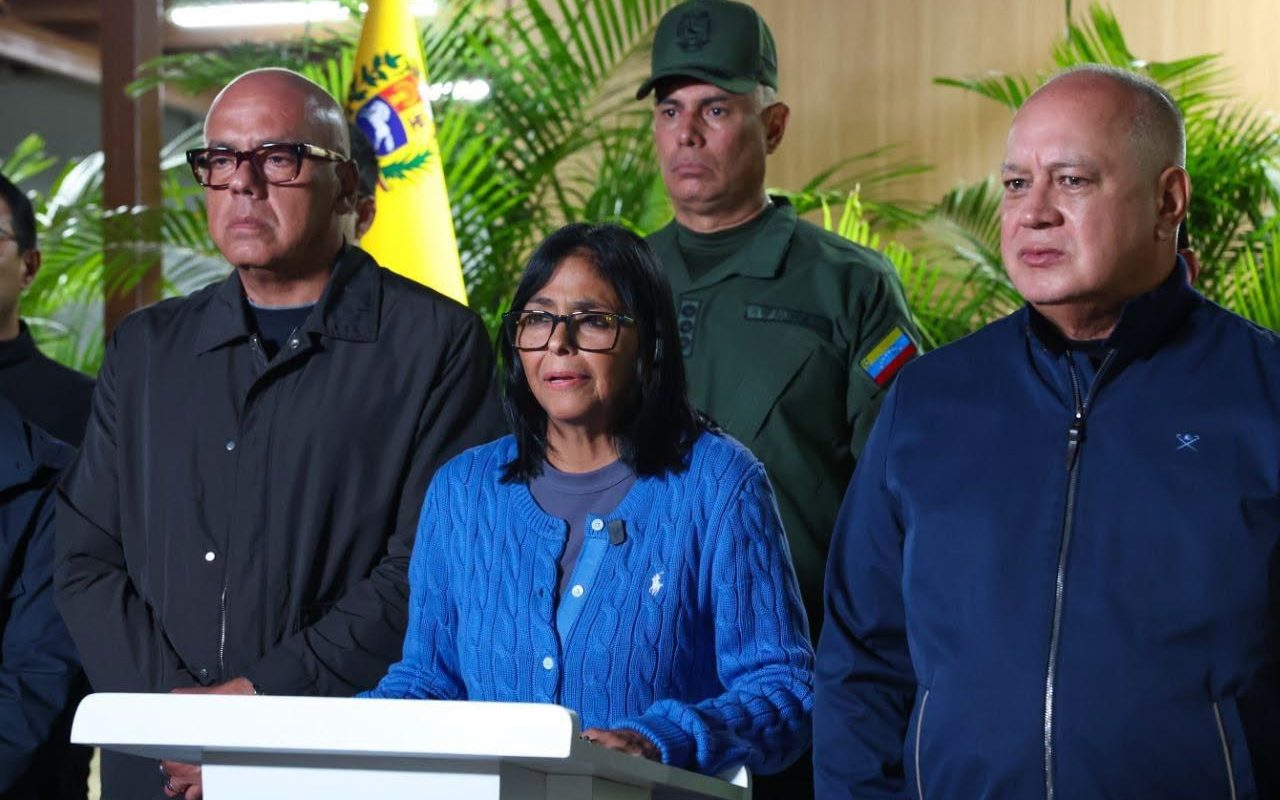
Less than 24 hours after the disaster, acting president Delcy Rodríguez confirmed a sharp rise in casualties, as reported by LA NACION: 188 people dead, more than 1,500 injured, and over 200 still believed to be trapped under rubble.
The update marked a dramatic increase from earlier figures that had reported only dozens of deaths and several hundred injured, underscoring how quickly the situation has escalated as rescue teams reach new sites. Local officials, including Caracas mayor Carmen Meléndez, indicated that at least 25 of the fatalities occurred in the capital.
Toda mi solidaridad con el pueblo hermano de Venezuela.
He dispuesto el envío inmediato de ayuda humanitaria para atender esta emergencia. Ecuador responderá con la rapidez y el compromiso que este momento exige porque, a pesar de las enormes diferencias, la humanidad siempre…
— Daniel Noboa Azin (@DanielNoboaOk) June 25, 2026
On the ground, rescue operations continue in a tense and emotionally charged environment. AFP described residents gathering around collapsed buildings in places like Catia La Mar and Caracas, watching emergency crews dig through unstable piles of concrete and steel.
In some areas, people reported hearing faint voices from within the debris hours after the quakes, adding urgency and heartbreak to already dangerous search efforts.
One resident near a collapsed structure summed up the paralysis many are feeling, telling reporters, “No tenemos nada… ni siquiera fuerza ni valor para meternos ahí,” as he stood outside a building where his family was believed to be trapped.
Nuestra solidaridad con el pueblo de Venezuela. La Secretaría de Relaciones Exteriores ha entrado en contacto con el gobierno del hermano país y ya he instruido la preparación de la ayuda necesaria. Por ahora nos han solicitado apoyo con personal especializado en rescate y de…
— Claudia Sheinbaum Pardo (@Claudiashein) June 25, 2026
In neighborhoods such as Los Palos Grandes, El Nacional cites residents’ testimonies hours after the earthquakes. Near the Petunia I building, one resident reflected on the shock of the event:
“¿Quién se iba a imaginar que iba a ser esto catastrófico?”
“Who could have imagined it would be this catastrophic?”
Another witness recalled hearing voices from within the rubble during the night:
“Anoche cuando nos fuimos como a la una de la noche se escuchaban voces adentro.”
“Last night when we left around one in the morning, we could still hear voices inside.”
Sostuve una conversación con la Presidenta de la República de Costa Rica, Laura Fernández, quien ha transmitido un mensaje de solidaridad al pueblo venezolano ante la difícil situación que atraviesa nuestro país. pic.twitter.com/fTzPgm0QZY
— Delcy Rodríguez (@delcyrodriguezv) June 25, 2026
Rescue operations are being carried out by a large coordinated force of firefighters, civil protection units, police, and National Guard personnel. One local official estimated the deployment at roughly 600 security personnel and 500 rescue workers, spread across multiple collapse zones rather than a single site.
Despite the scale of devastation, El Nacional emphasizes that families remain gathered near damaged buildings, refusing to leave as they wait for updates on missing loved ones. One resident expressed that sentiment simply:
“Tenemos esperanza que van a salir muchas vidas vivas, porque Dios es grande.”
“We have hope that many lives will come out alive, because God is great.”
At the same time, authorities have acknowledged that no precise figure can yet be confirmed for all those trapped or deceased, citing unstable structures and ongoing recovery operations.
Se encuentran ya en camino hacia nuestro país los primeros rescatistas provenientes de República Dominicana, para apoyar las labores de atención al pueblo venezolano ante esta terrible tragedia. pic.twitter.com/1cXfa5LVfD
— Delcy Rodríguez (@delcyrodriguezv) June 25, 2026
Authorities have declared a national state of emergency and designated La Guaira as a disaster zone, according to official statements relayed in Últimas Noticias and LA NACION. The government has activated a centralized emergency command structure bringing together security forces, public works, social services, and economic coordination under a unified response.
Delcy Rodríguez described “dozens of collapsed buildings” and emphasized that all available state resources have been deployed to rescue survivors and stabilize critical infrastructure. At the same time, key transport systems have been severely disrupted, including the closure of Caracas’s subway system, suspension of gas services in parts of the capital, and the shutdown of the Maiquetía International Airport due to structural damage.
Solidarizamos con el pueblo venezolano en estas horas y nos ponemos a disposición de su gobierno para coordinar envío de ayuda humanitaria y colaborar con equipos de rescate para enfrentar la emergencia del terremoto. Chile y Venezuela unidos para enfrentar esta tragedia. ????
— José Antonio Kast Rist (@PresidenteKast) June 25, 2026
The humanitarian impact has been compounded by widespread displacement and shortages. El Universal reported around 250 damaged buildings in La Guaira alone and nearly 2,927 affected families in that region, while other updates place the total number of damaged structures nationwide even higher as assessments continue.
Communication breakdowns have further deepened the crisis, with weak or nonexistent mobile service leaving families struggling to locate loved ones. In response, informal online platforms emerged to track missing persons, rapidly accumulating tens of thousands of reported cases, according to LA NACION’s coverage.
En este momento, hemos ofrecido ayuda al Gobierno de Venezuela a través de nuestra Cancillería.
300 rescatistas y paramédicos, junto con 50 toneladas de equipo, medicamentos e insumos de primera necesidad, están listos para partir hacia Caracas ????
— Nayib Bukele (@nayibbukele) June 25, 2026
Inside the capital, El Nacional describes a parallel reality of relentless rescue work and fragile hope. In neighborhoods such as Los Palos Grandes, families remain gathered near collapsed residential buildings, refusing to leave as they wait for news. One resident recalled how, even hours after the collapse, voices could still be heard inside the rubble.
Emergency teams—composed of firefighters, civil protection units, police, and National Guard personnel—are operating across multiple collapse sites simultaneously, with hundreds of rescuers deployed in each major zone. Despite the scale of destruction, the atmosphere is defined by a persistent hope that more survivors may still be found.
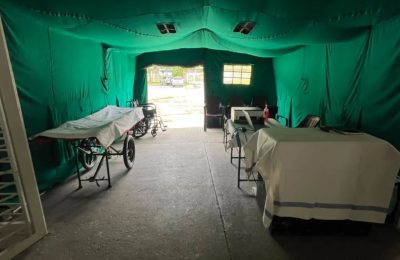
Medical systems have been pushed into full emergency mode. As El Nacional reports, the Ministry of Health activated the entire national hospital network alongside 12 private clinics in Caracas to handle the surge of injured.
Major public hospitals such as Hospital Vargas, Hospital Domingo Luciani, and Hospital Militar Dr. Carlos Arvelo are operating under emergency protocols, while private institutions including Clínica Ávila, Hospital de Clínicas Caracas, and Clínica Santa Sofía have been integrated into the national response. The effort is concentrated in the hardest-hit regions, including Caracas, La Guaira, Miranda, Aragua, Carabobo, and Falcón.
Expreso profundas condolencias y solidaridad al gobierno y al pueblo hermano de la República Bolivariana de #Venezuela, por la pérdida de vidas y daños ocasionados por el sismo.
Los colaboradores de la salud de #Cuba allí presentes están totalmente movilizados y prestando…
— Bruno Rodríguez P (@BrunoRguezP) June 25, 2026
At the same time, Venezuela’s engineering community has begun mobilizing for what will be a long and complex structural recovery. The Colegio de Ingenieros de Venezuela has deployed technical brigades nationwide to evaluate the safety of buildings and infrastructure, focusing on hospitals, schools, bridges, water systems, and energy networks.
Independent engineers and local groups, as reported by El Nacional, have also offered free inspections of damaged homes and buildings in Caracas municipalities such as Chacao, El Hatillo, and Sucre, asking residents to report only visible and significant structural damage to avoid overwhelming response teams.
As aftershocks continue—some reports citing more than a hundred since the main quakes—the country remains in a fragile state of suspension between immediate rescue and the beginning of long-term recovery. Official figures remain provisional, but the scale is already clear: hundreds of lives lost, thousands injured, entire neighborhoods destroyed, and many still unaccounted for beneath the rubble.
Yet amid the instability, rescue workers, engineers, medical teams, and residents continue working side by side, holding on to the possibility that even after the ground has stopped shaking, life may still be found within the ruins.
“The two major earthquakes that just hit the great people of Venezuela are both massive in scale and have left a devastating number of deaths. The U.S.A. stands ready, willing, and able to help!” – President Donald J. Trump pic.twitter.com/laeZ9nvTMf
— The White House (@WhiteHouse) June 25, 2026
The Trump administration announced a broad U.S. government response to the devastating earthquakes in Venezuela, with President Donald Trump authorizing immediate humanitarian assistance, search-and-rescue operations, and coordination with Venezuela’s interim authorities. The State Department has activated a Disaster Assistance Response Team (DART) and established a dedicated interagency task force in Washington to oversee relief efforts, assess conditions on the ground, and assist affected Americans.
As part of the response, the United States is providing $150 million in humanitarian aid, including $100 million through the U.N. Office for the Coordination of Humanitarian Affairs (OCHA) and $50 million for organizations such as World Vision, Samaritan’s Purse, Catholic Relief Services, International Medical Corps, the International Organization for Migration, and the World Food Programme.
Two elite urban search-and-rescue teams from Fairfax County, Virginia, and Los Angeles County, California, have also been deployed, while the Department of War and U.S. Southern Command are providing airlift, logistics, and operational support to accelerate the delivery of life-saving assistance and humanitarian supplies.
 Latina Republic is a 501(c)(3) nonprofit organization that tracks government initiatives across Latin America and the Caribbean. We feature official updates on immigration, the economy, social welfare, environmental policy, and cultural stories, filling critical information gaps to highlight the region’s diversity, resilience, and wealth of lived experiences.