

Dominican Republic Brief
Week of June 22–28, 2026
From expanded disaster relief to new investments in care infrastructure and a major push ahead of Santo Domingo 2026, the Dominican government spent the week emphasizing social protection, public services, and national development.
Government expands flood relief to 1,766 families
The government, through Supérate, began distributing emergency cash transfers to 1,766 households affected by April’s severe flooding across Los Alcarrizos, Santo Domingo Oeste, and Pedro Brand. Each family is receiving RD$7,000, with total assistance exceeding RD$12.3 million.
Officials also highlighted broader recovery efforts, including the distribution of thousands of household appliances, food packages, and household goods, while announcing that nearly 69,000 additional families have recently been enrolled in the Bono Luz electricity subsidy program.

Why it matters:
Climate-related disasters are becoming more frequent across the Caribbean. Rather than relying solely on emergency aid, the Dominican Republic continues building an Adaptive Social Protection system designed to rapidly identify vulnerable households and deliver financial assistance after disasters—a model increasingly promoted by multilateral development institutions.
Dominican Republic graduates 216 professional caregivers
More than 200 caregivers specializing in home care for older adults graduated under the government’s National Care Policy, bringing the nationwide total of trained caregivers to 3,486, including nearly 2,900 focused on elderly care.
The initiative, led jointly by Supérate and CONAPE, combines classroom instruction with supervised fieldwork and certification.

Why it matters:
Like much of Latin America, the Dominican Republic faces a steadily aging population while family-based caregiving remains largely unpaid and informal. Professionalizing the care economy could both improve elder care and create new employment opportunities—particularly for women—while laying the foundation for a broader national care system.
Nearly 700 older adults receive social services in Sánchez Ramírez
CONAPE held two social inclusion fairs serving almost 700 senior citizens in La Cueva de Cevicos and Fantino.
The events offered:
Medical and dental consultations
Prescription medications
Pension evaluations
Health insurance enrollment
Legal guidance
Food assistance
Agricultural support programs
Officials also noted that 889 non-contributory pensions have been granted to older adults in Sánchez Ramírez during President Luis Abinader’s administration.
Why it matters:
Rather than requiring citizens to travel to government offices, the administration continues expanding mobile service delivery into smaller municipalities—an approach intended to improve access for older and lower-income Dominicans.
Santo Domingo 2026 preparations enter the spotlight
With just weeks before the XXV Central American and Caribbean Games, the government showcased several projects tied to the event.
Highlights included:
- Continued construction and upgrades to sports facilities
- Promotion of the newly renovated Arena Banreservas Virgilio Travieso Soto
- Progress at Parque del Este, expected to become one of the Games’ signature venues
- Messaging around the Games as a long-term investment in sports participation rather than a one-time event.
Why it matters:
Hosting the Games is one of the Dominican Republic’s largest regional infrastructure and tourism initiatives of the decade. The government hopes upgraded facilities will support youth sports, attract future international competitions, and strengthen Santo Domingo’s profile as a regional events destination.
Border Sports Games kick off
The government launched the 2026 Border Sports Games, bringing together young athletes from the country’s seven frontier provinces.
Competitions include:
Baseball
Basketball
Volleyball
Athletics
Boxing
Karate
Officials framed the initiative as both a sports development program and an investment in opportunities for youth living along the Haiti-Dominican Republic border.
Why it matters:
Border provinces have historically lagged behind the national average on several socioeconomic indicators. Sports programs have increasingly become part of broader efforts to promote youth engagement and community development in the region.
New school sports facility opens in Duvergé
President Luis Abinader inaugurated a new covered athletic facility at the Félix María del Monte Educational Center in Duvergé, while meeting with approximately 300 students from public and private schools to discuss education priorities.
Why it matters:
School infrastructure improvements remain a visible component of the administration’s investment strategy outside Santo Domingo, particularly in the country’s southern provinces.
President tours National Zoo
President Abinader visited the National Zoological Park, reviewing its operational needs and future improvements.
The visit emphasized the government’s interest in strengthening:
- Biodiversity conservation
- Environmental education
- Public recreational spaces
Why it matters:
The administration continues to pair environmental messaging with investments in public spaces, seeking to improve tourism assets while promoting conservation.
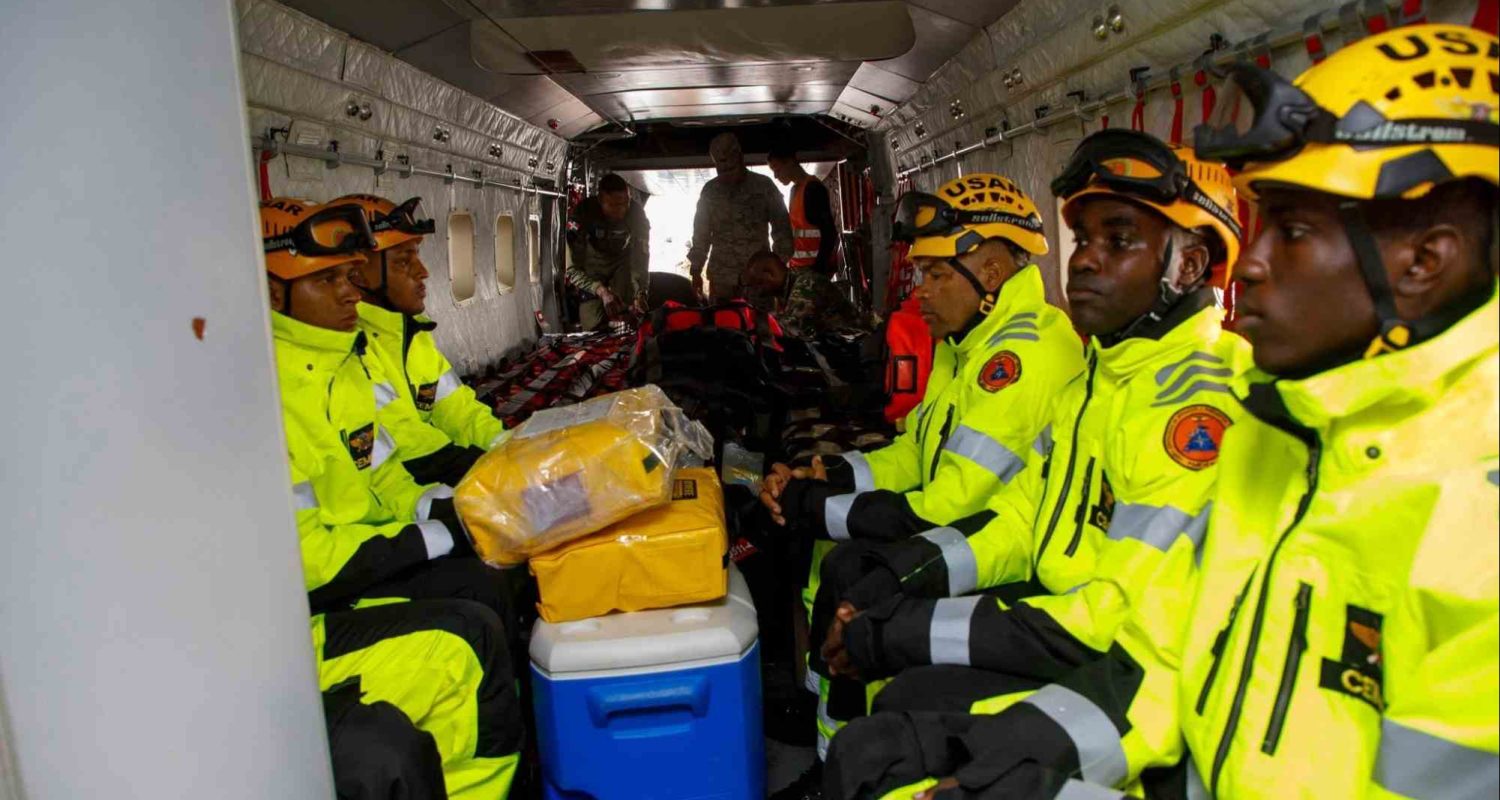
Dominican Republic sends rescue team to Venezuela
Under Operation Quisqueya Solidaria 2026, the Dominican Republic deployed a specialized Armed Forces search-and-rescue team to assist Venezuela following recent earthquakes.
Why it matters:
The mission underscores Santo Domingo’s growing role in regional humanitarian assistance. While the Dominican Republic frequently receives disaster support, it has increasingly positioned itself as a provider of emergency response across the Caribbean and Latin America.
Tourism development continues in La Romana
The government highlighted new initiatives in La Romana aimed at strengthening tourism infrastructure while supporting local businesses and workers who depend on the sector.
Why it matters:
Tourism remains one of the Dominican Republic’s primary economic engines. Beyond attracting visitors, current investments seek to spread tourism-related income more broadly among local communities rather than concentrating benefits within major resorts.
The Bottom Line
This week’s agenda reflected three consistent priorities of the Abinader administration:
- Expanding social protection, particularly through cash transfers and elder care.
- Investing in infrastructure, from schools and sports facilities to tourism assets.
- Building regional leadership, both by preparing to host the Central American and Caribbean Games and by contributing humanitarian assistance abroad.
Together, the week’s announcements reinforce a governing narrative centered on resilience, public investment, and social inclusion as the Dominican Republic prepares for one of its highest-profile international moments with Santo Domingo 2026.
 Latina Republic is a 501(c)(3) nonprofit organization that tracks government initiatives across Latin America and the Caribbean. We feature official updates on immigration, the economy, social welfare, environmental policy, and cultural stories, filling critical information gaps to highlight the region’s diversity, resilience, and wealth of lived experiences.