Venezuela Expands Earthquake Response as Delcy Rodríguez Meets U.S. DART Team
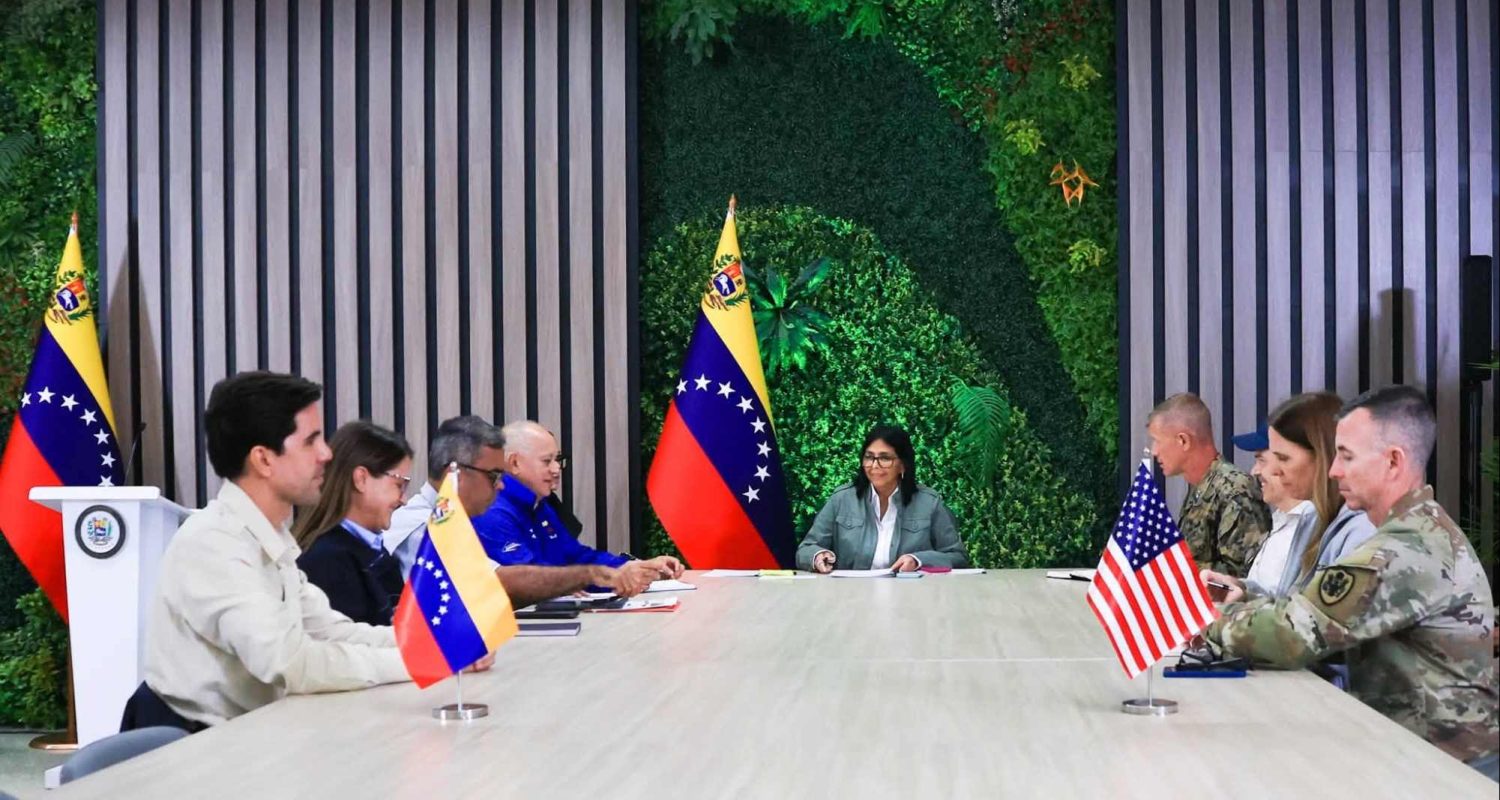
Acting President Delcy Rodríguez welcomed Enn Magee, head of the U.S. Disaster Assistance Response Team (DART), to Caracas for a high-level strategic meeting aimed at coordinating the immediate response to the twin earthquakes that struck Venezuela on June 24.
During the technical working session, Venezuelan and U.S. officials focused on three key priorities to address the emergency: optimizing search and rescue operations, ensuring the effective distribution of humanitarian assistance, and coordinating the logistics required to establish temporary shelters for displaced families.
Rodríguez was joined by Minister of Interior, Justice and Peace Diosdado Cabello; Vice President for Digital Government Anabel Pereira; Vice President for Public Works and Services Juan José Ramírez; and Deputy Foreign Minister for Europe and North America Oliver Blanco.
The U.S. delegation included Chargé d’Affaires John M. Barrett, Major General Kevin Joseph Jarrard, an expert in disaster response and coordination, and Defense Attaché Colonel Ian Murray. Together, both delegations reviewed contingency plans and ongoing emergency operations across the country.
Nationwide Housing Assessment Underway
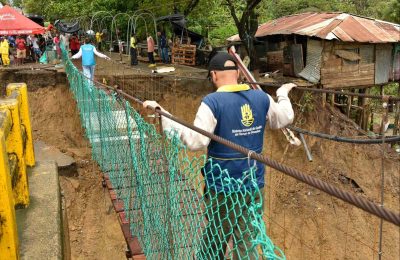
The government has activated a nationwide housing assessment while multidisciplinary teams of engineers, architects, and structural experts have been deployed throughout La Guaira, Miranda, and Caracas to evaluate earthquake-related damage.
“Teams of engineers, architects, and technical specialists are on the ground in La Guaira, Miranda, and Caracas verifying the structural safety and habitability of homes affected by the earthquakes,” Rodríguez stated.
Field inspections are being conducted through an expedited technical evaluation process that classifies buildings according to structural damage and safety risk.
Traffic-Light System for Housing Safety
The Acting President announced that authorities have implemented a color-coded classification system to determine whether homes are safe for occupancy:
Green: Homes are structurally safe and may continue to be occupied.
Yellow: Homes require repairs or rehabilitation before residents can safely return.
Red: Homes have sustained irreparable damage and are considered total losses.
The classification system is designed to facilitate the safe relocation of families to temporary shelters while helping authorities prioritize reconstruction efforts and allocate emergency resources efficiently.
“Based on this traffic-light system, we will determine whether each home is habitable. Green indicates homes that are safe to occupy, yellow identifies those requiring repairs, and red designates properties that have been permanently lost,” Rodríguez explained.
Rapid Housing Reconstruction Initiative
Rodríguez announced that the Ministry of Habitat and Housing is developing accelerated urban development projects designed to deliver thousands of permanent housing solutions before the end of 2026.
According to the Acting President, the new housing developments will be constructed as quickly as possible while adhering to strict seismic safety standards and will be located in areas deemed geologically suitable and free from significant natural hazards.
She reaffirmed the government’s commitment to remaining on the front lines of the emergency response alongside affected communities.
“The most important thing is that we do not give up. We remain committed to working with our people, standing beside them in their moments of grief, concern, and uncertainty, while above all providing concrete solutions,” Rodríguez said.
Emergency Coordination Command Established
The leader also announced the creation of a high-level Emergency Coordination Command responsible for overseeing the rapid construction of temporary camps and coordinating long-term housing solutions for displaced families.
The primary objective is to establish clear operational plans for the immediate installation of transitional shelters while accelerating permanent reconstruction efforts.
Humanitarian Assistance Reaches More Than 75,000 Families
National Assembly President Jorge Rodríguez reported that humanitarian operations have now reached 75,238 families across seven states affected by the earthquakes.
“To date, assistance has included hydration, food distribution, transportation to temporary shelters, psychological support, and comprehensive medical care,” he said.
From a public health perspective, authorities reported that 12,402 individuals have received medical attention. Of those:
- 527 patients were transferred to Caracas for specialized treatment.
- 4,093 people received medical care directly in La Guaira.
- 7,274 individuals were treated through emergency triage centers established throughout the affected areas.
Humanitarian Logistics Continue at Scale
Officials highlighted the importance of the national logistics operation in mitigating the impact of the disaster.
To date, authorities have distributed 22,478 food packages directly to affected families and transported more than 7.237 million kilograms of food supplies to the seven impacted states.
Emergency operations have also delivered 754,038 liters of potable water, ensuring access to one of the most critical resources for families living in temporary shelters and vulnerable communities.
Government officials emphasized that institutions remain on continuous operational alert, maintaining constant monitoring and active deployment to ensure that every affected family receives the assistance and support required throughout the recovery process.
Key Points
- Venezuela and the United States are coordinating disaster response efforts through direct engagement between the government and the U.S. Disaster Assistance Response Team (DART).
- Authorities have launched a nationwide structural assessment using a traffic-light system to determine whether damaged homes are safe, repairable, or must be replaced.
- More than 75,000 families have received humanitarian assistance, including food, drinking water, medical care, transportation, and psychological support.
- The government is preparing temporary shelter infrastructure while accelerating plans to build thousands of new earthquake-resistant homes before the end of 2026.
- Emergency operations remain active across seven affected states as authorities continue damage assessments and relief distribution.
The collaboration between Venezuelan authorities and the U.S. Disaster Assistance Response Team marks a notable example of operational cooperation despite years of strained bilateral relations, underscoring the humanitarian priority placed on disaster response. The rapid deployment of structural assessment teams, large-scale humanitarian assistance, and plans for long-term housing reconstruction suggest the government is attempting to transition quickly from emergency relief to recovery.
The success of these initiatives will be closely watched, as they will determine not only how effectively displaced communities are rehoused but also Venezuela’s capacity to strengthen disaster preparedness and resilience following one of its most significant seismic events in recent years.
 Latina Republic is a 501(c)(3) nonprofit organization that tracks government initiatives across Latin America and the Caribbean. We feature official updates on immigration, the economy, social welfare, environmental policy, and cultural stories, filling critical information gaps to highlight the region’s diversity, resilience, and wealth of lived experiences.