South Dakota is a small midwestern state with approximately 900,000 inhabitants. The state is known for being the home of Mount Rushmore and other regional parks that emphasize the state’s vibrant environment. The state is also home to 27,845 immigrants that make up for 3.2% of the state’s entire population.
Of this 3 percent, 8 percent of immigrants come from the Central American country of Guatemala, while another 7 percent come from both Mexico and the Philippines respectively, in addition to 6 percent being from Sudan and the last largest being 5 percent of the Ethiopian community.
Although a small percentage overall, the immigrant population is vital to the growing economy of the state in the production, maintenance and personal care sectors, according to the American Immigration Council. DACA recipients in the state are few as there have only been 241 individuals who have been granted this since its inception in 2012.

Immigrant Communities
In the late 1980s, thousands of Sudanese children fleeing from the country’s religious civil war left their homes and sought protection from hostilities in refugee camps. The male children came to be known as the “Lost Boys” of Sudan. The “Lost Boys” were forced to move from one refugee camp to another, with most ending up in Kenya. Many who started the torturous journey fell victim to gunfire, disease, predators, and starvation.
The United Nation’s International Organization for Migration found repatriation inappropriate for these refugees. Nearly 300 “Lost Boys” were relocated in South Dakota. Among those, 150 found homes in Sioux Falls where they have been welcomed by the community.
With the help of volunteer agencies and the Multi-Cultural Center of Sioux Falls, the boys have rebuilt their lives, states Victor Meledge-Ade in “Sudanese “Lost Boys” in Sioux Falls, South Dakota: A geography of cultural adjustment.”
As a first-generation American whose parents emigrated from South Sudan in the early 1990s, Abuk Jiel a senior Criminal Justice and Political Science double major at the University of South Dakota, who serves as the Student Body President and is the daughter of South Sudanese immigrants with bilingual community development experience, tells how she was constantly reminded of “how fortunate [she is] to be in the United States.”
In the Perspectives section of the Argus Leader, Jiel shares her story upon arriving in South Dakota: “I spent my early years romanticizing how easy my life would be compared to the horror stories of cultural and religious genocide my mother shared with me. I was also continually reminded of how my life was different from my white classmates.”
She continues,”Immigrants in this country face challenges unlike any the average American has seen in their lifetime. Refugees like my mother left their homes behind, left their families, children and jobs for the hope of opportunity, and more importantly a life without fear of being killed.
When my mother took her first steps outside of the Sioux Falls airport in the middle of winter, she wished for nothing more than the American dream, to become a citizen of this country and prosper in the land of opportunity.” In South Dakota, refugees “are still overlooked and seen as out of touch. But in reality, these very same refugees are the ones advancing our state to that we see around us today,” adds Jiel.
Meat Packers in South Dakota
More than half of frontline meatpackers are immigrants, according to a Center for Economic and Policy Research analysis, and roughly 80 percent are people of color. In their article on South Dakota’s meat packing industry and how a town welcomed immigrants to fill these jobs, Mother Jones reports that “relatively few US-born white people take notoriously grueling jobs in an industry where the average wage is about $14 an hour.”
For hundreds of first-generation Karen Americans, whose job prospects were limited the turkey plant was the best option available. “It was that reality that made Huron’s recovery possible,” writes Noah Lanard. Karen refugees from Myanmar settled in South Dakota; an ethnic and religious minority that have been persecuted in the country formerly known as Burma, their migration to South Dakota transformed the small community of Huron. Lanard tells that while some locals have struggled with the new arrivals, “the town’s turkey factory has welcomed the new workforce with open arms.”
This was in part due to city leaders’ efforts and determination to overcome prejudice and welcome the newcomers. Immigrants and their supporters spoke to churches and clubs to explain how Karen people had been forced out of their homeland.
They patiently answered questions, “even the ones about whether the newcomers would eat their neighbors’ dogs,” describes Lanard. The superintendent restructured the school system to make segregation impossible. Huron’s experience provides lessons for the nation, tells Mother Jones.
Meat plants, turkey and pork factories in South Dakota have opened doors for refugees. “An immigrant from El Salvador bought a three-bedroom home with a basement for her family. A single mother from Ethiopia sent her daughters to college.
A refugee from Sudan bought bunk beds for her boys, new couches and a dining table,” tell Caitlin Dickerson and Miriam Jordan of the New York Times. South Dakota has become “a kind of beacon of American prosperity for tens of thousands of employees who landed on the high prairie from Africa, East Asia and Latin America. But the opportunities were not obtained easily,” they report.
The meat plants became hot spots of coronavirus. Yet many workers said that before the virus hit, working in the meat plants “had offered them a life that otherwise would never have been possible as immigrants and refugees.”
The USDA echoes the sentiment, “South Dakota’s rural makeup has been a good fit for folks coming from all walks of life to settle down. Huron has embraced people from many different countries and cultures, and the trend is spreading to other South Dakota communities statewide.”
Immigrant Contributions to the Economy
Immigrants in South Dakota have contributed over $100 million in taxes.
- Immigrant-led households in the state paid $88.5 million in federal taxes and $49.2 million in state and local taxes in 2018.
- South Dakota DACA recipients and DACA-eligible individuals paid an estimated $510,000 in state and local taxes in 2018.
As consumers, immigrants add nearly half a billion dollars to South Dakota’s economy.
- South Dakota residents in immigrant-led households had $495 million in spending power (after-tax income) in 2018.
Immigrant entrepreneurs in South Dakota generate millions of dollars in business revenue.
- 756 immigrant business owners accounted for 1 percent of all self-employed South Dakota residents in 2018 and generated $6.4 million in business income.
§ 190 active DACA recipients lived in South Dakota as of March 2020, while DACA has been granted to 241 people in total since 2012.
Source: American Immigration Council.
South Dakota in Higher Ed
| International Students in Higher Education | 1,826 |
| Economic Contributions of International Students in the State | $39.2 million |
| Jobs Supported by International Students in the State | 269 |
| All Immigrant Residents in South Dakota | 35,647 |
| Immigrant Share of Total Population | 4% |
Source: Higher Ed Immigration Portal
Driver Licenses & Identification Mobility
Restrictive: Policies do not provide the state’s undocumented residents with access to driver licenses and state identification, but DACA recipients can still obtain a driver’s license or state identification card.
Nonprofits Serving Immigrants
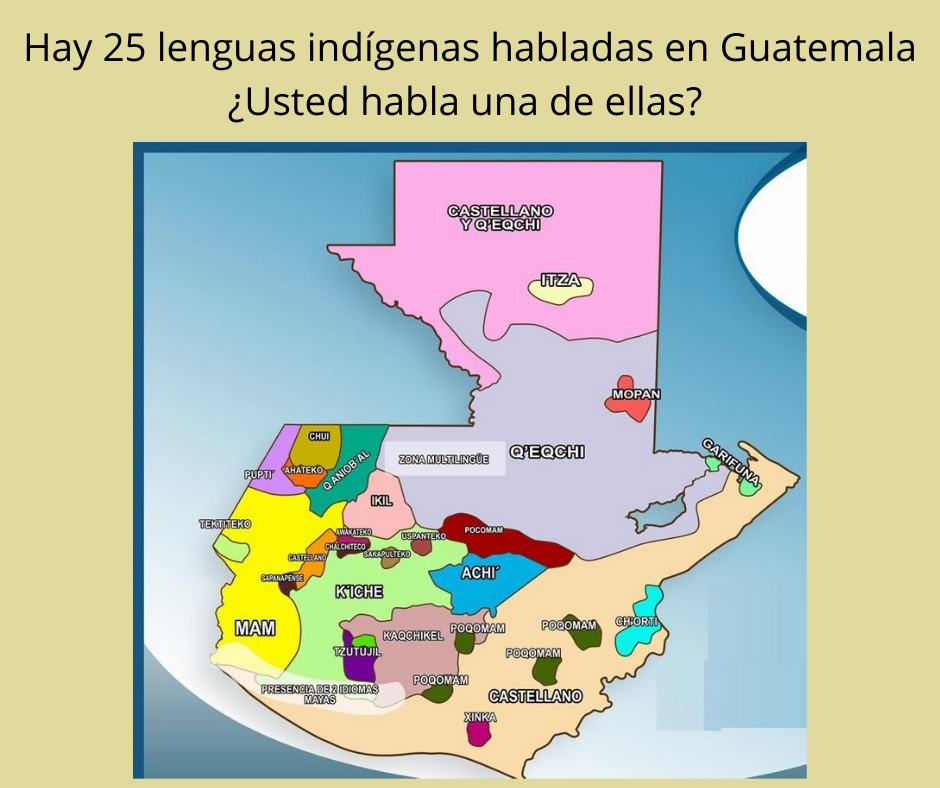
The Asamblea Guatemalteca of South Dakota is a local non-profit serving the Guatemalan community in Sioux Falls. Once a year, a mobile Guatemalan consulate stops in Sioux Falls. They help Guatemalan citizens renew documents like passports and IDs, sign marriage licenses and other legal paperwork for Guatemalan nationals who reside outside of their home country.
The consulate couldn’t come to the area last year. The Asamblea Guatemalteca of South Dakota’s goal is to educate, inspire and empower the Guatemalan community in South Dakota. The organization teaches locals about the rich Guatemalan culture.
South Dakota Voices for Justice is a lobbying organization that counters anti-immigrant, anti-refugee, and Islamophobic legislation in South Dakota, and works in coalition with all who fight bigotry and racism in the state.
SDVFJ has actively lobbied for or against over two dozen bills and resolutions since 2017. SDVFJ lobbies for inclusive legislation that supports or uplifts immigrant, refugee, and Muslim communities in South Dakota. During 2010-2016 legislative sessions, before SDVFJ began lobbying, 60% of bigoted legislation introduced was defeated, and 40% of bigoted legislation introduced was passed. After SDVFJ began lobbying, less bigoted legislation has passed.
The organization was vocal while former President Donald Trump attempted to remove the DACA program in 2017. They carried this advocacy on during the fight to halt the passing of SB 103, a bill that would have denied the acceptance of undocumented students and DREAMERs in higher educational institutions.
The bill was introduced by Republican Senator Stace Nelson and would have prohibited the acceptance of these students as well as blocked them from being able to receive any financial aid in the form of grants, scholarships and other forms of aid.

¿Que Pasa? Sioux Falls is a non-profit organization dedicated to providing resources and information to the Sioux Falls community. The organization directly interacts with members of the community through their Facebook account where they post messages informing the community of city updates, current events and even provide translations of laws and programs relayed by the state.
The organization also created a space for Latinos to connect with one another, boosting job opportunities and other resources for community members to interact with. The organization has received high praise for the work it has done. One member expressed her gratitude in a review for the page stating, “It is a blessing to have someone who translates into Spanish what is happening in Sioux Falls as there is no news in Spanish so go ahead, God bless your lives and your families.”
Governor Kristi Noem
On June 29, 2021, Republican Governor Kristi Noem deployed the National Guard from the state to assist the border patrol in the state of Texas after an influx of immigrants began to arrive. Arkansas, Florida, Nebraska and Iowa’s governors also agreed to send troops to the border. However, South Dakota is the only state that is using funding from a private Republican donor. William Johnson, a Tennessee billionaire, approached Governor Noem due to her state’s smaller budget and offered to make a donation for her to send troops with the donation rather than using taxpayer money.
South Dakota won't be taking any illegal immigrants that the Biden Administration wants to relocate. My message to illegal immigrants… call me when you're an American.
— Governor Kristi Noem (@GovKristiNoem) April 14, 2021
This raised alarms for many concerned individuals as the donation opens the opportunity for others to use donations to influence the choices of a government official. Democratic Senator Reynold Nesiba expressed disdain towards the donation as he explained that “This could set a dangerous precedent to allow anonymous political donors to call the governor and dispatch the Guard whenever they want.”
The governor’s tweets have been called “un-American, racist and heartless.” Former President Donald Trump issued an executive order allowing states and cities to refuse to accept refugees. President Joe Biden struck down that order in February. Islam, Executive Director for South Dakota Voices for Peace, says the governor’s decision “is ultimately not hers…The state, governor, cities, counties… Nobody has any authority over federal immigration law,” said Islam. “These children, when they come to South Dakota, they aren’t part of any agency. They are staying with people they presumably have a relationship with, and are vetted through the Health and Human Services office of refugee settlement.”
_______________________________________________________________________
 Kimberly Gabriela Martinez | University of California, Irvine
Kimberly is an undergraduate student majoring in Political Science at UCI. She grew up in a predominantly Latinx community in Southeast LA and is the daughter of two Honduran immigrants. Having seen the obstacles that many immigrants face first-hand has inspired her to pursue a career in immigration law. She hopes to amplify the voices of those in the community during a time where immigration has become one of the most polarizing issues in modern politics. Making sure that underrepresented stories and voices are heard is important in removing the negative stigma around the immigrant community and she hopes to contribute to this change.