

The Walled City: The Gem of Puerto Rico
As expected from the capital of the Commonwealth of Puerto Rico, San Juan is a very well-known Puerto Rican city. It is known for being the seat of the self-governing territory, a tourist spot, its nightlife and its history. It is also the oldest city in Puerto Rico and the United States; San Juan was founded in 1521 while St. Augustine in Florida was founded in 1565 and Jamestown was founded in 1607.
The city has seen the continued Spanish colonization of the island, the enslavement of African slaves, battles against English and Dutch privateers, piracy, an English invasion, a struggles for independence, the abolishment of slavery, an American invasion, the 1st World War, the Great Depression, rapid industrialization, the 2nd World War, the birth of the new millennium and the new world we find ourselves in. Although the island has seen immense change, the residential district of “Old San Juan” has not seen any drastic change as its charming and diverse architecture and cobblestone roads have stayed the same for many years.

The architecture of Old San Juan is diverse as it contains a mix of Neoclassical, Gothic, Baroque, Colonialism, Renaissance and others. The Plaza de Armas alone has a mix of different architectural styles with neoclassical, Elizabethan and Enlightenment influences in one place alone. The cobbled streets have remained in the same way, just as when the Spanish once ruled the island. Words alone cannot describe the marvel that is Old San Juan as it is truly one of a kind. Old San Juan is the cultural and architectural soul of Puerto Rico.

Old San Juan usually sees many locals come to celebrate an unofficial holiday, “Fiestas de la Calle San Sebastián”. It is a festival dedicated to the Christian martyr Saint Sebastian that lasts for four days: Thursday, Friday, Saturday and Sunday. The religious aspect of the festival is represented by a procession in honor of St. Sebastian followed by a mass, which is traditionally celebrated on a Saturday night.
Despite the religious significance, it is also a celebration to mark the end of the Christmas season. It is well-known locally for its traditional artisanry fair, chess games, music concerts and Bomba and Plena performances. It is a festival which tends to be packed to the brim with people in Old San Juan. According to the official website of the Municipality of San Juan, in recent years, attendances from tourists and local visitors has been estimated to exceed 300,000 people.
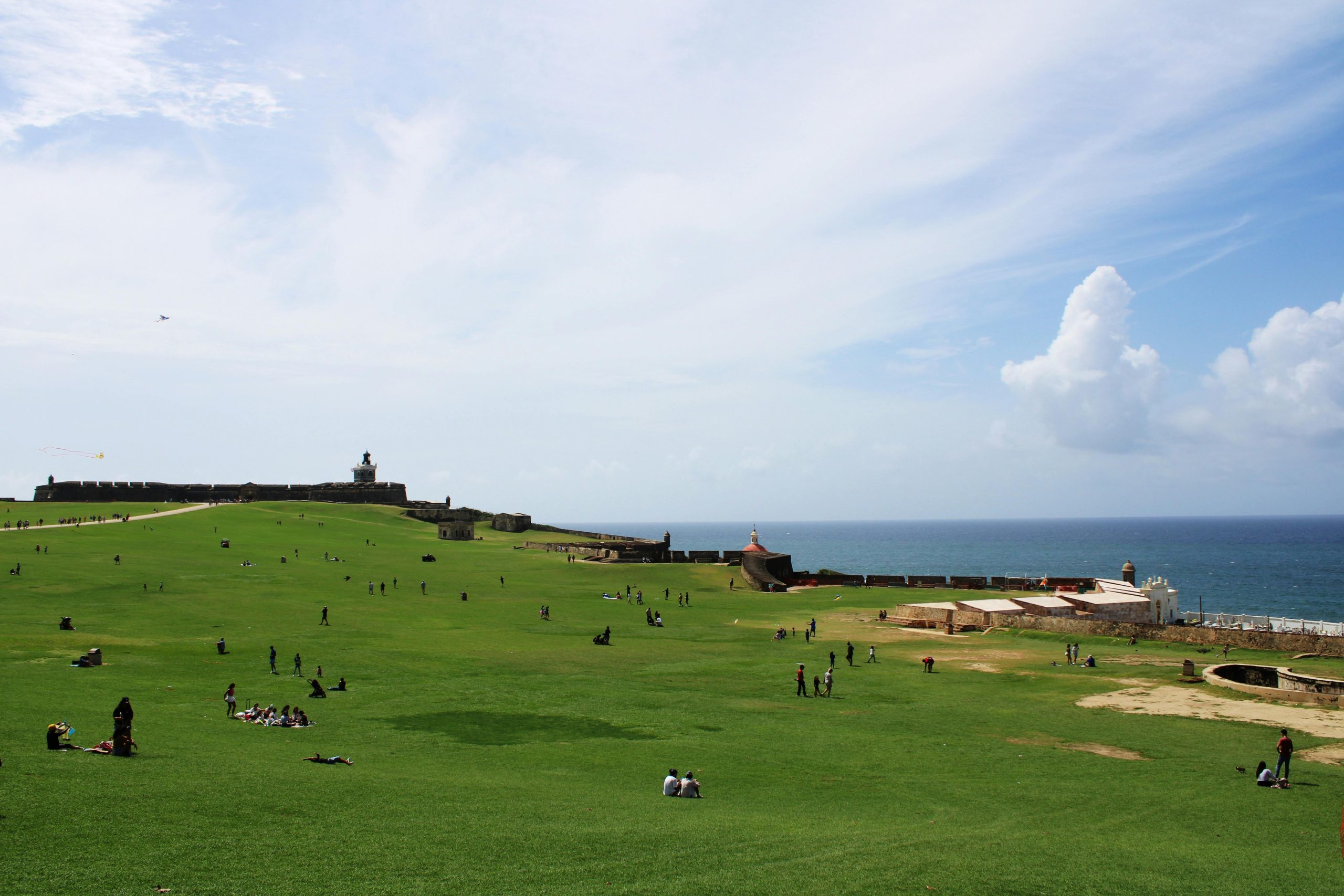
This historical district has many historical sites in the Walled City such as the 19th century cemetery Santa Maria Magdalena de Pazzis Cemetery, the San Juan Cathedral, Calle Fortaleza, Puerta de San Juan, and the multiple colonial-era Spanish forts. The most famous of these forts is the “Castillo San Felipe del Morro,” which is usually referred to as “El Morro.” It is among the largest fortifications built by the Spanish in the 16th century alongside it having been infamous for being difficult to capture – though Earl of Cumberland George Clifford managed to capture the fort, he was not able to hold it before dysentery wreaked havoc unto his men. Nowadays, it is a famous domestic and international tourist spot where many go to fly kites under the tropical sun.
There is also the “Casa Blanca” which was the home of the descendants of Juan Ponce De Leon and future governors of the island until the “Palacio de Santa Catalina de Alejandria” – now known as “La Fortaleza – was modernized; nowadays, the Casa Blanca serves as a museum. However, La Fortaleza continues to serve as the official residence for the governors of Puerto Rico since the 16th century, making it the oldest state residence in continuous use in the Americas as it served as the gubernatorial residence since 1544.
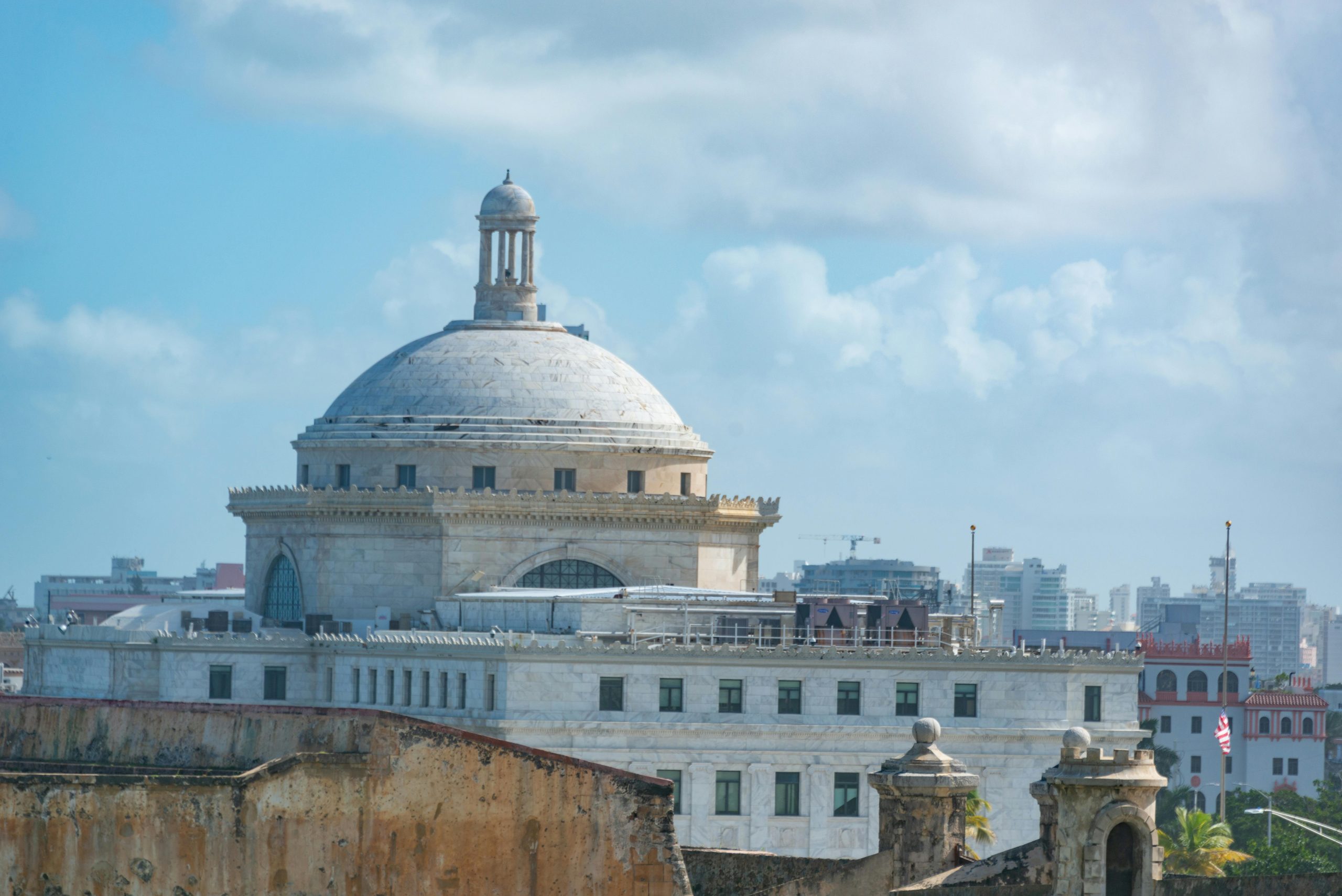
The Capitol of Puerto Rico is also located in Old San Juan and, across the street from it, on Constitution Avenue is the Walkway of the Presidents. The Walkway of the Presidents features a statue of each US President who has visited the island since the end of the Spanish-American War. The presidential statues in the walkway are, in order of time in office: Theodore Roosevelt, Herbert Hoover, Franklin D. Roosevelt, Harry S. Truman, Dwight D. Eisenhower, John F. Kennedy, Lyndon B. Johnson, Gerald Ford and Barack Obama.
Old San Juan is the beating heart of Puerto Rican culture, what it was before and what it is now. Whether under Spanish or American rule, Puerto Rican identity has persisted and flourished. Much like how New York City, Moscow and Paris are eponymous with the United States, Russia and France culturally and historically, San Juan is the place eponymous with Puerto Rico’s history and culture. For those who leave the island in search of a better life, even if they leave, they remember the massive walls of El Morro and the cobbled roads of Viejo San Juan and the full view of the vast sea on the horizon.
 Derek Roldan | Latin American Correspondent
Derek Roldan Torres is a Puerto Rican senior student who is currently studying at the University of New Haven, pursuing an International Affairs degree. Through his research and writing, he wishes to bring to attention the political issues the Caribbean and Southern Cone currently faces and the stories it holds. Through the Caribbean, Cuba tends to dominate the American news cycle while some stories in Jamaica, the Dominican Republic, Puerto Rico and etc. go relatively underreported by comparison. Through the Southern Cone, the region proves to be an especially important battleground as its economic importance increases. In reporting and researching these regions, he hopes to increase the understanding of these regions and their importance to the United States and the wider world to an English-speaking audience.

