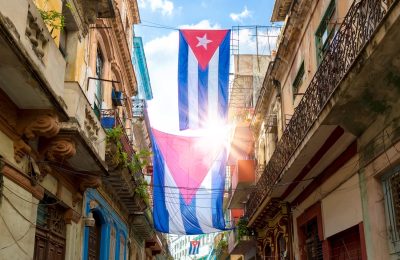


“The stories I seek always have a soul, some more damaged than others, but I’m not as drawn to beauty as I am to authenticity,” Amalia Denise.
Amalia Denise’s journey into photography is a story of personal discovery intertwined with a deep commitment to documenting the world around her. “I am from Pinar del Río, a province in the western part of Cuba, and I moved to Havana during my adolescence,” she shares.
Thinking of her childhood, Amalia recalls vivid memories. “Perhaps the first thing I understood about photography is that it works as a form of communication. My mother was far away, and I grew up with my grandparents looking at their photos. It was a way to be with her, to feel what she was experiencing. I believe that sense of sensitivity and space moves me within the stories I want to tell.”

Though her initial interest in photography was driven by a desire to capture beauty, it was during a photojournalism class that Amalia’s perspective began to shift. She discovered that photography had a much greater role to play, particularly as a tool for storytelling and bearing witness to the human experience.
“At first, I thought I could capture beauty, but before starting my studies, I took a photojournalism class where I discovered that photography also has a testimonial purpose,” she says. “I began searching and searching for references that led me to some of the greatest documentary filmmakers from my country, like Landrián, Raúl Corrales, Korda, and the work of Sara Gómez. Perhaps my appreciation for these filmmakers (Sara Gómez and Landrián) also influenced my interest in documentary cinema. Then, I discovered a torrent of very talented photographers around me, and that is very inspiring.”


The themes that Amalia chooses to explore in her photography are deeply personal and rooted in her commitment to authenticity.
“The stories I seek always have a soul, some more damaged than others, but I’m not as drawn to beauty as I am to authenticity. As for the themes, I enjoy getting to know rural communities, their way of life, and what makes them stay in such remote places, especially given the internal and external migration situation that my country is going through. Recently, I visited Sierra del Rosario as part of an anthropological research project at the university, and it was a wonderful experience.”


As Amalia describes, “It was a community of no more than six homes, with at least a kilometer of distance between each one. From there, I was able to understand broader issues through immersive journalism. It’s not just the photographic documentary testimony, but also the interviews and the observation that build the story,” she explains.


“And that’s what I aim for,” she clarifies, “to build a message that can touch people’s hearts and humanize the work.” Amalia shares that she’s just getting started in photojournalism, and even at this early stage, she feels a sense of community is arising around her. “I have so much to be grateful for to my generation because I feel the same emotions in their photographs,” she reflects.

While many projects have left a lasting impression on Amalia, one in particular stands out due to its historical significance.
“The first project I found heart-wrenching was the photographic series on the Reconcentración of Valeriano Weyler. It depicts the fascist model of overcrowding in the rural areas of western Cuba as part of the colonial policy in 1896. Weyler was the general in charge of the extermination of almost 10% of the population at the time, and the photographs show the conditions of famine and misery that citizens endured.”


Thinking of its impact, Amalia says it’s painful, but “also a mark of our history.” That series inspired her to explore photography with more depth.
“I believe it really struck a chord with me to continue researching documentary photography. Through that, I also came to understand the respect for my reality and the need for a country to document its time. I greatly admire the work of contemporary Cuban artists like Linda Esperanza Aragón, Manuel Almenares, and Raúl Cañibano. There is so much sensitivity in their lenses.”

In recent years, Amalia has become involved with environmental activism through the group aCOSTAo/Comunidad Ambientalista, which has expanded the scope of her work.
“We started the project as a group of university friends, and getting involved in environmental activism was a huge challenge. In Cuba, it’s necessary to work on policies that respect and preserve ecosystems, both at the industrial level and in smaller practices, like fishing. In recent years, projects have emerged, mostly led by young people, as well as small environmentally responsible businesses that have teamed up with institutions within the larger space of the Red Verde (Green Network).”


“Documenting part of the activism within the Network and also being a member of it influences the themes I’m interested in addressing, and it’s also a way to analyze the environment and the relationship people have with it. aCOSTA not only opened a door for me to engage in projects related to these causes, but I also taught me the value of friendship and teamwork.”

Amalia is also keenly aware of the broader environmental issues facing Cuba. She recognizes the strength of the emerging environmental movements within the country, particularly among young people.
“In the environmental landscape, I believe the Red Verde de Cuba is quite powerful, and the emerging projects have promoted environmental preservation. However, at the institutional level, there is a noticeable neglect of some communities affected by pollution, and journalism is a way to highlight and even denounce these issues.”

Amalia explains that community concerns about pollution sparked investigations, which in turn inspired photographers to highlight the urgent environmental issues that need attention.
“Last year, investigations were conducted on the pollution of Cuba’s rivers due to industrial waste and the increased food safety risks associated with consuming fish from these contaminated freshwater sources. There were also reports on areas polluted by waste burning, deforestation, and accumulated garbage. I’ve seen these works in the independent press, and the reports point to the need for environmental policies and the intervention of state entities in addressing the pollution issue.”

“As for me, I continue to stay involved in initiatives for waste collection along the coastlines. I don’t yet think I have a photographic commitment beyond what I can contribute practically, first and foremost.”
Balancing her work as a journalist and photographer, Amalia strives to approach each project without preconceived notions. “I don’t have prejudices,” she says, “or at least I try to strip myself of most of them when starting a project. There are moments that could be difficult to capture, both for me and for the people involved, and I’m referring to moments of vulnerability—something I felt during my visit to the evacuation center in Artemisa after Hurricane Rafael passed through.”

As she shares, Amalia’s journey through photography is still unfolding. “I am too young to understand life through photography. It’s a path I am still discovering, and I would like to learn more, mature more, and live more in order to have a solid opinion. I hope that, at any point in my journey, I will always stay true to reality,” she admits.

As for her place in the Cuban photographic community, Amalia’s contributions reflect the collective spirit of her generation—one that is deeply committed to documenting Cuba’s realities.
“My strongest connection to photography on an institutional level comes through my university studies. I still don’t belong to artistic collectives or associations. However, I know there is a lot of support within the community and on social media, which serves as a very useful platform for distribution.”

Regarding her training, it’s been a blend of courses and self-teaching. “I started off as a self-taught photographer and later took classes in my Journalism program. Since then, I’ve become more interested in researching and developing my appreciation for photography.”
Amalia believes that the Cuban artistic scene is in full development.
” I believe there is great documentary work being done in my country, and the photographers I know from my generation share this sensitivity I often speak of. I greatly admire the work coming from Cuba. It’s inspiring that in such a time of deep crisis, photographers are stepping up to document it with their own resources, which are hard to come by in the country, both in terms of access and budget.”

There is a generational need to document our times, beyond just ourselves, in places far removed from the city and from the image people outside of here may have of us. When this concern reflects itself in popular culture, it means we have a place and a time to tell.”
To Learn More Visit:
 Soledad Quartucci, CEO, Latina Republic
Latina Republic envisions a world where the beauty and resilience of Latin American and Caribbean cultures are recognized and appreciated globally. By amplifying the voices of artists and cultural custodians, we strive to cultivate a deeper understanding of the region’s challenges and triumphs. Our goal is to inspire greater appreciation for the arts as a tool for empathy, unity, and transformative social change. Through our work, we aim to equip all stakeholders with essential insights for addressing regional challenges, ultimately enriching the global cultural landscape and portraying the victories and hardships of everyday life in Latin America.