
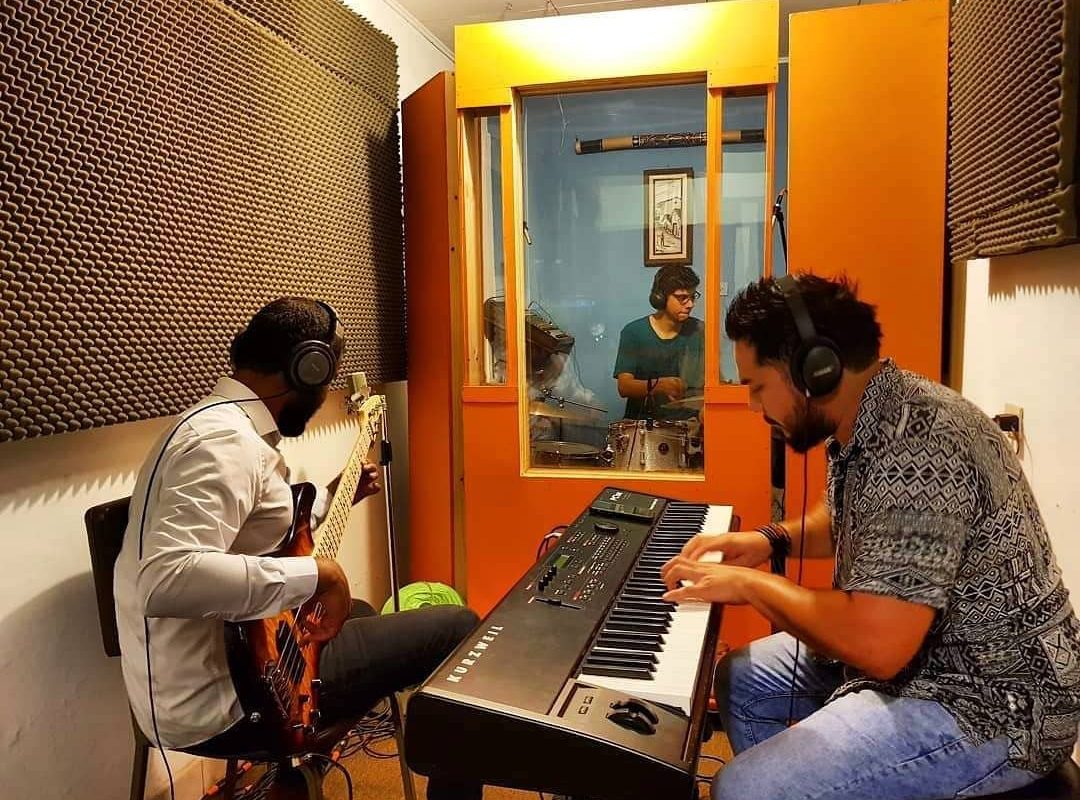
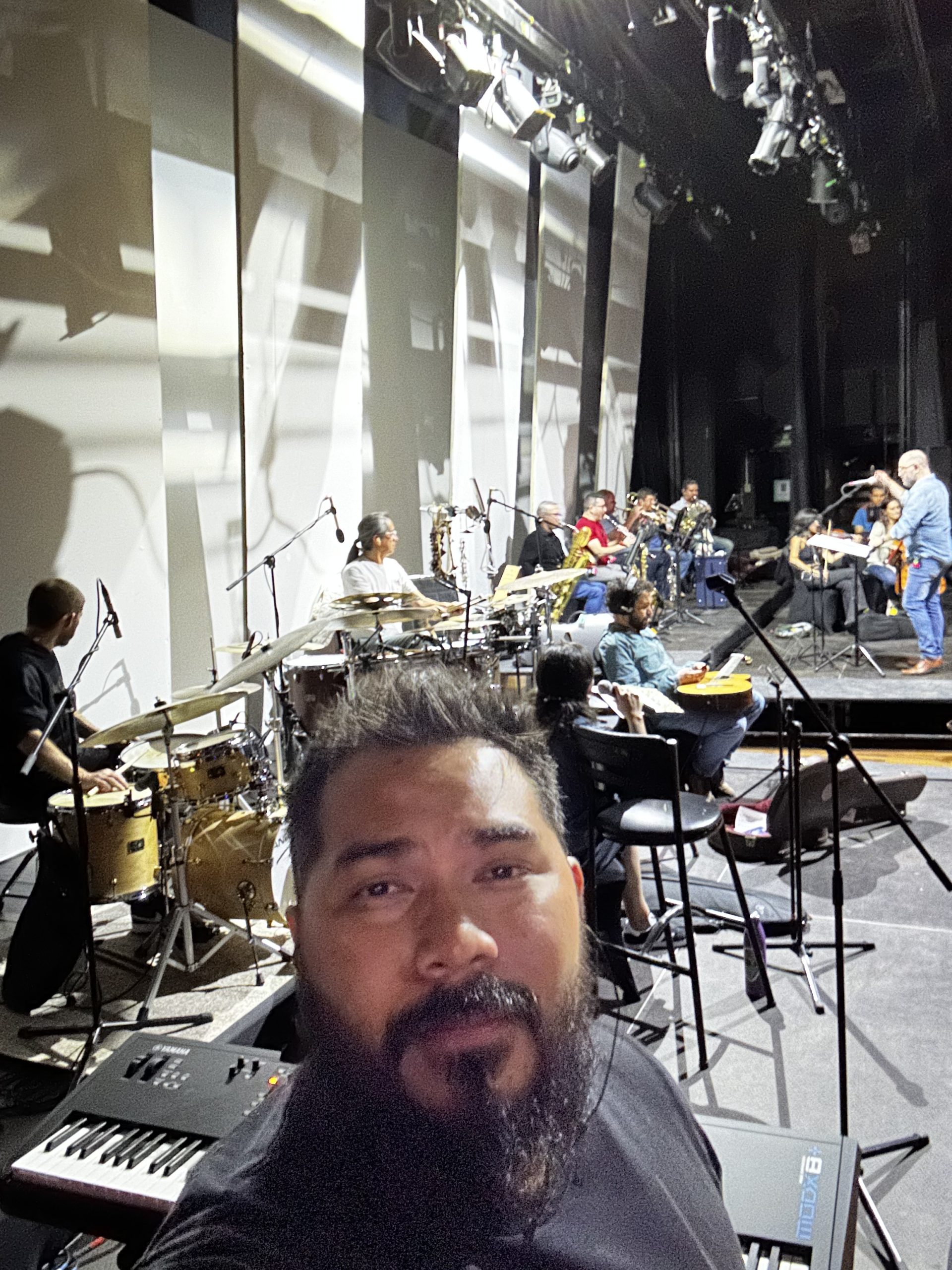
“I enjoy studying, playing in ‘chivos’ or concerts, jazz jams, composing, improvising, and teaching—meaning I spend the entire day alongside my instrument,” Oskar Molina.
Oskar Molina’s musical journey is as dynamic and heartfelt as the sounds he creates. Born on August 7, 1988, in San Salvador, El Salvador, Oskar’s relationship with music began long before his conscious memory. “According to my mother’s stories, I’ve been making music since the womb,” he shares.
“As a young child, I would make music with pot lids, empty cans—anything that made a sound, I would create a rhythm.” This early fascination with sound evolved naturally into a deeper connection with music.
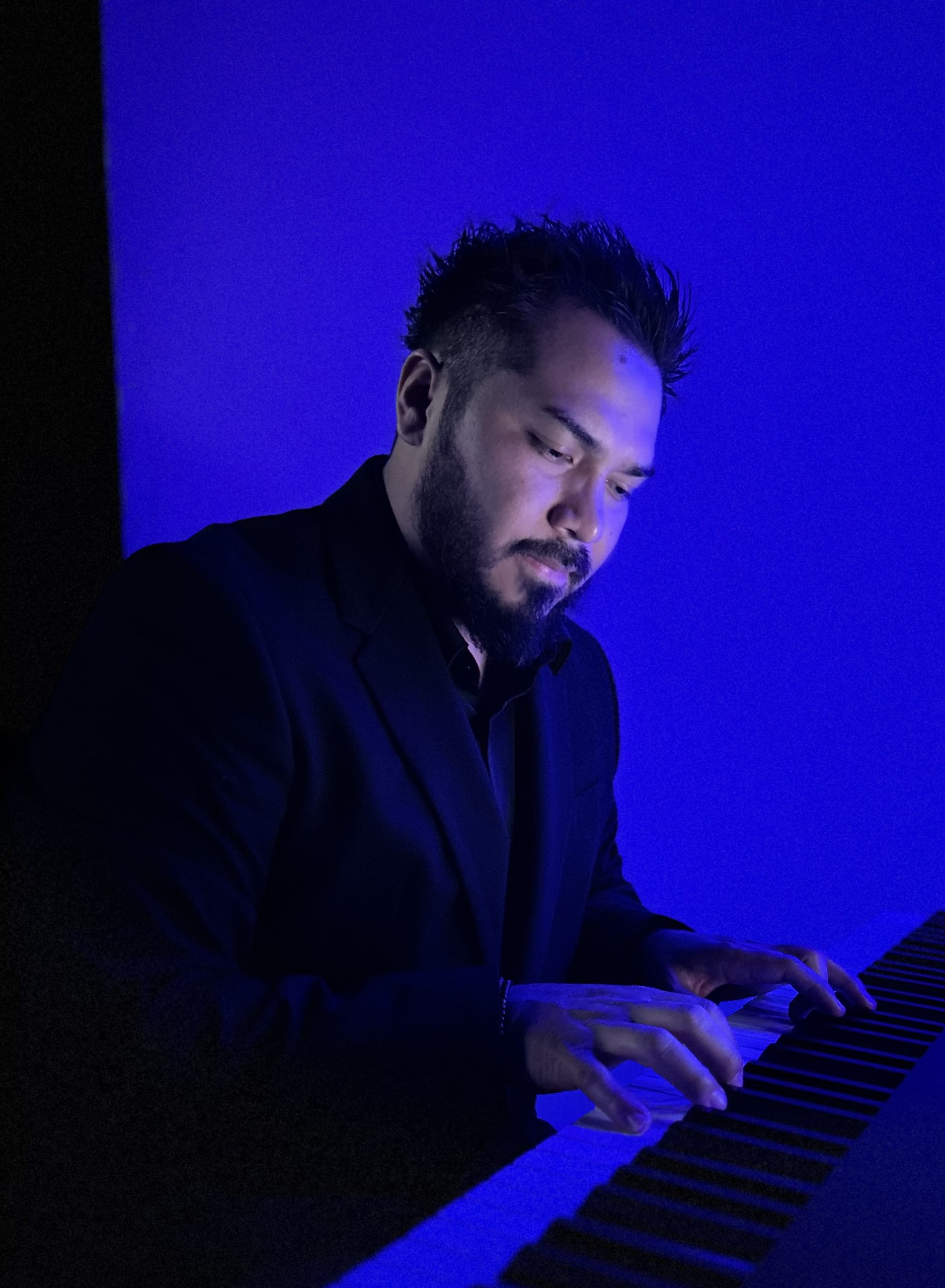
His mother enrolled him in flute and guitar classes, but as Oskar reflects, “I never really connected with the instruments. What caught my attention was the piano keyboard.” After that, Oskar says his process was self-taught.
“I would pick out melodies by ear. I couldn’t develop music reading skills in my childhood, but together with friends, we’d figure out simple pieces. I learned basic chords, and during my childhood, I was part of a children’s choir, where I played chords and melodies for Sunday Masses,” he shares.
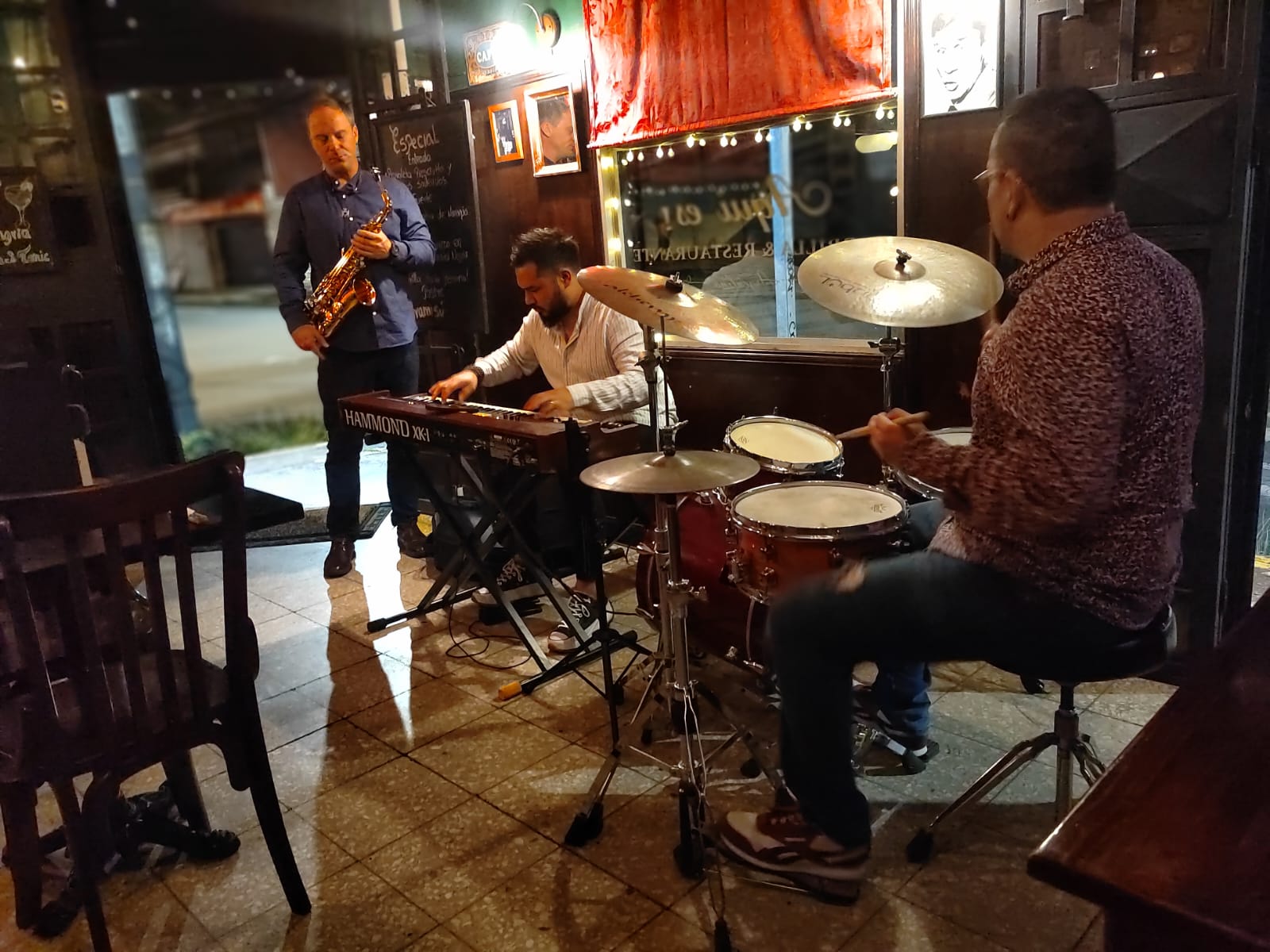
At the age of ten, he began taking piano lessons with Professor Bracamonte at the University of El Salvador, but it was not until later that he realized the full extent of his love for the instrument.
“After that, my process was self-taught. I would pick out melodies by ear. I couldn’t develop music reading skills in my childhood, but together with friends, we would figure out simple pieces. I learned basic chords, and during my childhood, I was part of a children’s choir, where I played chords and melodies for Sunday Masses. At Colegio Santa Cecilia, I was part of the youth orchestra, where we played merengues and cumbias under the direction of Maestro Benjamin Mazariego. Later, my friends and I formed a Batukada group, and we even had a reggae and ska band that we called Rey Azúcar.”

His love for music continued to deepen as he honed his skills, eventually leading him to formal studies. “At 19, I began my studies with pianist and teacher Giovanni Ardón at the Ancalmo Foundation. From that time, I started formal piano studies, learning theory, sight-reading, history, and academic repertoire. I participated in various internal competitions at CENAR, and through that, I met Dr. Gerardo Meza, who invited me to audition for schools in Costa Rica.”
Oskar’s path brought him to Costa Rica in 2010, where he was confronted with the challenge of elevating his skills to meet the high expectations of the country’s music scene. “When I arrived in Costa Rica, I was very surprised because the artistic level, especially in piano, was very high. So, I had to immerse myself in the university’s practice rooms to study and try to raise my level even higher to be able to enter the program. I spent a year and a half taking classes at the pre-university level and with private teachers, until I finally achieved the goal of entering the piano program.”
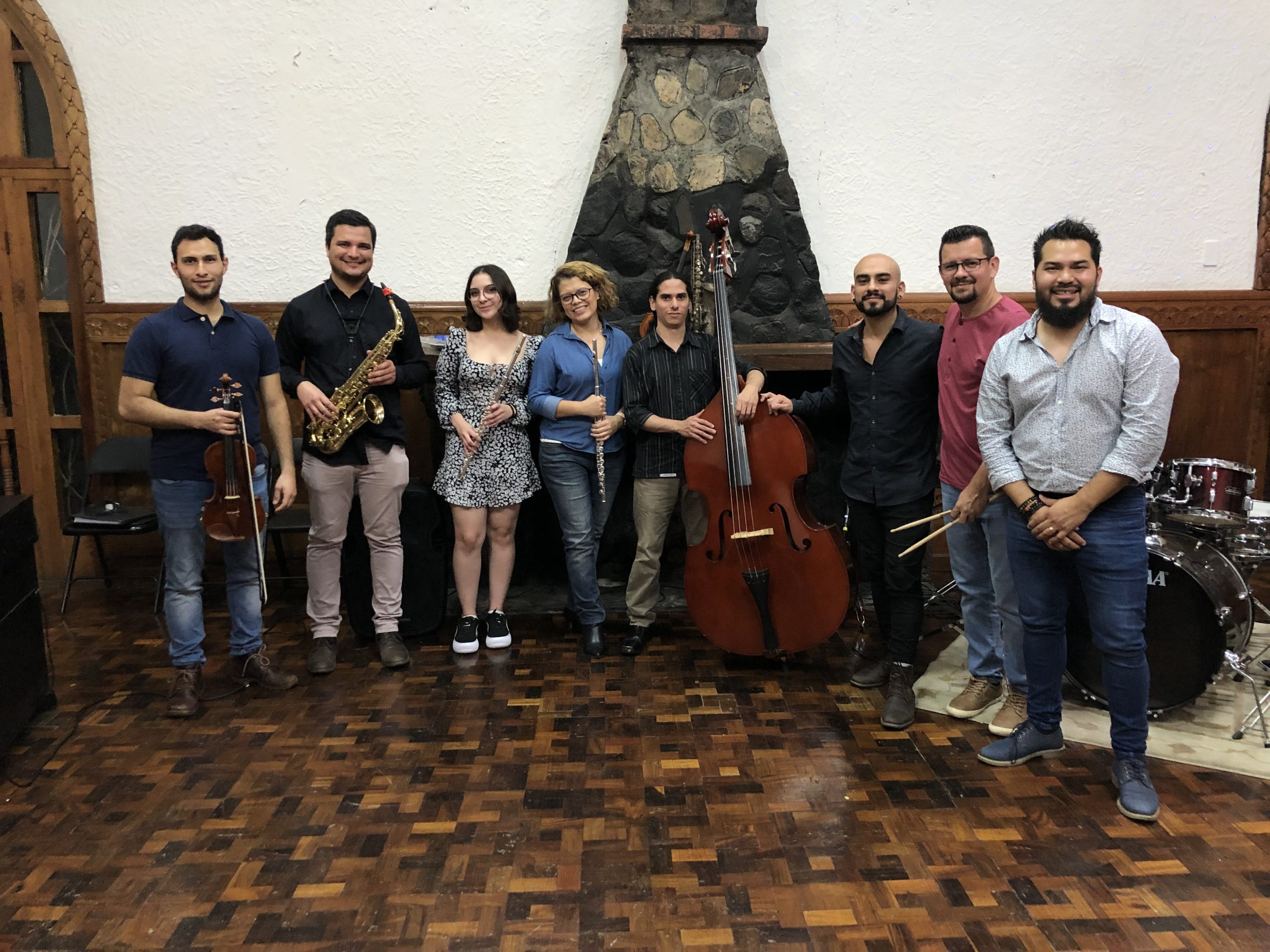
While his journey had its challenges, Oskar credits his family, particularly his mother, for their constant support. “My family has been a great support in each of my processes, especially my mother, who always motivated me to be part of musical projects and even encouraged me to take classes with high-level professors.”
As Oskar explains, “Initially, my mother saw the piano as a hobby and not as a professional career. Before starting my piano studies, I was studying industrial engineering, and alongside that, I took classes at the Ancalmo Foundation and CENAR (National Center for the Arts), where I met Professor Geovanni Ardon. He was the one who motivated me to make the decision to pursue a career in piano performance.”
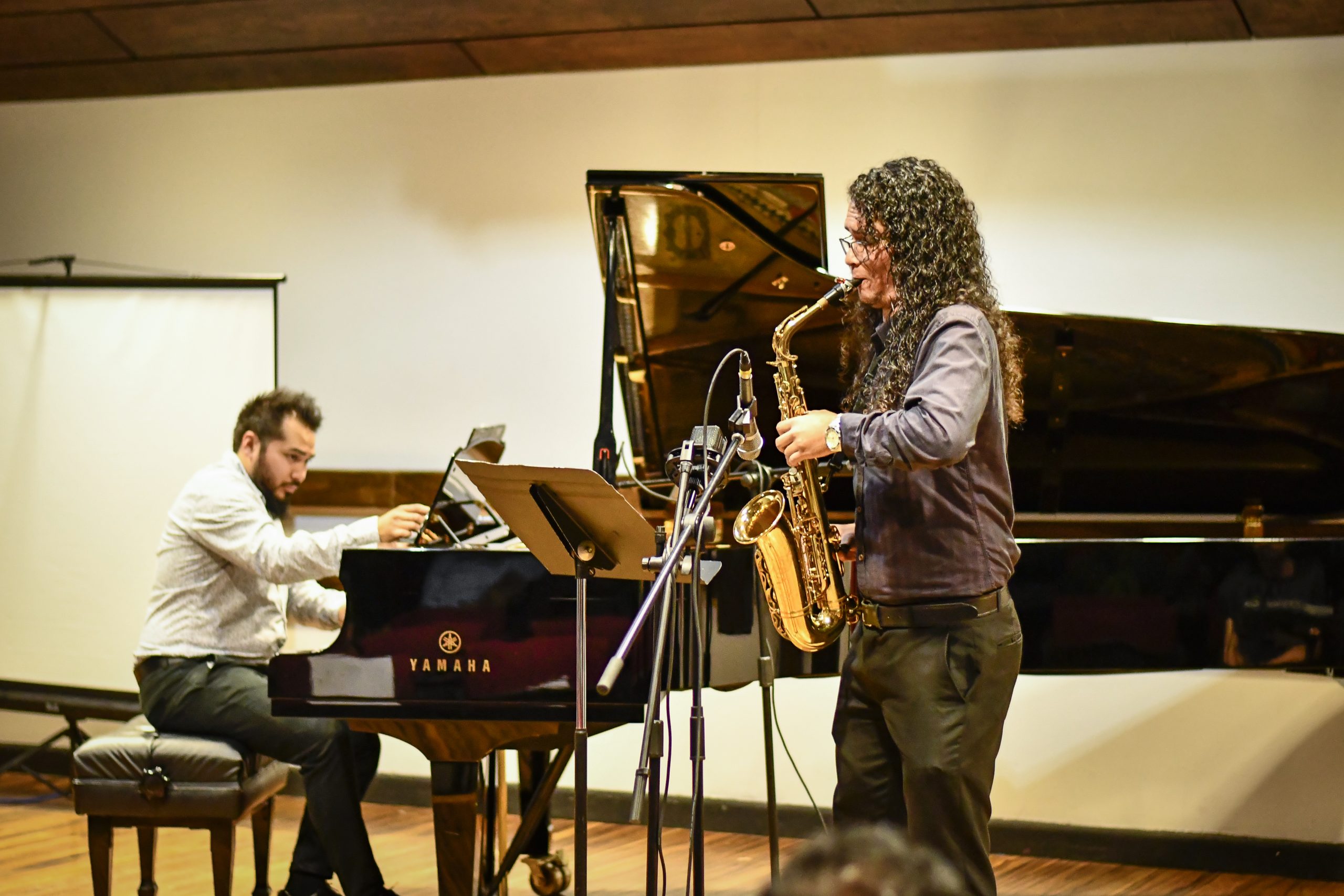
He shares that once his mother saw his determination to develop as a pianist, “she didn’t hesitate to support me.” Next, Oskar embraced a new adventure, moving to Costa Rica to continue his studies.
Today, Oskar’s life is a delicate balance between his many roles: teacher, accompanist, composer, student, husband, and son. He reflects, “Organizing my time and balancing being a teacher, an accompanist pianist, and a composer is not an easy task. Along with all of these activities, I am also a student, a husband, and I try to be a son and a brother from a distance. In short, my life is full of many activities, so it’s essential for me to be very organized, set small goals, keep an agenda in hand, have schedules even for taking a breath, and sharing time with my wife and friends.”

In his life, music isn’t just a career, it’s a way of life. “I enjoy studying, playing in ‘chivos’ or concerts, jazz jams, composing, improvising, and teaching—meaning I spend the entire day alongside my instrument. Being a pianist has become a lifestyle for me, and even for my wife, who has also supported me in that decision.”
He adds, “I really don’t work. I have so much fun with every student, concert, or even when I’m by myself at the piano, enjoying every moment and every activity I do with my piano.”
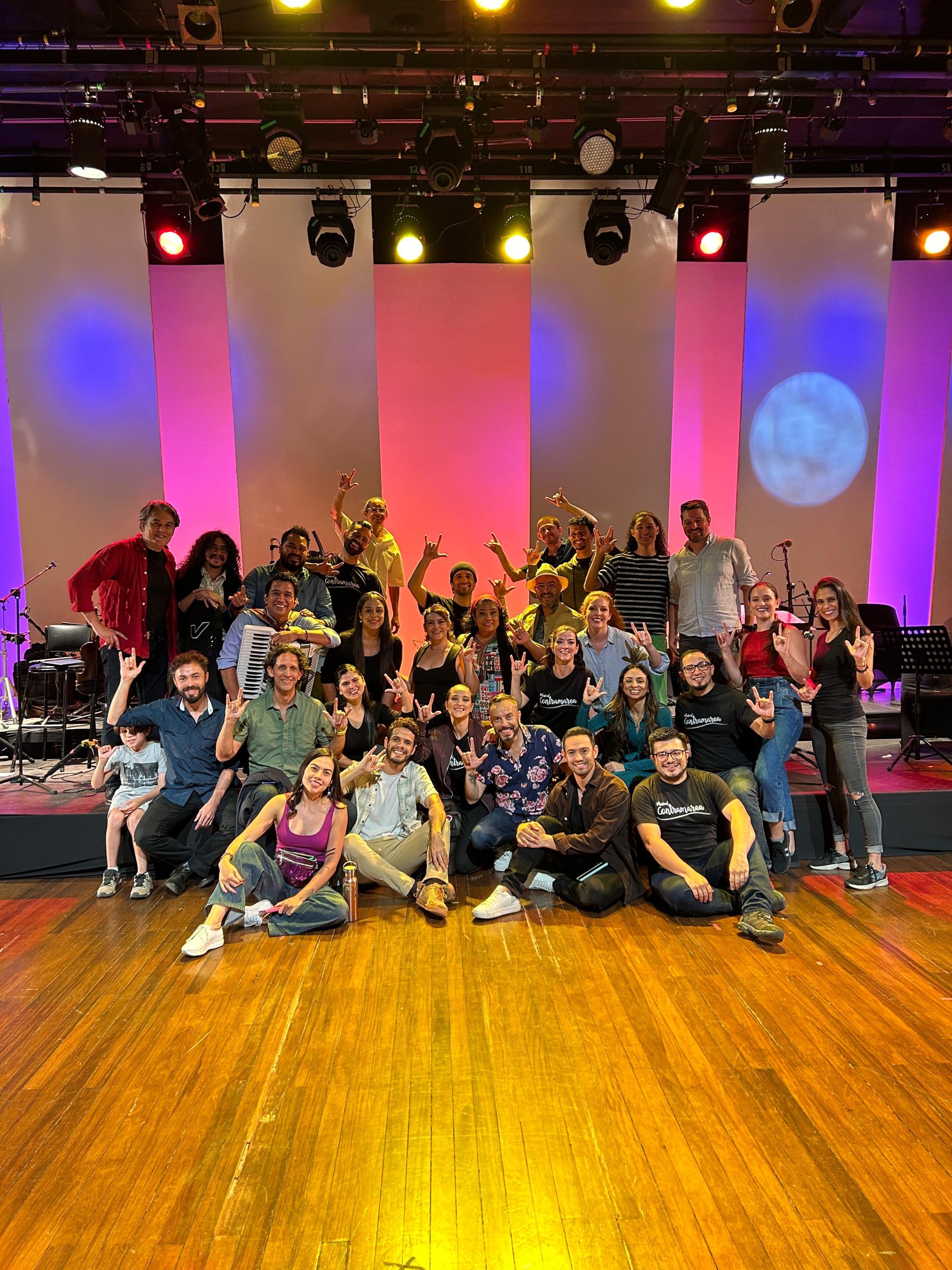
Teaching is also a deep source of fulfillment for Oskar. “Since I decided to become a musician, I loved the idea of sharing the knowledge I was accumulating. It even helped me as a student because I would review the concepts I received in lessons with my teachers, which allowed me to understand them more deeply. When I explained them to children or even to my peers, I would end up fully grasping key strategies needed to be a pianist.”
Reflecting on his journey, Oskar acknowledges he developed some habits that experience helped him to improve. “During my self-taught process, I developed poor posture, different study strategies, and many bad habits. But thanks to those differences, I was able to view traditional music study methods from a new perspective.”
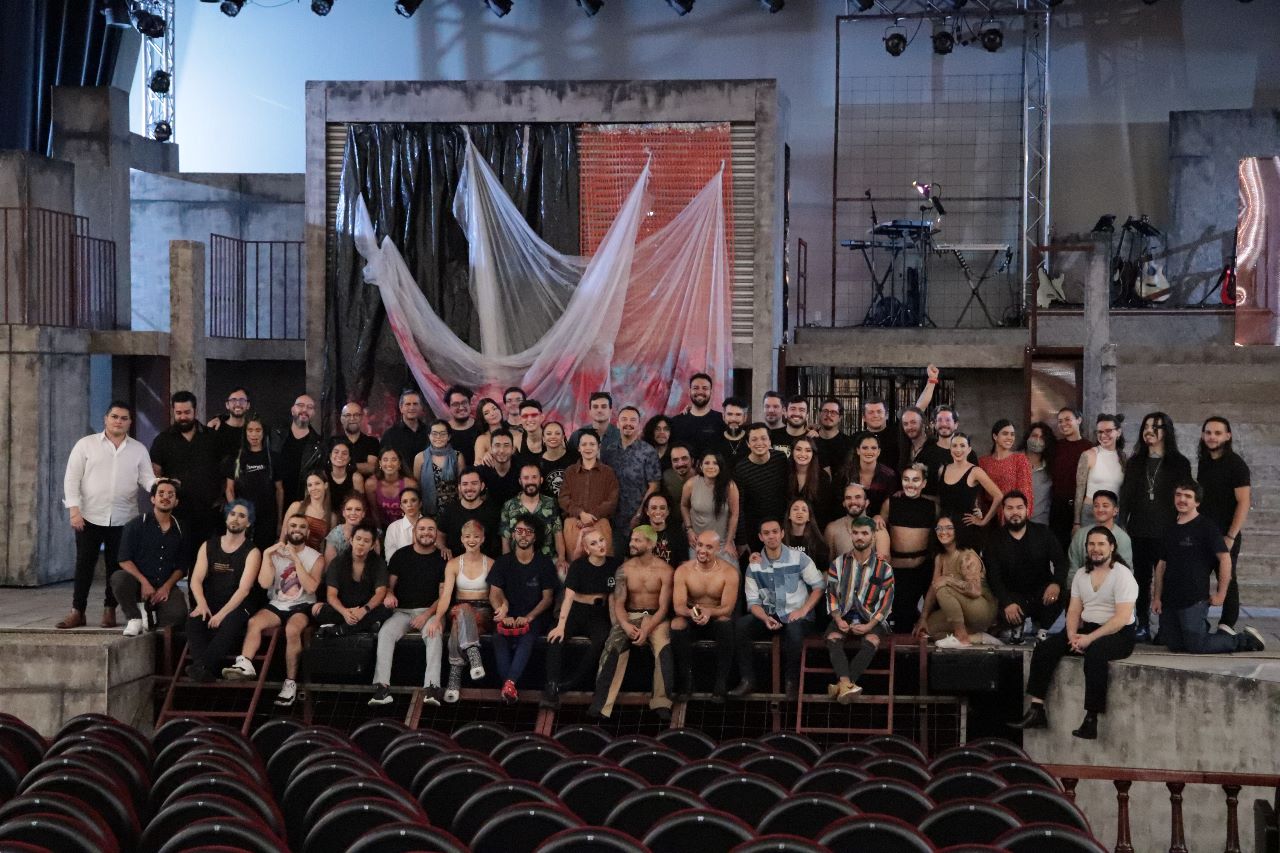
This self-awareness carries over into his teaching, where he values the process of seeing his students grow. “The most rewarding thing is seeing the hope and joy in their eyes when they manage to play music. When they even sound different from when they first came into class, when they are able to play a piece from start to finish, when they are able to improvise…seeing those processes grow is one of the gifts that teaching gives you.”
As an accompanist, Oskar has encountered his fair share of challenges, especially in sight-reading. “The biggest challenge as an accompanist pianist was developing sight-reading skills. Reading for accompaniment has to be both panoramic and simultaneous—horizontal and vertical at the same time.”
Yet, this challenge has become one of the most fulfilling aspects of his work. “Accompanying is one of the activities that continues to help me improve my level as a musician. It challenges me daily and demands that I stay active.”
Over the years, Oskar has also developed a deep passion for jazz, and the art of improvisation in particular. “One of the most important aspects to develop in jazz music is phrasing, and the development of improvisation. Throughout my experience, learning jazz phrasing has been quite a challenge. It’s practically like learning a new language; literally, it’s about learning phrases, sound, intonation, and rhythm to truly be part of the style.”
He goes on to describe how this process unfolds in his workshops. “In my jazz workshop, I have students ranging from beginner to intermediate levels, many of whom do not yet have full mastery of their instrument. One of the activities I focus on developing is transcription.”
For Oskar, jazz isn’t just about technical proficiency; it’s also about freedom and creativity. As he puts it, “Spontaneity and creativity are things that cannot be taught, but they are things that can be developed.”
He continues, “To achieve parallel work between improvisation and technical development, a lot of creativity and playfulness with the instrument is required.”
His teaching philosophy also extends to classical music, as he seeks to instill both technical skill and creative freedom in his students. “For this, it’s necessary to develop basic and technical aspects such as the execution of intervals, arpeggios, scales, melodies, rhythms, and phrases; but above all, it’s necessary to develop the internal and musical ear. If you don’t hear it internally, playing an instrument would be very abstract and difficult.”
Reflecting on his own development as a composer, Oskar has come to appreciate the importance of studying and understanding the works of classical composers. “I think that, to become a composer, it is necessary to go through the study of different composers, perform their pieces, and analyze them, to understand or put yourself in the composer’s shoes, in order to understand how the creation process works.”
For Oskar, classical composers such as Bach, Beethoven, and Chopin are foundational. “In my formation as a musician, I cannot overlook classical music. Composers like Johann Sebastian Bach, Mozart, Beethoven, Chopin, Debussy, Kapustin, to name a few, have been my foundation or starting point.”
His own compositions are deeply personal and reflect his journey. “For example, the composition ‘Tres Esmeraldas’ was inspired by the feeling and love I have for my mother, sister, and niece. ‘Waltz for Xot’ was a composition I dedicated to Xotchil for our wedding day, and it was inspired by her. ‘Alf’s Riff’ and ‘Alf Dance’ were creations inspired by my pet Alf.”
Oskar’s life and music are a testament to the power of dreams, perseverance, and passion. “The greatest lesson that music has taught me up until this point in my life is that dreams and whatever we set our minds to can be achieved in this life. I have always kept in mind the Chinese proverb that says, ‘Strong souls have willpower, weak ones only have desires.’”
For Oskar, this mindset has been central to his journey. “If the dream is alive in our thoughts, we work cleanly in our process and find a way to fully exploit our talent to bring it to life, we will fill ourselves with patience and humility, and life itself and the circumstances will begin to open doors and narrow paths to achieve what we have dreamed of.”
As he looks to the future, Oskar remains focused on continuing his work and letting his musical path unfold in unexpected ways. “It’s not an easy process to work on our will, but looking back, and reflecting, my journey has taken me to many places I never imagined I would be. For now, all I can do is keep working on my projects, creations, and studies, hoping that these will take me to other places I have yet to reach.”
To Learn More Visit:
 Soledad Quartucci, CEO, Latina Republic
Latina Republic envisions a world where the beauty and resilience of Latin American and Caribbean cultures are recognized and appreciated globally. By amplifying the voices of artists and cultural custodians, we strive to cultivate a deeper understanding of the region’s challenges and triumphs. Our goal is to inspire greater appreciation for the arts as a tool for empathy, unity, and transformative social change. Through our work, we aim to equip all stakeholders with essential insights for addressing regional challenges, ultimately enriching the global cultural landscape and portraying the victories and hardships of everyday life in Latin America.