


Colombia Debates New Abortion Ruling
Colombia’s Constitutional Court decriminalized abortion during the first 24 weeks of pregnancy in a historic court decision last week. It comes in a moment when young women are struggling with lack of opportunities and limited access to sexual health.
However, the ruling has left the country divided, with many advocating for female reproductive rights and freedom of choice while others, including the president, countering the pro-choice movement in support of preserving human life at all costs.
In a 5-4 decision, the Constitutional Court agreed that, as of February 21st 2022, any voluntary interruption of pregnancy (interrupción voluntaria del embarazo or IVE) performed, for any reason, within the first 24 weeks does not constitute a crime in Colombia. After the 24th week, however, only the three reasons that allow an abortion since 2006 will be applicable:
1) When it is a risk for the woman’s life or physical or mental health
2) When serious fetal malformations would not allow the newborn to survive
3) When the pregnancy is the result of rape, abusive sexual conduct, non-consensual insemination or transfer of a fertilized ovum, or incest.
With this decision, Colombia becomes the latest Latin American country to lift the ban on abortion. This reflects a trend in the region, with countries like Argentina and parts of Mexico doing so within the last two years.
Last year, Ecuador also decriminalized abortion in all cases of pregnancy resulting from rape. With some restrictions, Cuba, Puerto Rico, Uruguay, Guyana and French Guiana are among other Latin American territories that allow abortions under the woman’s choice.
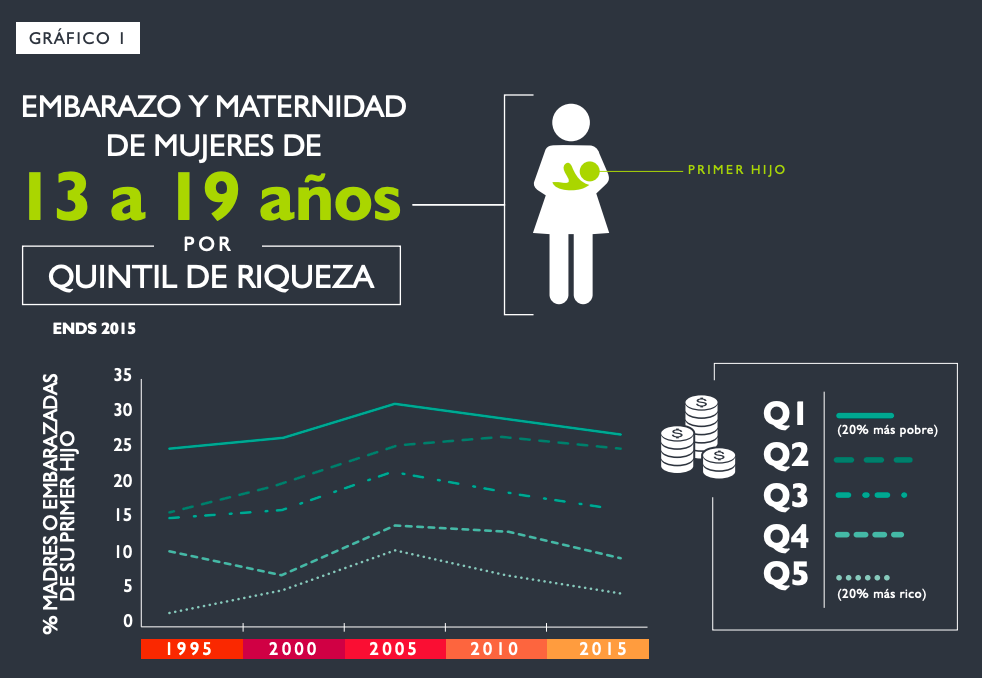
This ruling stems from a complex situation that involves a rise in underage and teenage pregnancy in Colombia. As a result, many young women have been penalized for abortion crimes. Research carried out by the Ministerio de Salud reveals that poverty is the greatest contributor to early-age parenthood, with other factors being lack of opportunities, dropping out of school and limited access to information about sexuality from the beginning.
This affects girls and young women in particular, especially those in single-person families and who live in rural or sparsely populated areas. The report also concludes that gender stereotypes and cultural standards that promote gender violence become an important factor in the risk of teenage pregnancy.
In Colombia, it is estimated that 400 abortion-related cases are investigated every year, out of which 12.5% correspond to women between 14 and 17 years old. Additionally, 24% of those convicted turn out to be underage women.
Another study revealed that between 2006 and 2019, 355 sentences were imposed on women, and 81 of them were girls between 14 and 17 years old. It also admitted that “underage women are more prosecuted and sanctioned than adult women for the same crime.”
Causa Justa, a movement that seeks reproductive liberty and autonomy for women, took the initiative of submitting the case to the Constitutional Court.
It is made up of multiple women, feminist and human right organizations as well as activists, academics and research centers across the country.
They recognize the “urgent need of eliminating abortion from the criminal code as an advance for women’s rights and a positive change for society and democracy.”
They argue that the fact that abortion is a crime “generates a stigma that, according to research, does not distinguish between what is allowed by law and what is not.”
Such stigma, therefore, blocks women from pursuing safe procedures and receiving that which is legal and a fundamental right. “The norm in question also violates equality as the structural barriers disproportionately affect women and girls in situations of vulnerability,” the lawsuit said.
After deciding on the matter, the Court also urged the Congress and the National Government to create regulations based on the decision, some of which include informing women about their options during and after pregnancy, following up with pregnant women who might consider adoption, publicizing methods of planning and prevention of pregnancy and reinforcing sexual and reproductive education for everybody.
Aware of the situation that women face, the Court also explained that the decision has immediate effects, which means that current lawsuits must be dismissed and sentences must be revoked. No doubt, the news will come as a relief for many women in vulnerability.
The movement has received support from many other sources. María Ardila Trujillo, a lawyer on behalf of Women’s Link Worldwide, a non-profit international organization that advocates for women and girls’ rights, spoke in favor of the decision.
“It makes it earlier and safer. This regulation protects the most vulnerable women who were at risk due to an unsafe abortion. Now they will turn to the healthcare system, where they will get information, contraceptives, which will help to avoid unplanned pregnancy,” she says.
She also added that the experience from other places that have lifted bans on abortions is that it actually makes them less frequent.
Ana Cristina González Vélez, co-founder of feminist group La Mesa por la Vida y la Salud de las Mujeres, says that legal restrictions on abortion are unfair, inefficient and counterproductive.
She asserts that time limitations can only recognize women’s autonomy to some degree and are only valid up to a certain stage of pregnancy. Furthermore, these limitations “are not based on scientific reasons and deny women’s ability to decide as capable moral subjects,” she continues.
However, the other side of the argument has also raised their concerns. Colombia’s population is predominantly Catholic, with almost 70% claiming affiliation to the church.
Although the Constitutional Court constitution has established that the religious plurality of the country makes it a secular state, the response from pro-life advocates has been widespread.
Déjame Nacer (Let me be born), a group the reunites several pro-life movements across the country, has called for protests in response to the news.
“Most Colombians do not agree that [five judges] impose a death sentence to the country, which destroys its present and its future, by condemning the most defenseless and innocent beings, our babies who are about to be born, to infanticide.”
They are also worried that the Court might be exceeding their reach and overpowering the Congress, which is the most adequate institution for making these decisions.
Furthermore, they argue that the decision establishes a supposed right that threatens life and opposes article 11 of the Colombian Constitution, which states that the right to life is inviolable.
Son decisiones de la justicia en su independencia; jurídicamente creo que se rompió el principio de cosa juzgada; ya @CConstitucional se pronunció en 2006. Hoy se habla de 24 semanas, una vida con expectativa de nacer. 5 personas no pueden fijar lineamientos en algo tan sensible. pic.twitter.com/Ah3O4P4Odn
— Iván Duque ?? (@IvanDuque) February 22, 2022
Colombian president Iván Duque, for example, does not share the pro-choice stance. “I believe it is delicate that with the reach the situation is having, we might be allowing abortion to become almost a form of birth control and that it might become a regular and recurrent practice”, he says.
He continued by declaring himself a pro-life person and stating that life begins at conception. Referring to the five court members who voted in favor of the ruling, he says that matters of such importance for society should not be settled by a group so small.
Additionally, the Colombian Episcopal Conference, representing the Catholic church, weighed in by recognizing that abortion is an answer to the difficulties of the mother, especially in cases where it is the result of sexual violence or financial struggle.
However, they believe that “every pregnancy implies the existence of another human being, different from the mother, in defenselessness and vulnerability, who also has the right to be part of human life.” They also turn to the constitution to defend their argument of the human right to life and receiving protection from the government.
Regardless of the controversies, the new ruling is an answer to one of the current issues affecting women in Colombia. Furthermore, they are hopeful that this decision will contribute to advancing women’s rights in Latin America.
 Javier Cataño García | University of South Florida, Tampa
My name is Javier Cataño García and I am pursuing a M.A. in Spanish, with focus on linguistics and literature, at the University of South Florida, Tampa, where I also teach undergraduate Spanish courses. I was born and raised in Colombia, but I have lived in the United States since August 2021. I have always had a special interest in foreign languages and geography, and I am looking to channel that interest through Latina Republic. I also have some training and experience in English-Spanish translation and interpretation. Although my professional career has been centered in teaching, I enjoy delving into other areas such as music, cooking and journalism. I hope to find new directions in my career through Latina Republic.