



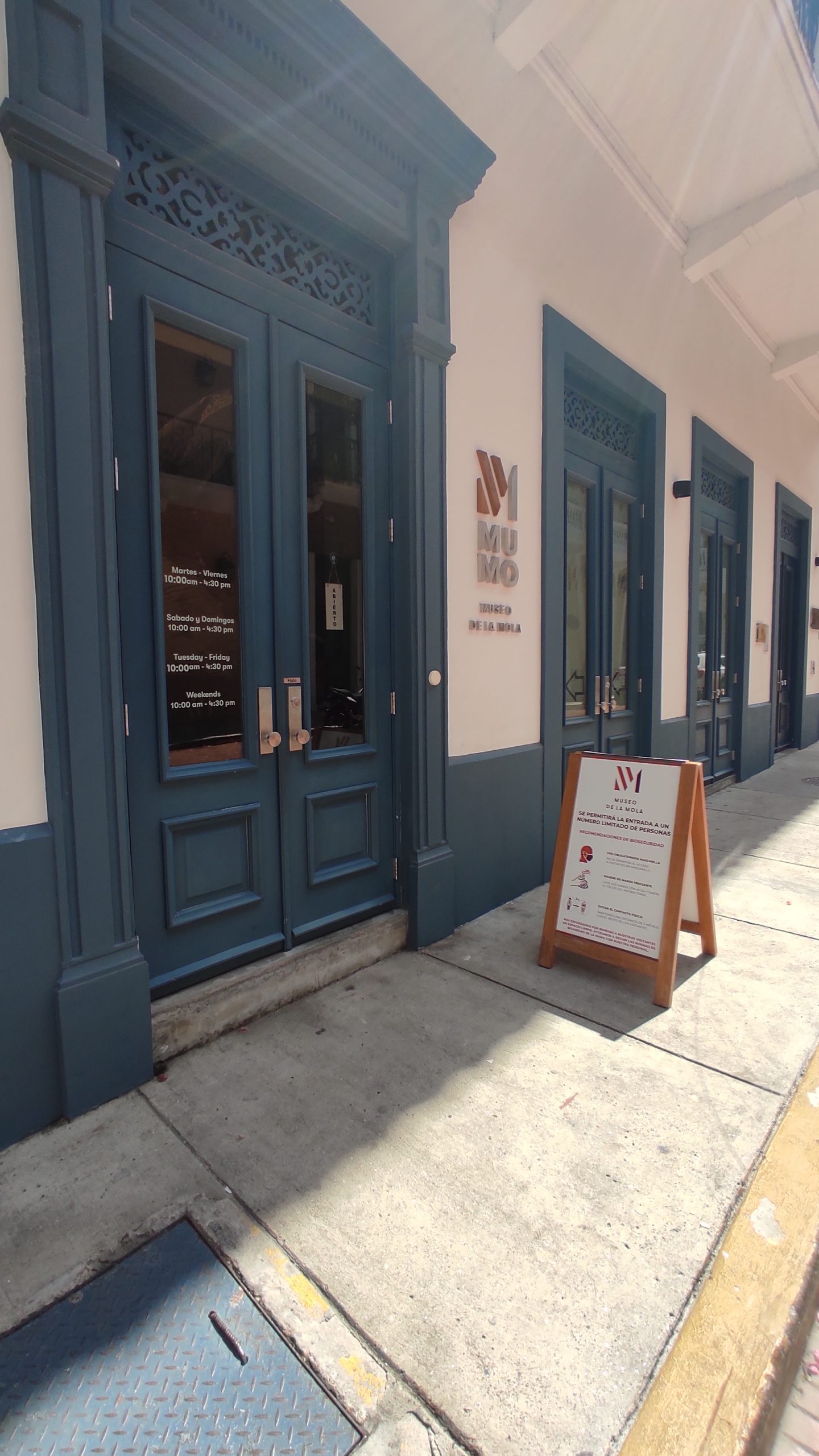
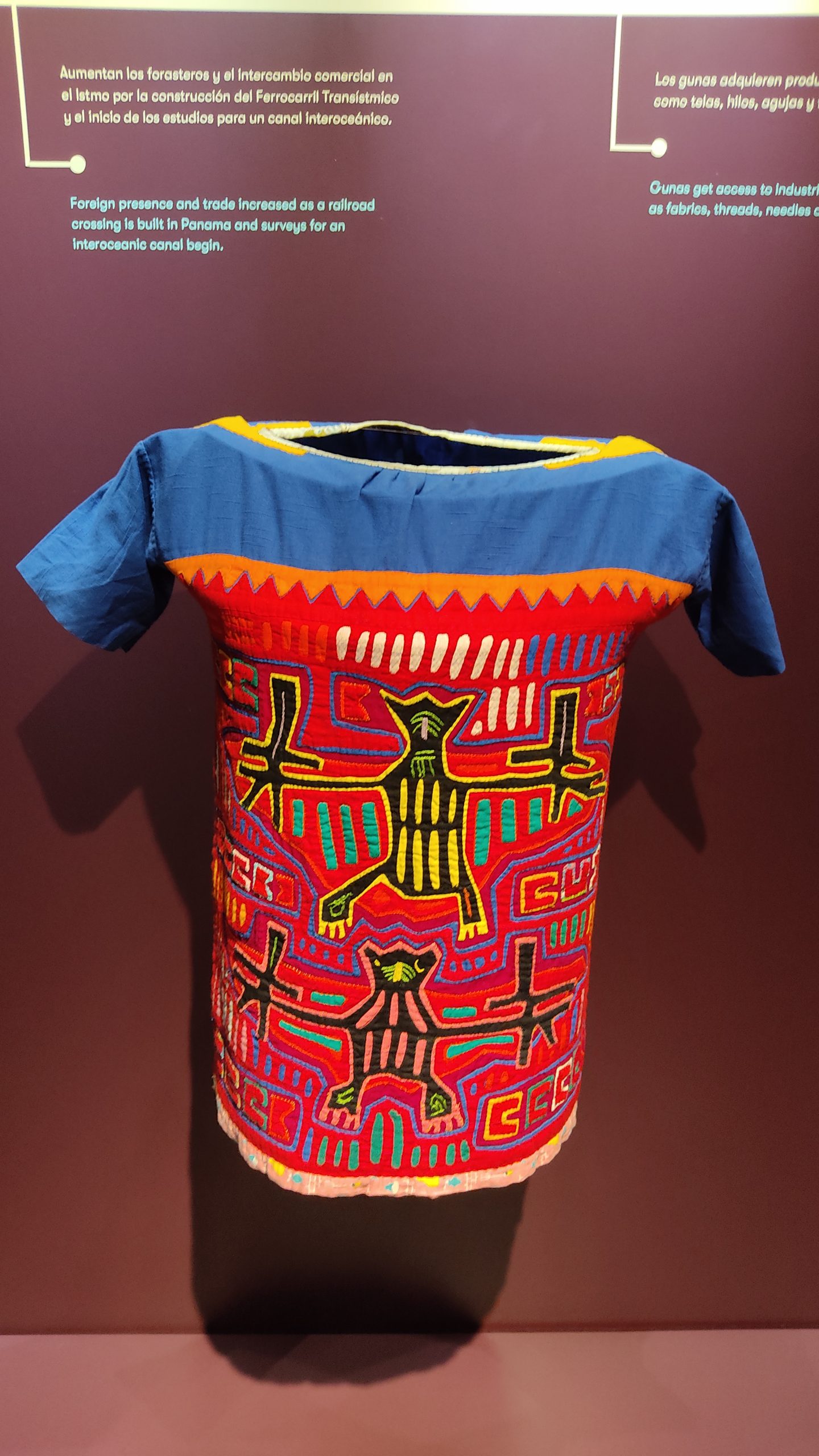
The Mola Museum located in the El Colegio II building, José de Obaldía San Felipe street, houses in its interior the enriching history behind the mola. This textile craft is composed of several layers of fabrics that have geometric designs. The clothing patterns refer to nature and the Guna culture. Its design is in the form of rectangular panels of cloth that form the chest and back of the Guna women’s blouses.
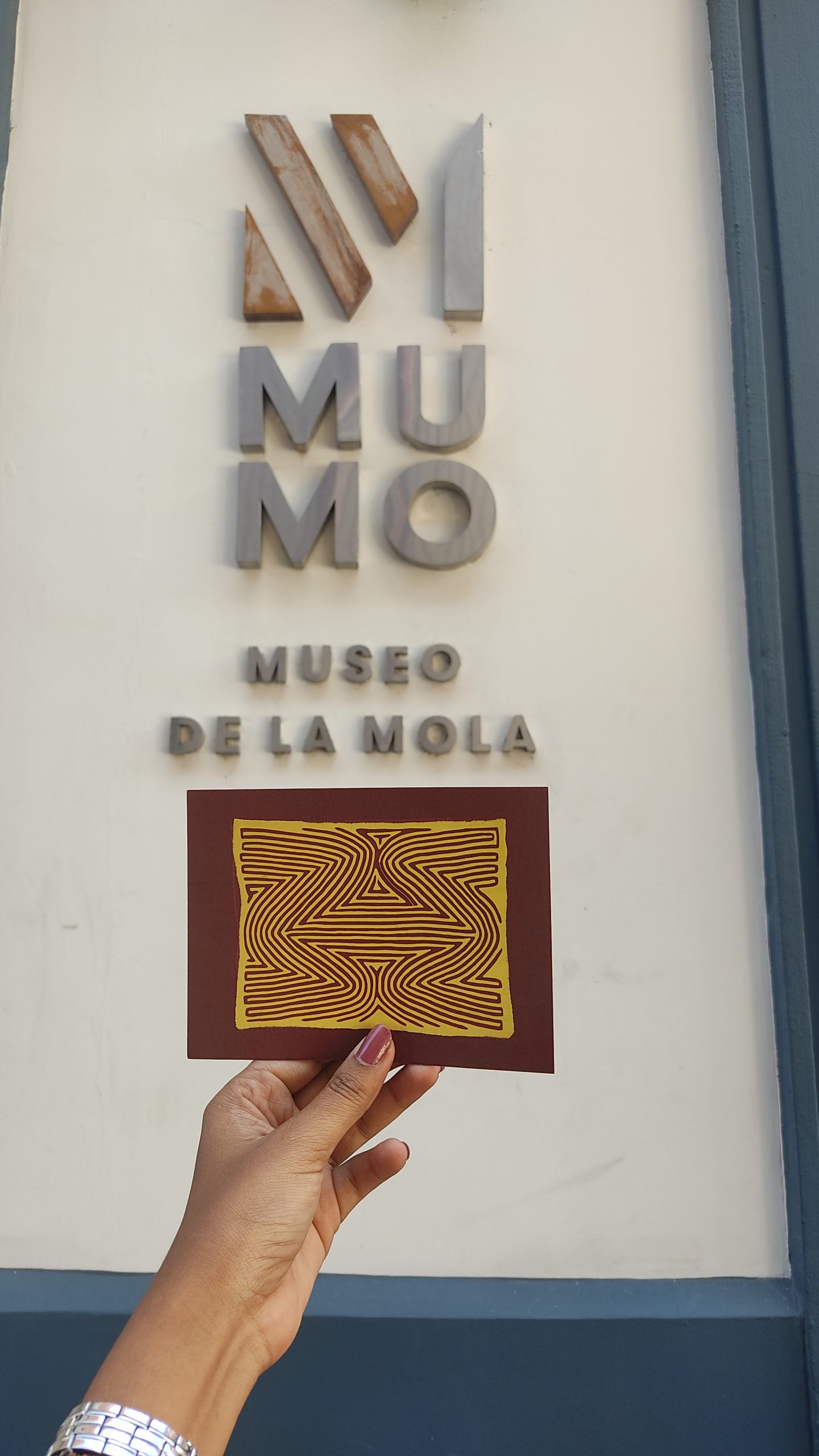
According to museum data, it is believed that Guna women began to use the layering technique to make molas at the beginning of the 19th century, although this technique was already used in other parts of the world. The Gunas were the first to use it to make molas in full panels. On average, the Gunas take around 60 hours to make a complex mola.


According to the Guna worldview, molas were created from the mythical origin of the Galu Dugbis universe, a sacred place located in the fourth layer of the underworld where specialists in scissors live, who are said to be spirits with the appearance of very beautiful women. When a male Nele, or spiritual guide, approached this Galu, leyends tell that one of them seduced him and made him her husband before she managed to enter.

Only one Nele woman, Nagegiryai, was able to enter Galu Dugbis, where she saw changing designs like clouds in the sky. There she learned the art of the molas and the feminine ancestral knowledge that she later transmitted to the other Guna women.

Yanelis Ledezma, museum guide, explains that the museum covers various cultural aspects of the Guna Yala region that, over time, has spread and today has become an attraction.
“The museum is visited by many people, both residents and foreigners, who are interested not only in textile crafts, but also in the history and worldview of this community,” she says.

For Ledezma, the opening of the museum has caused a great impact on the international community, including Panamanians of Guna origin who were born and live in the city and who, thanks to the museum, have managed to connect with their roots.
“This space is not only to increase knowledge, it also helps us appreciate the creativity and effort behind these confections, which allows you to value the knowledge of these artisans,” she says.

From Inside the Museum
The museum has several exhibition rooms that detail the evolution and history of the mola, also enhance aspects related to spirituality, and the whole concept of mother nature is exposed. In addition, the narrative value of the molas is shown and how the making of commercial molas is developed (which do not have a deep cultural meaning, but rather their designs are inspired by everyday life).

“The commercial molas today are made by the youngest Gunas; their objective is to transmit their culture, to make known all the patterns they make and that people can acquire a handicraft made by their hands,” says Ledezma.
A striking aspect within the museum is the mirror box where different colorful patterns of molas are projected, the various forms of creative assembly used to exhibit this artistic piece are also interesting.
Origin of the Museum
The museum was inaugurated on December 1, 2019 and is owned by the Alberto Motta Foundation, the patterns on display are part of a private collection.
According to the foundation’s website, the idea arose in 2017 when the Stanley Motta, during a visit to the Textile Museum of Oaxaca, Mexico, recalled the mola collection of businessman José Félix Llopis, who was a great friend of his father Alberto Motta.
Upon returning to Panama, he established contact with Patricia Llopis, Mr. Llopis’s niece, who upon receiving the news of the interest in opening a museum in honor of the mola, made available her uncle’s complete collection. To complete the exhibition, the molas of the Panamanian art collector David De Castro were added.
Activities and Schedules
The museum carries out various activities related to drawing workshops, issues of the Guna community, clothing, and presentations of the traditional dance, their myths and stories of the Guna people.
The museum hours are Tuesday through Friday from 9:30 a.m. to 4:30 p.m. and on Saturdays and Sundays it opens from 10:00 a.m. to 5:00 p.m. Admission is free. For more information +507 383-1227 / @museodelamola.
 Astrid Chang | Correspondent for Panamá
Astrid Chang has a degree in Journalism with an Emphasis in Audiovisual Production. Since 2018, she has been a journalist at La Estrella de Panamá. Her work in the newspaper was initially as an intern, where she developed in the area of sports, nationals, social networks and the web. Later, she was hired to lead the themes for World Youth Day and to be a presenter for the segment “Flash Economy.” She later became part of the Café Estrella team, a new content proposal by ‘La Decana’. In this booklet she has written articles on the environment, technology, health, sports, society, music, culture, sexuality, art, fashion and tourism. Likewise, she has organized and directed projects with visual artists for the International Book Fair of Panama. She too, was sent special to cover the Lima 2019 Juegos Parapanamericanos, and currently she is the coordinator of sports issues in the newspaper. She has training in journalistic leadership.