

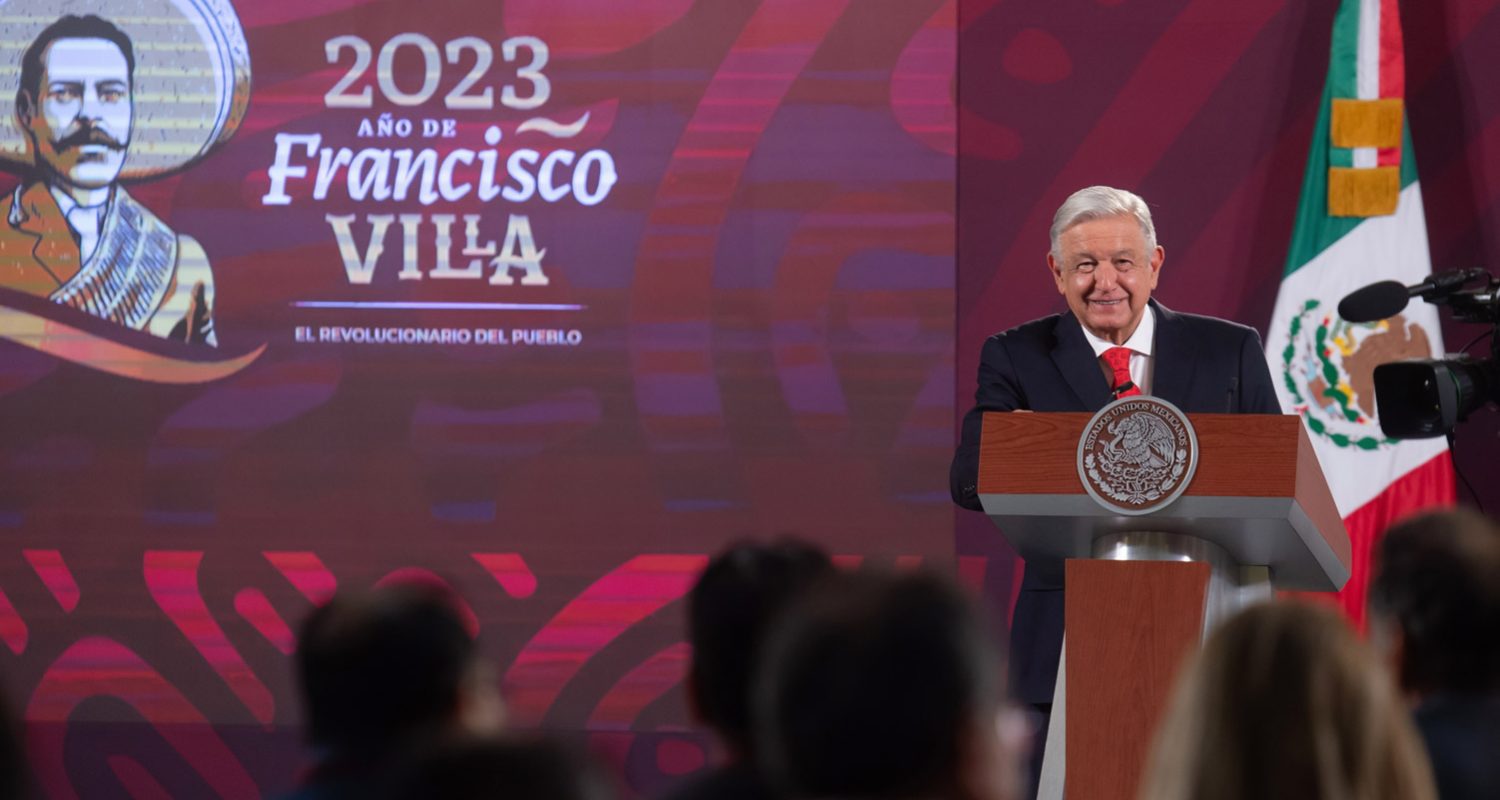
Mexico Bets on Energy Self-Sufficiency
Energy self-sufficiency guarantees independence and sovereignty, affirms the Mexican President
President Andrés Manuel López Obrador affirmed that the Government of Mexico is working to achieve energy self-sufficiency, “which will avoid importing fuels —as was the case in the neoliberal period— and reduce prices for consumers.”
“We have, to continue being an independent and sovereign, free country, we have to go towards energy self-sufficiency, just like food self-sufficiency, (…) so that we do not get involved in the conflicts of the great powers, of the hegemonies,” he explained.
The president said that the business plan of the public sector, in the case of Pemex, consists of directing public investment in the modernization and construction of refineries and coking plants to increase the national production of gasoline, diesel and jet fuel.
Coking plants receive the residues that remain after refining crude oil, known as fuel oil. What the plant does is refine it to turn it into more gasoline and diesel. “That is, take advantage of it even more,” details El Financiero de Mexico.
The residue is the charge that goes to the delayed coking plant, where the product is heated above 482°C in a furnace, and then flows into coke drums where, under appropriate conditions of pressure and temperature, it is cracked, thermally, according to the Gazette of the Mexican Petroleum Institute (IMP).
“What we want is that oil production is not sold, that we do not continue selling crude oil abroad, that we process all our raw materials so that we do not have to buy gasoline abroad because that means more increase in the price of gasoline affects consumers,” he said.
“If we process the raw material here, there is employment, there is work and we are more independent. How much would a Mexican government hold out if the powers decide not to sell it oil or, rather, not to sell it gasoline? At most, a month,” he emphasized.
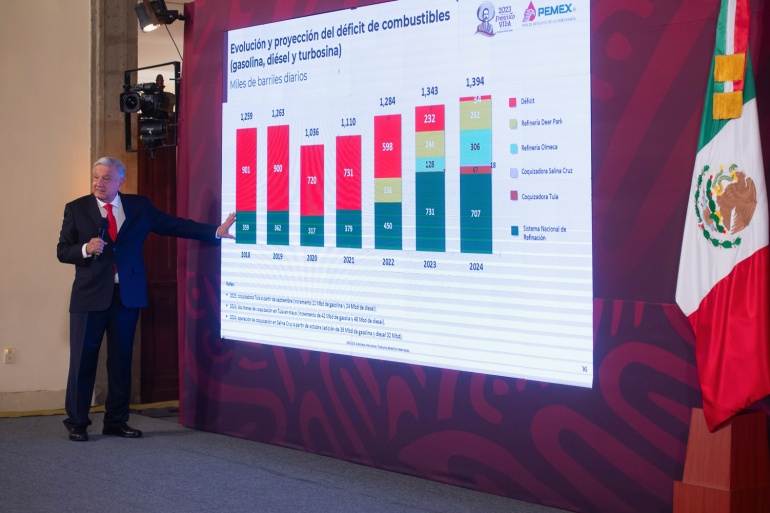
In a morning press conference, the Chief Executive explained that up to 901 thousand barrels of fuel were imported per day in 2018; this year the reduction is estimated to 232 thousand barrels.
The six plants of the National Refining System are currently in the process of modernization; the Olmeca refinery in Paraíso, Tabasco, opened last year and is about to start production; the Government of Mexico acquired the Deer Park refinery in Texas and works will soon be completed on the coking plant in Tula, Hidalgo.
Next year the coking plant in Salina Cruz, Oaxaca, will be added, which will process fuel oil in order to generate more gasoline with less pollution.
This energy infrastructure will make it possible for imports to be only 34,000 barrels per day in 2024, which could be replaced by empowering the country’s refineries, which receive a contribution of 80 billion pesos in order to increase their capacity.
“So, instead of living or having income from the sale of crude oil, we will have the income in the domestic market from the sale of gasoline, fuel; it is a reconversion,” he noted.
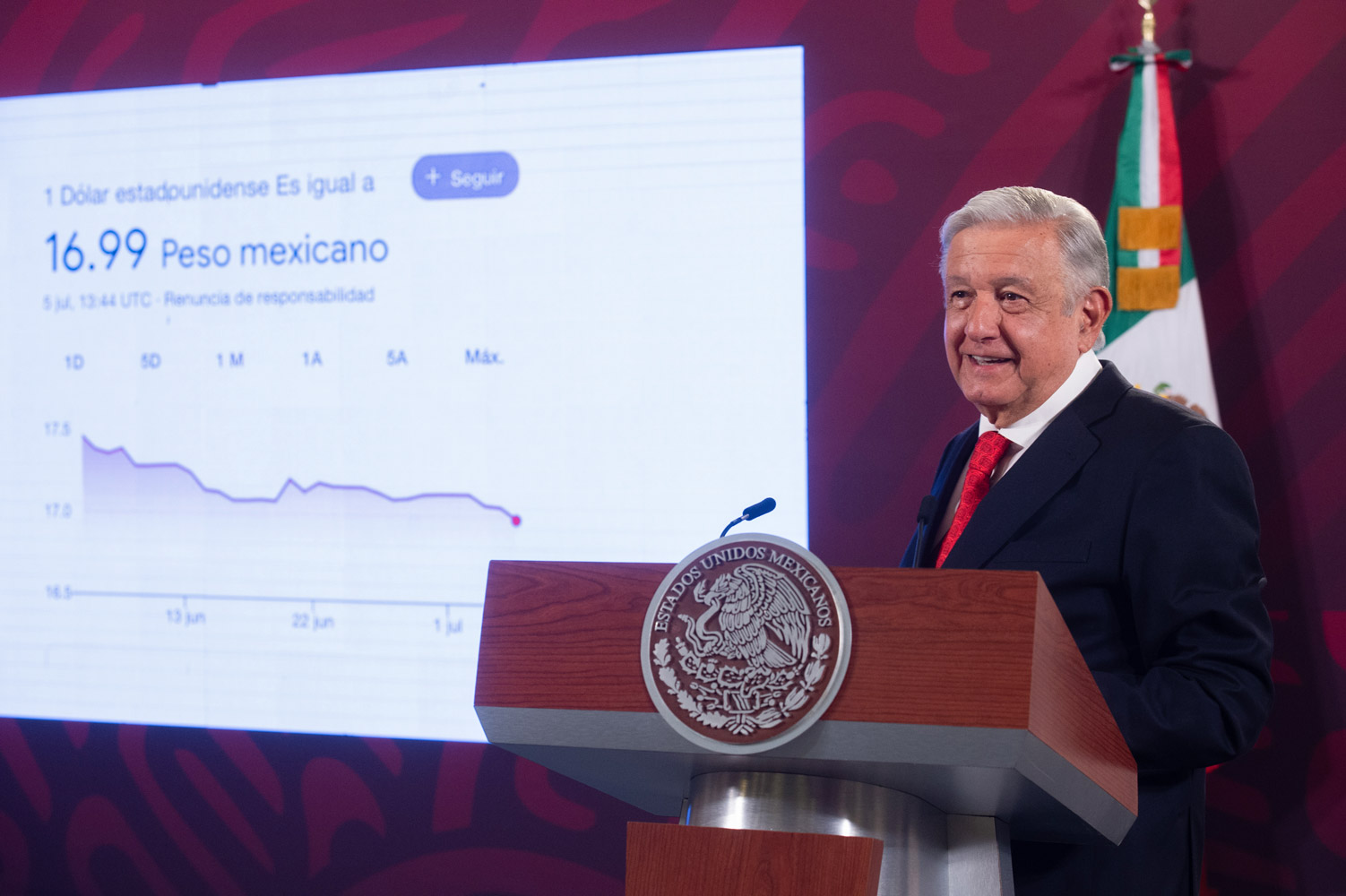
President López Obrador indicated that the recovery of the energy sector and the defense of sovereignty have a positive impact on the construction industry, promote the creation of homes, the expansion of basic services and the installation of new public spaces that guarantee well-being in the municipalities where priority projects are established.
In addition, jobs are generated; The construction of the Olmeca refinery, for example, required 35,000 workers, who now provide their services in the Maya Train and in the Salina Cruz coking plant.
The president urged the next head of the Executive to maintain the promotion of investment and public works.
“What do I recommend going forward to those who are going to govern, to whom I am going to deliver the post? That they think about not stopping investing, that public investment is not abandoned —as was the case in the neoliberal or neo-Porfirio times— because it is extremely important and that they imagine, it is a simile, like riding a bicycle, that you do not have to stop pedaling to avoid stop,” he said.
He recalled that there are still projects to expand and strengthen for the benefit of the people, such as passenger trains to the center and north of the country or the Sonora Plan, an initiative focused on clean energy generation. These works, he said, will guarantee development.
“There are many projects so that there will continue to be employment (…) Mexico is one of the countries in the world with the least formal unemployment, this is something extraordinary, this helps to increase wages,” he remarked.
 Latina Republic is a reporting, research, and advocacy nonprofit organization advancing human rights in the Americas. Latina Republic fills the void in coverage of urgent social, political, environmental, economic and gender inequities affecting the Americas. Latina Republic’s mission is to inspire humane policies that fortify relations between the U.S. and Latin America. Our work is guided by peaceful international relations focused on solidarity. We believe asylum and seeking refuge is a human right. Our work envisions a world where neighboring countries are seen as partners, and immigrants and refugees don’t have to live in the shadows. Our goal is to advance peaceful dialogue by highlighting local perspectives that don’t make it into the mainstream news. Our vision is that this knowledge will assist all stakeholders in solving regional problems while strengthening ties.