Biophilic Buildings in Colombia’s Sustainable Designs
Linen bamboo sheets keep a person from tossing and turning due to the summer humidity. The lights turn on every morning. A silent electricity powering everything from the coffee machine to the hidden furnace run by an organized forced air system. A meticulous concoction of electricity, natural gas, and fuel oils. The stovetop flashes streaks of tempered blue flames. Cooking a tasty lunch. With it, emissions that suffocate the Earth’s atmosphere.
Modern society finds itself in a complicated dilemma. Many of the utilities described are common privileges in many well-established households. Unfortunately, such home appliances have become a key contributor to climate change. More carbon in the air has translated into experiencing even hotter days. As of this year “and the current El Niño forecast, Carbon Brief estimates that global temperatures in 2024 are likely to average out at around 1.5C above pre-industrial levels” written by Zeke Hausfather from Carbon Brief.
While the onset of human emissions and other greenhouse gasses have been steadily trending upwards since the mid 1800s, Hausfather notes that “the past 10 months have all set new all-time monthly temperature records… across the tropical Atlantic and western Pacific oceans, much of South America, Central Africa, the Mediterranean and the Indian Ocean.”
Such intense heat encourages people to depend on more cooling “which could trigger a dangerous cycle of higher electricity consumption and carbon emissions. In a planet facing unprecedented urbanization and a simultaneous climate crisis, the importance of energy efficiency in buildings and cooling technologies is more critical than ever”, according to Fabian Dejitar in his 2023 article “Decarbonization and Energy Efficiency in Latin America: How to Progress Towards a More Sustainable Architecture?” featured in ArchDaily.
Dejitar specifically discusses the intersectional notion of educating Latin America’s population– governments, businesses, professionals, and civilians– on the need for energy efficiency in order to prioritize the role the community plays in successfully implementing sustainable and NetZero buildings.
A Glimpse into the Creation of Energy Efficient Buildings
So, what exactly does it take to create a sustainable model for future buildings and homes? Aside from a government’s motive to reimagine more efficient buildings for the benefit of improved social inclusivity, it takes innovative architects ready to take such hopeful ideas from paper sketches into a living, 3D reality.
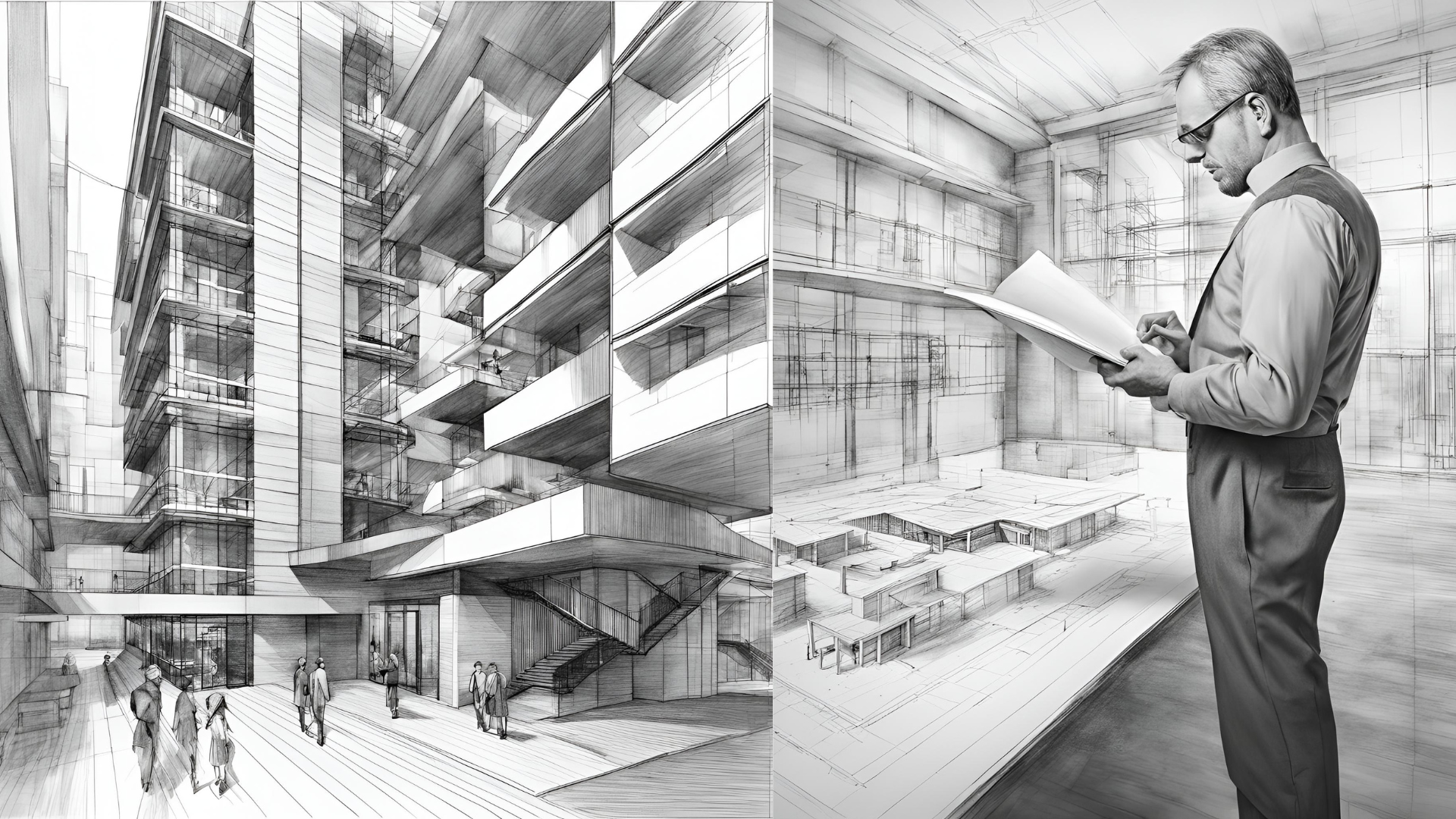
“Designing Buildings.” AI generated on Canva.
A perfect example of this is demonstrated through the report, “How to Design a Building that Breathes: A Sustainable Case Study of Colombia’s EDU Headquarters” explained by specialist in thermal design and building physics, Professor Craig (EngD) who delves into the thermodynamic challenges of the headquarter’s creation.
Similar to many Latin American cities, redesigning the Urban Development Center within the bustling city of Medellin means taking into account temperatures that consistently oscillate between 18°C and 28°C in the shade year round along with unreliable wind conditions.
Professor Craig elaborates on the importance of understanding and the altering of ‘thermal comfort standards.’ At first, they were defined as an applicable range of temperatures that could suit people within all buildings at any given time. Notwithstanding, these standards persuaded the ideology of necessary air-conditioning technology and modernist architecture. However, recent discoveries in thermal sensation emphasize the value of subtleties. That is, a person’s natural tendency to adapt to seasonal changes or tolerate warmer temperatures by acknowledging the opening of a window.
Moreover, new standards suggest that a slightly warmer temperature range is acceptable for office activities as long as there is sufficient air circulation. So, if dependence of air conditioning decreases in the pursuit of sustainability, how else should ventilation be assured?
This is where Professor Craig introduces the decade-long progress in the discovery of buoyancy ventilation. In application to a building, he explains that with natural wind-driven ventilation, fresh air is pushed in from the sides. However with buoyancy ventilation, the fresh air is sucked in from the sides—by the warm air column rising up the chimney. So the action is different and fundamentally more reliable.
For example, on a hot day, when occupancy is high, there may not be enough wind to flush out the interior. But buoyancy ventilation differs: as the occupancy increases, so does the driving force. In other words, buoyancy is a force that can be engineered and the ventilation is powered by waste heat from occupants, computers and other internal heat gains. In that sense, they can design and sustain a reliable ‘breeze’ in the absence of wind.
Undeniably, this ten floor high headquarters embodies the definition of a “building that breathes.” Occupied by highly-skilled architects and city planners, it represents a dedication to new wave sustainable architecture in Medellín, as this building was intricately fabricated with solar panels, solar chimneys, temperature calibration, thermal buoyancy, and an absence of air conditioning.
While many professionals working in the EDU consider the building an experiment, in terms of analyzing how the recent sustainable technologies function once integrated, Professor Craig highlights that it goes beyond this. They planned to actively broadcast the performance of the building on the internet because “if nobody knows how buildings actually perform, how can we as an industry collectively learn from our successes and failures?”
Energy Expansion: Thermal District Projects in Colombia
Highlighting the remodeling of one building is admirable in its own sense; however, it is the transformation of deeply embedded systems that truly trigger a shift in people’s outlook. The EDU headquarters is only one example of Colombia’s greater effort to promote sustainability and social urbanism within downtown Medellin, but the projects don’t stop here.
After the first thermal energy district located in the La Alpujarra neighborhood of Medellin opened, more expanded in other areas such as the port city of Cartagena. As of 2023, there are six operating energy districts within five Colombian cities, and two more under construction. Additionally, there are more than ten projects in the structuring phase that are being developed under the “Energy Districts in Colombia” strategy, according to the United Nations Industrial Development Organization.
The functionality behind thermal districts is that they are “an outsourced service network providing heat or cold to buildings and/ or individual users within a locality or development, through a network of underground pipes from a central generation plant” as explained by Duván Chaverra Agudelo from The Latam HVAC/ R Review.
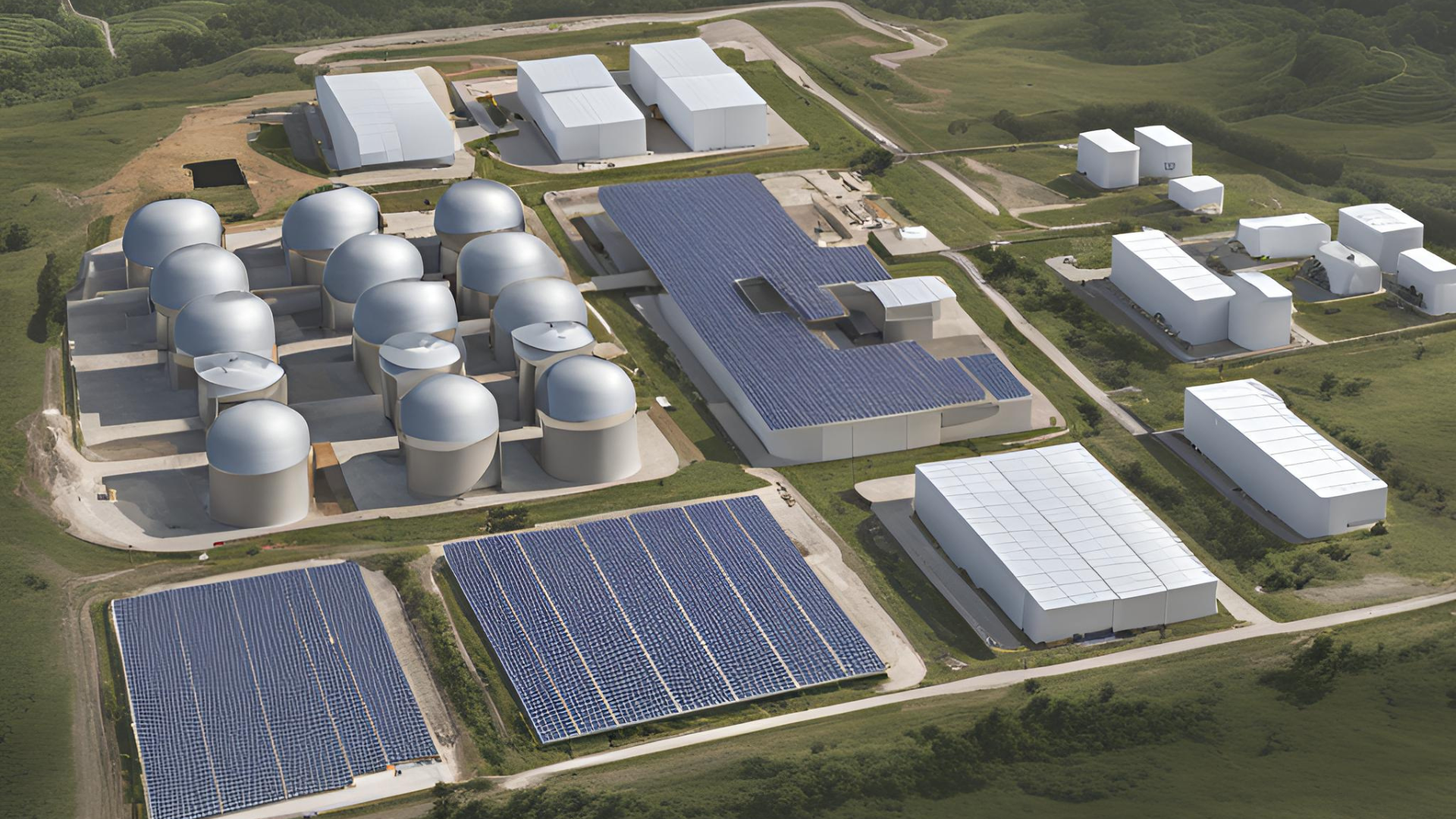
Agudelo continues by addressing the core objective of energy district projects which is to help reduce greenhouse gas emissions as well as the use of ozone-depleting substances. In doing so, such projects aid in the progress of moving towards energy efficiency in the cooling and heating services of public and private buildings in cities, further promoting the use of renewable resources.
Creating the Right Prototype
Thermal energy districts certainly sound great; however, to truly appreciate them for their value and capacity to be used as a blueprint for other Latin American countries– hurdles of its initial implementation must be addressed. Thankfully, Andres E. Velasquez, Chief Executive Officer of Building Technology (BT) Consultants, delved into his experience working through the ins and outs of “Developing Thermal Energy in Colombia”. Undeniably, he states “implementing district energy in developing countries involves overcoming multidimensional challenges”.
He first explains that back in 2005, the concept of district energy was not well known enough. Mainstream was considered the air-conditioning system that typically served individual tenants in buildings and were 100 percent powered through electricity from the grid. Natural gas had become a more reliable source, but still not as used.
By 2009, BT had raised many attempts to create district energy networks, yet most resulted in financially infeasible projects which required mitigating too many economic and technical concerns. Logistically, it was due to the fact that there were no specific set of regulations or standards to be followed. An understanding of power systems was limited to large-scale industrial projects. Neither building developers or investors fathomed the idea of coming up with complex, centralized energy systems at the time.
Despite the slower introduction to the potential of district energy, an installation of underground pipelines ran from the EPM Smart Building to Plaza Mayor. Velasquez states that this project molded the initial prototype for the first cooling network in Colombia– which did not come into operation until a decade later.
In order to make district energy systems come to life in Colombia and elsewhere in Latin America, they began researching its operation around the world to understand what techniques could be readily applied. From places like the United States, Asia, Europe and the Middle East, they discovered that the following factors enabled a mature district energy market to develop:
- Existence of differential time-of-use electricity rates based on high-/low-demand hours
The rate in Colombia, however, remains the same at any given time; it only depends on the type of customer and amount of energy purchased. - Subsidized interest rates and sufficiently long deadlines to incentivize investments in energy efficiency
In Colombia, “soft credit” loan programs with low interest rates and initial years with no principal payments were not available for terms longer than five years. - Government grants for urban infrastructure businesses
The Colombian government did offer financial support for water systems and electrical networks but not for thermal energy. - Typical plant sizes using cogeneration starting at 2.5 MW
Many projects studied in Colombian universities and cities were for cooling-only systems sized for tens of thousands of tons of refrigeration. - District cooling used in summer and district heating in winter
Colombia has a stable climate year-round as it is close to the equator, with some geographical variations depending on the elevation above sea level, and there are no populated areas that have temperatures below 32 degrees F.; hence it primarily needs cooling.
Furthermore, Velasquez elaborates how globally, the cost of generating electricity, distribution infrastructure, and building operating costs results in a higher total than the cost of implementing thermal energy district powered systems. Undoubtedly, this encourages future opportunities for district cooling development.
Provided with an increase of knowledge, more projects were designed and constructed by BT and other companies during 2009-2013. Building owners gradually grew more excited about the concept of investing less in on-site HVAC equipment, cutting down on electric infrastructure while being able to operate more efficiently. Consequently, this would also enable owners a higher rate of return on investment compared to traditional real estate development.
Alas, Velasquez advises that, “in order to more broadly implement the district energy concept, there have been several technical, regulatory and legislative issues to overcome. The latter are being resolved in Colombia by the government, in compliance with international commitments to reduce the country’s carbon footprint. In addition, the reduction of taxes on both imports and sales of thermal energy-related equipment as well as on the sale of electricity and district energy is making the investments required for district energy development feasible.”
Spotlight on Latin America’s Future
Continuing with Colombia’s pioneering attitude on energy development, the first District Energy Latin American Conference was held in Cartagena, Colombia in September of 2023. During the three-day event, UNIDO brought together representatives from various international organizations and academia, along with those from the public and private sectors, to converse and present energy districts as an alternative for cooling in the cities.
Given Colombia’s new progress in their District Energy projects, this conference also gave leaders a platform to discuss how the country is doing in regards to their energy transition process and observing overall contributions to sustainable urban development goals. This is critical as data from the Energy Hub indicates that energy demand in the Latin American and Caribbean has increased by 70% in the last 20 years.
A brief look into the Global ABC Regional Roadmap for Buildings and Construction in Latin America 2020-2050 report, written in 2020, supports how an increase in energy demand has been driven by a significant increase in regional population and wealth (gross domestic product). Their statistics suggest that “by 2040, Latin America’s population is expected to grow by a further 20% and could increase its economic wealth by 83%”.
Under an ideal Sustainable Development scenario, “energy efficiency and decarbonisation of electricity in buildings in Latin America… could reduce annual emissions from buildings in 2040 by almost 140 megatonnes of carbon dioxide (MtCO2) compared to a Stated Policies Scenario”.
Of course, a transformation of decarbonized buildings requires a vast transformation of the construction sector. This report indicates that achieving net-zero buildings is possible, but it requires clear and purpose-driven policies involving passive-building design, low-carbon materials, and highly efficient lighting and appliances– as exemplified through the EDU headquarters.
On the larger scope of attaining energy efficiency, achieving Sustainable Development goals implies intensive, collaborative dedication from urban planners, architects, developers, investors, construction companies and utility companies. All these professionals certainly understand that Latin America’s population is exponentially increasing and with it, higher rates of urbanization. A necessity for new living and working spaces.
Still, this report doesn’t undermine the current challenges many countries currently face such as “urban sprawl, lack of public infrastructures, expansive areas of informal settlements and high percentage of the population living in inadequate housing, located in vulnerable areas… This is aggravated by the high levels of informality…with self-construction being a common practice.”
Realistically, many Latin American countries are experiencing slow progress in terms of constructing new energy codes; however, slow progress is still progress. International dependance is a foundational source of inspiration, nonetheless. Hopefully, Colombia’s steady implementation of energy efficiency can be the guiding light for other countries to do the same.
Conclusion
Our planet is sweating, and the salt droplets trickle down our skin. It’s gasping for air, yet so are many people’s lungs from respiratory and cardiovascular illnesses– a result of marginalization and profitable toxic emissions. Still, who can not recall a sweet memory of the sun being nothing more than a blissful kiss of Vitamin D? Gusts of fresh wind blowing away one’s worries.
It is no wonder that studies consistently demonstrate the positive benefits of time spent outdoors for human cognition– improved focus, creativity, and capacity for healing. Now, as a majority of the population find themselves spending most of their time indoors, a radical transformation must be breathed into buildings of the future, buildings of the now.
Breathing life filled with greener spaces, natural ventilation, networks of efficient cooling/ heating systems, and vast amounts of sunlight which synchronizes our innate human-nature connection. For far too long, the results of industrialization have set forth the idea that man-made actions are separate from the cycles of life, yet climate research has continuously disproven this myth.
A reconceptualization of our built environment can mean reclaiming a renewed relationship with nature. A narrative not of mindless exploitation, but of mindful integration that prioritizes a use of localized materials and designs that mimic each region’s unique climate, ecology, and culture.
 Paula Perez | Environmental Correspondent
Hi everyone! I am an upcoming junior at the University of Minnesota, studying Biology, Society, & Environment (BSE) with a minor in Public Health. Coming from a working-class, Mexican immigrant household, simple energy-conserving habits have always come naturally to me. From being reminded to turn off the lights, save the plastic bags from grocery stores, finish all of the food on my plate, and preferring to commute by foot/bus. Though many Latin and other minority groups alike tend to exhibit smaller carbon footprints, they are often the ones at a disproportionate advantage from issues such as climate change. Hence, these ongoing disparities have kindled my keen interest in intersectional environmentalism which highlights and advocates for the experiences of marginalized communities. Alongside Latina Republic, I aim to illuminate the distinct voices embedded in the specific complexities of insufficient housing, food scarcity and unequal food distribution, and sanitation across Latin American regions. With the intent of becoming a future Public Health advisor or medical provider, my ultimate goal as an Environmental Correspondent is to cultivate a deeper cultural competence. Because ultimately, helping a person— or a whole community— heal means truly taking the time to understand their personal narrative, the rich history that they come from, and acknowledging the multifaceted challenges they may face. Sharing that unique narrative is what we accomplish at Latina Republic.