There was a time when the world spoke of El Salvador with fear — a country defined by headlines of violence, gangs, and survival. Streets once emptied before sunset. Entire communities lived under the shadow of uncertainty, where ordinary life felt fragile and hope often seemed distant.
Today, the lens tells a different story.

Through the photographer’s eye, a transformed nation emerges — one filled with movement, color, devotion, and renewal. Families walk freely through plazas once avoided. Children run across newly restored parks. Visitors gather beneath cathedral lights while the sound of church bells echoes through colonial streets. The images capture not only tourism, but a collective reclaiming of public life.

At the center of this transformation is security. Under President Nayib Bukele, the government launched an aggressive campaign against gang violence, dramatically changing the daily reality of the country. El Salvador, once labeled among the most dangerous places in the world, is now being recognized as one of the safest in the Americas. It has also become a leading force behind the “Shield of the Americas,” a regional alliance created alongside Costa Rica to combat organized crime and strengthen regional security.

But beyond politics and statistics, the photographs reveal something more human: a nation rediscovering itself.
The tourism boom unfolding across El Salvador in 2025 and 2026 feels less like a trend and more like a rebirth. More than 4.1 million international visitors have arrived to experience the country’s Pacific coastline, volcanic landscapes, historic towns, and spiritual traditions. The camera moves from the surf breaks of Surf City to the glowing streets of the historic center of San Salvador, where restored architecture and vibrant nightlife now coexist with centuries-old traditions.
Holy Week has become one of the most powerful reflections of this new era.

In town after town, religious processions once muted by fear now unfold openly and proudly. Streets overflow with worshippers carrying candles, flowers, and elaborate handmade carpets. Churches fill with music and prayer. The atmosphere captured in these photographs is deeply spiritual — not staged, but lived. Faith has returned to public spaces with remarkable intensity.

For Semana Santa 2026, more than 145,000 international visitors entered the country, a 4.3% increase from the previous year according to the Ministry of Tourism. Yet the images suggest that the true story is not just about numbers. It is about confidence. People gather without fear. Families travel across the country. Tradition once interrupted by violence has become celebration again.

The transformation is visible everywhere.
At Apulo, newly renovated recreational spaces overlooking Lake Ilopango are once again filled with visitors. Along the coast, beaches and resorts welcome surfers, families, and international travelers from the United States, Europe, Guatemala, and Honduras. Luxury hotels, modern restaurants, concerts, sporting events, and cruise tourism are reshaping the country’s image abroad.

Even the arrival of cruise ships has become symbolic. Massive vessels carrying thousands of passengers now dock at Salvadoran ports, testing and showcasing the country’s growing infrastructure, coordination, and hospitality. Police officers, transportation officials, tourism guides, and healthcare workers move together in synchronized effort — another sign of a country eager to welcome the world.

Yet perhaps the strongest images are not the grandest ones.
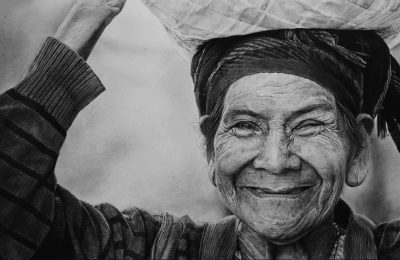
They are the quiet moments: a grandmother praying during procession nightfall, fishermen preparing boats at sunrise, children waving flags in restored town squares, couples walking freely through streets that once belonged to fear. The photographer’s storytelling captures a nation not trying to erase its past, but to move beyond it.

Tourism in El Salvador today is more than economic growth. It is memory, resilience, and identity woven together. It is a country learning how to be seen differently — by outsiders, and perhaps most importantly, by its own people.
And through every frame, one feeling remains unmistakable: El Salvador is living a moment many thought impossible — a golden era shaped by faith, security, and the rediscovery of hope.
 Mauricio Alexander Cáceres García is a Correspondent for Latina Republic covering El Salvador and Latin America. An award-winning Salvadoran photojournalist and documentarian, his work focuses on cultural identity, tourism, religion, and the evolving social landscape of the region. Through powerful visual storytelling, Cáceres captures the traditions, people, and destinations shaping modern El Salvador. With extensive experience in national and international news coverage, his photography has earned recognition across Latin America for its human-centered and documentary approach.