


The Global Environment Facility (GEF) describes the illegal wildlife trade as “one of the most lucrative illegal businesses in the world” and the situation is only more grave in Brazil, given the nation’s rich biodiversity. Brazil is home to a staggering 60% of the Amazon biome and 13% of the world’s animal and plant life, with 117,000 animal species and 46,000 species of plants. As of 2018, 1,173 species either face extinction or have already vanished in Brazil.
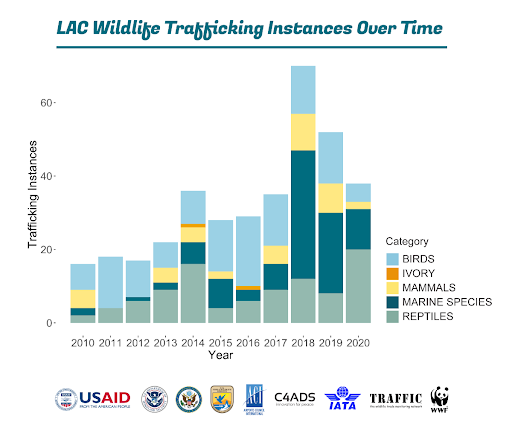
The situation is only worsening and, in the past decade, illegal seizures of wildlife in Brazil have risen by 200%. Every year, thousands of songbirds are plucked from the treetops and sold as pets, fish are drained from the Amazon River and sold to restaurants or for ornamental purposes, and jaguars are killed for their teeth and coats.
At the forefront of the struggle against illegal wildlife trafficking is the Brazilian NGO Freeland Brasil, the South American branch of Freeland Foundation, which works with international governments to protect vulnerable human communities and wildlife from organized crime and corruption.
Founded in 2012, Freeland Brazil’s approach to conserving biodiversity includes initiatives involving the domains of education, training, and politics. The organization works towards a sustainable world free of illegal wildlife trade through education and awareness in order to reduce demand in exploitative products.
Furthermore, it is dedicated to capacity building through programs that train and support law enforcement agencies countering wildlife trafficking. In terms of politics, Freeland Brasil aids in public policy-making and the fostering of international articulation in order to institutionalize the fight against wildlife trafficking in Brazil and the rest of South America.
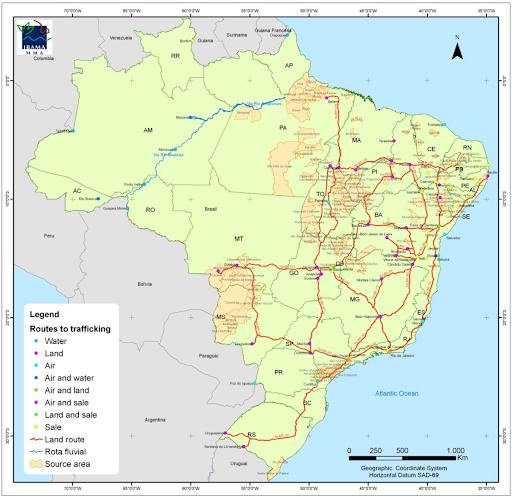
In 2020, Freeland Brasil prepared a comprehensive report of wildlife trafficking in Brazil, which was published by Traffic. According to the report, millions of wildlife species, including river turtles, jaguars, rare songbirds, fish, and poisonous snakes, are trafficked annually in Brazil’s thriving black market. They are both sold domestically and exported internationally to the US, EU, China, the Middle East, and elsewhere.
The trade is flourishing in a time of impunity by the Brazilian government, which has failed to consider wildlife trafficking a serious crime. Therefore, illicit international trade is facilitated by weak laws and even weaker penalties, inadequate government records, and poor law enforcement coupled with widespread corruption, fraud, bribery, forgery, money laundering, and smuggling.
The pervasive and unmonitored capture of wild plants and animals for illegal trade purposes has had and continues to have grave consequences for Brazilian biodiversity, the national economy, and the ideals of just law and fair governance. Furthermore, overexploitation has historically driven extinctions and irreparably disrupted vital ecosystems.
Since the illegal wildlife trade targets birds with the most vibrant and attractive plumage, the few survivors that remain are likely to become inbred, weakening the gene pool and, in turn, genetic resistance. In turn, the trade threatens the equilibrium of the food-chain as well as plant-pollinator interactions, as pollinating and seed-dispensing species become more rare.
While the Brazilian Government undoubtedly plays a vital role in the ongoing and pervasive exploitation of natural resources and native species for profit, the global community, in fostering demand for these products, plays an even greater role.
Therefore, while the Brazilian government must implement stricter punitive measures as well as preventative strategies, such as funding to federal environmental and wildlife protection agencies as well as engaging with local communities to nurture grassroots efforts to protect threatened species, we are all accountable for raising awareness of the issue and limiting our own demand for these products. Furthermore, we owe support to organizations like Freeland Brasil in their efforts to combat illegal wildlife trafficking.
 Clara Rabbani | University of Chicago
Clara Rabbani is a rising sophomore at the University of Chicago, majoring in Anthropology with a minor in Urban and Environmental Studies. She is passionate about poetry and is the editor of “The World is Waking Up: Poetry of Resistance from Youth Around The World”. With a Brazilian and Iranian background, she is also fascinated with the diversity of human cultures and their intersection with environmentally sustainable practices. She will be collaborating as the Environmental Writer for Brazil.

